Showing posts with label Vitamins. Show all posts

Sunday, July 17, 2011

Get Yourself Enough Vitamin D

Lack of vitamin D has become quite the issue among the Lebanese community nowadays and I'm hearing lots of concerns of what foods provide you with your daily needs of this vitamin especially that this vitamin is associated with good, strong bone health!
Vitamin D insufficiency can result in thin and brittle bones and thus increasing the risk of rickets in children and osteomalacia in adults. Together with calcium, vitamin D helps protect from osteoporosis, modulates neuro-muscular function and reduces inflammation.

So where can you provide yourself with enough vitamin D?

Sunlight helps your body to make vitamin D. But because of the skin cancer risk, there are no official "sunlight" recommendations up till now. Therefore, exposing yourself to small amounts of sunlight - 15-20 minutes - could be helpful. Keep in mind that the sun is less likely to provide your daily needs at higher latitudes, in winter, if you're older or dark skinned. So with this scorching sun during summer in Lebanon, it is important to use sunscreen when you're spending the day at the beach! Saying "I'm getting my daily dose of vitamin D" is not actually a wise decision to take!

Fatty fish such as  salmon, trouts, mackarel, tuna, eel and canned tuna & sardines can provide with you with good amounts of vitamin D as well as heart healthy omega 3 fatty acids. 

Fortified milk/yogurt can be fortified with vitamin D >> the key is to read your nutrition facts label. And a good note to keep in mind is that ice creams, labne and cheeses are never fortified with vitamin D! On the other hand, some soy/rice milks can be fortified so yea, keep reading those food labels!

Egg yolks- the yellow part of an egg- is what contains the vitamin D you want. Therefore having boiled eggs can be a part of healthy diet when eaten in moderation, but make sure to adjust your cholesterol intake during your day because the American Heart Association recommends that you consume no more than 300 mg of cholesterol per day, and just one egg contains 200 mg!

Vitamin D can also be found in fortified cereals, fortified orange juices and in beef liver. Though I personally don't recommend that you have your vitamin D from beef liver because it's super high in cholesterol - and no you don't need that much of cholesterol in your diet!

Supplements can provide you with your vitamin needs but it shouldn't be your first option, like most doctors in Lebanon advise you to go for! Supplements are surely needed if you have low levels of vitamin D and best thing about them is that you don't have to split your supplement doses. Just don't go buying supplements, consult your doctors ahead of time because vitamin D can be toxic in large amounts.

References: Health.com

Thursday, June 9, 2011

Green Peas and Fava Beans - Our Fresh Summer Treats!

Fava beans (foul) and green peas (bazella) are one of the favorites Lebanese treats during this time of year, other than green almonds nuts of course!

Fava beans
Green raw peas and fava beans contain significant amounts of carbohydrates and thus they are considered to be primarily constituted of starch. Their protein content is greater than that of potatoes and is actually close to that of rice even though both rice and peas have different types of amino acids (protein building blocks). So a smart way to go around cooked peas is to have them with rice, this way both their protein content will complement each other.
Peas are also rich in vitamin C, in fact, they have  40 mg for each 100 g, almost as much as lemon while fava beans contain about half of that of lemon.
Moreover, green peas and fava beans supply your body with vitamin A, E, B1, B2, B6, folates, iron and zinc and best of all, they supply you with lots of fiber!

Fresh Green Peas
Now apart from all the benefits listed about green peas and fava beans, can these green treats be considered as veggies and thus it's Ok to nibble on them "freely"? 
Well, not really! The issue we have in Lebanon is that during this time of year, everyone buys kilograms of these fresh greens and enjoy them - mindlessly if I might add - with lunches, dinners, picnics or simply with alcohol! So a very important nutritious advice concerning foul and bazella is to enjoy them in small amounts because to start with, they are high in fibers and might not be well tolerated in large amounts causing digestive disturbances and gases and most importantly because they are considered as starch - just like potatoes/pasta/breads/rice and not as green vegetables! This is why it is best to replace them with green munchies such as carrot, cucumber and bell pepper sticks or if you decide to have green peas and fava beans, make sure not eat them as a surplus to other starches in your diet!

It's Cracking Almond Nuts Time!


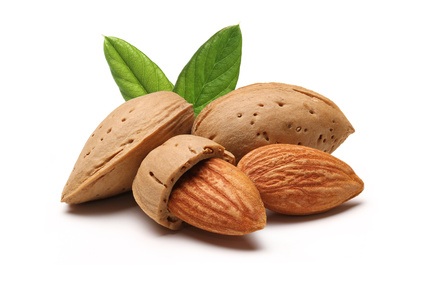
Packaged almonds are available year around, but now it's time for fresh almonds in Lebanon! We refer to almonds as nuts, but in fact, they are technically the seeds of the fruits of almond trees, which are actually cousins of peach, cherry and apricot trees! The fruits that almonds tree bear have pits or seeds, which, at the 1st stage of maturation, are gelatinous and milky but during this time of year, they become solid white, fully formed, fresh and crunchy! Almonds have been part of the human diet from immemorial times and their intake increase in Lebanon, especially during summery days!

Almonds contain a high percentage of proteins (13.3%) bearing in mind that this is a vegetable product while meat and fish possess between 15 and 20 g for each 100 g. They also contain fat for more than half of almonds weight is formed of predominantly monounsaturated and polyunsaturated fatty acids.
Almonds are relatively rich in vitamin B 1, vitamin B 6 and above all vitamin E as well as almonds are among the richest plant based foods in calcium and phosphorus with significant amounts of magnesium, potassium and iron.

Almonds, freshly picked from the tree and shelled, can be eaten as they are. They are more digestible that dried almonds and I usually use my teeth to open them, but using a nut cracker is definitely safer. As for dried almonds, the moisture content would be reduced and thus they become hard. They can be eaten raw but when very well chewed, or lightly toasted. They can be easier to chew and digest is soaked overnight. The next morning they will have become tender and after removing the skin that covers them, they give the sensation of having been freshly picked from the tree, yet we all know, deep down inside, that it's not the same fresh taste!


During afternoons or night gatherings in Lebanon, most people enjoy cracking almond fruits, along with sipping beer. However, keep in mind that almonds contain 589 calories in 100 grams and therefore you can get around 200 calories in just 1/4 cup!
So think about it! With just 1 beer = 150 calories, and just 1/2 a cup of almonds = 400 calories, you'll end up with - believe it or not - 550 calories worth of mindless munching!

Friday, March 18, 2011

Fruits and Veggies - Blended Creatively in your Diet


Modifying recipes without compromising taste does not actually require extra time or effort, you just need few ideas to spark your creativity especially when it comes to fruits and vegetables and incorporating them in your family’s dietary habits. Focus has been put more on the importance of including fruits and veggies as a part of everyone’s personal eating habits with variety, moderation and balance built in.

Now even though fruits and vegetables’ content varies enormously, in general, they are low in fat, low in sodium, they are high in fiber and water, they supply many vitamins such as vitamin A, vitamin C, folate, B 6, potassium, calcium, magnesium, selenium and they provide lots of phytochemicals and antioxidants .

So here are few ideas that might help you fit a rainbow in your and your children’s diets:

Kalyn's Kitchen
Grate your way – Add grated shredded or chopped vegetables such as zucchini, spinach, carrots and cabbage to mashed potatoes, meat dishes, rice, bulgur, wheat or lasagna.
Be fruit saucy – It’s time to experiment with fruits: make strawberry puree, banana, apples, peaches or pears and try them on grilled seafood or poultry, pancakes, toasts or even mix them with skimmed milk and crushed ice!
Toss in dried fruits – Try adding dried mangoes, papaya, raisins, prunes or apricots in whatever meal you are having whether you are baking homemade breads or cakes or in salads, sandwiches, rice, pasta, milk or pancakes.
Creative pizza – You’ll probably think I’ll suggest adding zucchini, broccoli, asparagus, carrots, bell pepper strips and tomatoes to your pizza, and yes, it’s true. But I also suggest you trying to experiment with fruits as well! Try adding pineapple slices, raisins, mango bits or even apple wedges. They will sure taste different – good different.
Mix fruits and veggies – Make a quick stir fry or boiled rice or pasta and add both fruits and vegetables to them! Start with small bits of raisins and experiment with one meal as a start.
Expand – Try new vegetables that you haven’t tried in your life. These could be local or not; either way give them a shot in a stew, salad, with rice or rice!
Lunch then fruit – Make a habit of packing one fruit for every member of the family to have after lunch.
Toss up a vegetable, fruits and legumes – Add colorful vegetables, legumes and fruits in your salad. Try adding rocket with strawberries, kiwi with romaine lettuce, beets with cabbage and chickpeas or carrots with spinach, lentils and raisins. Weird, yet creative and delicious combination!
Check this recipe from Italian food net
Make dips and spreads – spicy salsas can be made with bell peppers, tomatoes, onions, garlic and spices. For a new twist, add pineapples, peaches or mangoes! You can make baba ghanouj form eggplants with tomatoes and pomegranates seeds as a topping or chickpeas hummus with mint and strawberry bits! 
Stuff omelette time with veggies – In Lebanon, we have the habit of scrambling eggs with mint, tomatoes, cucumbers and probably onions on the side. This time try mixing your choice of onions, bell pepper, tomatoes, carrots or spinach with the eggs and baking them altogether.

Through these “out of the box” creative and colorful recipes, you, as a family, will probably learn how to enjoy fruits and vegetables for their vibrant colors, crunch and wonderful different flavors and in the same have enough fruits and vegetables fit in your diet. This way, you will sure increase your intake of healthful foods and stick to a hearty diet!


Source: American Dietetic Association - Complete food and Nutrition Guide, Roberta Larson Duyff

Saturday, March 5, 2011

Fattouch with Sumac - Most Delicious Salad in My World!

Photo courtesy of DKS and Greedy Gourmet blogs

Fattouch - a pretty famous salad we have here in Lebanon - is my favorite salad of all time! It's quite rich in various vitamins, minerals, fiber, antioxidants and water because of all the vegetables in it.

If you want the recipe, and I highly recommend giving it a try, you can check Dirty Kitchen Secrets's Beth's post on the Greedy Gourmet blog! The salad is pretty easy to prepare and contains the rainbow you need to include in your plate: lettuce, purslane, mint, tomatoes, cucumber, radishes, onions, pomegranate molasses, bread, lemon, olive oil, salt, pepper and Sumac. Some (like my Mom) even throw in pomegranate seeds, parsley, rocket and sometimes cabbage.

Now this salad would not have been the same without Sumac!
Sumac is dried and ground from dark red-purple berries from the sumac bush but could be somewhat hard to find outside the Middle Eastern countries such as Lebanon, Syria, Turkey and Italy. It adds a very tarty astringent delicious taste to any dish whether it is rubbed on meats, potatoes, eggs, hummus, vegetables, in thyme to make our famous zaatar for the man'ouche, in pies (fatayer), in soups or in salads, you name it! It can be added in the cooking process or sprinkled at the end.
If it's not available, it is often replaced by lemon or vinegar, though it is not really as sour; nothing can actually compensate for the rich taste sumac gives!
It is quite rich in antioxidants such as tannins that show antibacterial and antiviral potential; aiding the body to fight diseases. It also contains vitamin C, magnesium, calcium and phosphorus!
Note that sumac should be bought from a store and not picked from roadsides because some of the bush's varieties could be poisonous. 

Wednesday, March 2, 2011

Fruit and Veggies' Month


During this National Nutrition Month of eating right with color, don't forget to include various fruit and vegetables more abundantly in your dietary habits.

Most fruits and vegetables are naturally low in sodium, low in fat, free from cholesterol, high in fiber, important sources of vitamin C, vitamin A, vitamin E, potassium and folate, increase your fullness factor and are an integral part in any healthy and or weight loss diet program.

Recommendations differ between one person and another, by age, height, weight, gender and physical activity.
However, in general, daily recommendations are:
>> 2-3 servings of fruit per day
>> 3-4 servings of vegetables per day

 (but what counts as serving?? This will follow next week)

& 30 mL of water per kilogram of your weight! Water is essential; especially when you gradually start to increase your fiber intake.


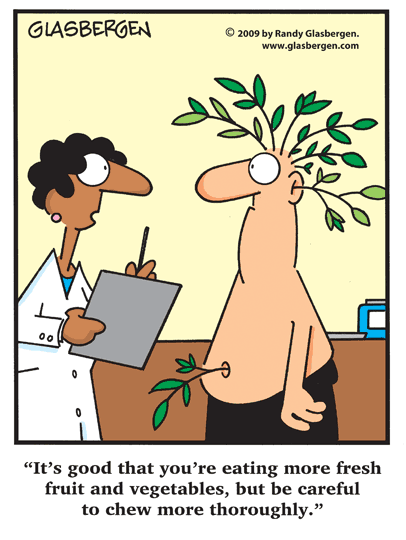
For many more cartoons, please visit Randy's site @ www.glasbergen.com.

Tuesday, March 1, 2011

Rainbow Plates this March!


March is considered to be the annual month of Nutrition with this year’s theme being “Eat Right with Color”. A rainbow of fruits and vegetables creates a palette of nutrients, vitamins, minerals, antioxidants and phytochemicals on your plate, each with a different bundle of healthful benefits.
It is important to know that variety within each food group is essential because each offers unique nutritional benefits and supply different nutrients.
Green produce indicates antioxidant potential and may help promote healthy vision and reduce cancer risks. Fruits and vegetables that are green are rich in phyto-nutrients and antioxidants that
Fruits include avocado, green apples, green grapes, green pears, kiwifruit and limes whereas vegetables include artichoke, asparagus, zucchini, dark green leafy vegetables, spinach, mloukhiye, green peppers, broccoli, parsley, rocket, peas, okra, cabbage, mint and the list goes on! This is the most abundant variety we have in Lebanon from which we can benefit a lot when making our famous Fattouch salad!
Orange and deep yellow fruits and vegetables contain nutrients that promote healthy vision, healthy heart, better immunity and reduce the risk of some cancers.
Fruits include oranges, mango, cantaloupe, tangerines, pineapple, apricots, peach, papaya and yellow figs while orange vegetables include carrots, yellow pepper, pumpkins, sweet corn and sweet potatoes.
The rich orange color offers antioxidants such as carotenoids, bioflavonoids and the antioxidant vitamin C. The deeper the yellow/orange color, the more carotenoids these foods have!
Purple and blue options may have antioxidant and anti-aging benefits and may help with memory, urinary tract health, recurring infections and reduced cancer risks. Fruits that are purply are blackberries, blueberries, plums, raisin and purple figs while vegetables are eggplants and purple cabbage. These contain phenolic antioxidants and anthocyanins, which is responsible for the dark purple color.
Red and pink color indicate produce that may help maintain a healthy heart, vision, immunity and may reduce cancer risks. This color group delivers lycopene, a powerful carotenoid, as well as anthocyanin. Reddish fruits include strawberries, pomegranate, cranberries, red or pink grapes and watermelon and the vegetables can include beets, red onions, red bell pepper and tomatoes
Last but not least, the last member of the palette is white, tan and brown foods that contain nutrients promoting heart health and reduce cancer risks. These include fruits such as banana, pears, dates and white peaches in addition to vegetables such as cauliflower, mushroom, onions, turnips, potatoes and garlic. Selenium in mushrooms and allicin in garlic and onion are of great antioxidant potential.
In whatever meal you are having, always include a bowl of colorful mixed vegetables followed by a snack of delicious fruits!
For more information, check Eat right.org

Kalyn's Kitchen Creative Salad Recipes

Recipe for napa cabbage, red cabbage and peanuts from Kalyn's Kitchen
Since it's fruit and vegetables' month with eating with colors and all, one smart and creative blog I love to get inspired from is Kalyn's Kitchen, especially her exhaustive salad selection.
In her blog, salads are divided either with:
  • Tomatoes and cucumbers
  • Fruits and vegetables
  • Greens (arugula, spinach, cabbage, lettuce, etc.)
  • Carbs source (pasta, grains, beans, rice, etc.)
  • Or with a protein source (cheese, eggs, different types of meats)
Now if you select one one the above mentioned types, hundreds of salad recipes appear, and that's the best part! I mean how creative can you really be?
Just check the Salads with Tomatoes and Cucumbers for instance and get inspired.

As for my personal favorite, I love the selection of "salads with vegetables and fruits" because salads are divided by fruit/vegetable type: whether with radishes, asparagus, avocado, snow peas, carrots, celery and the list goes on!


Who said you can't have one different salad every day of the year?
So here are few delicious photos of few salad ideas from Kalyn's!


Wednesday, January 5, 2011

BANANAAA!


Well, I'm a huge movies fan. I came across this last month after I saw the lovely Despicable me movie. However, I find that this short movie fits perfectly in my blog. Just let it buffer and check it out! I personally think we should all act this way around fruits: take them as snacks to work, school, university, wherever. They are trans/saturated fat/cholesterol/refined sugar- free and this way you will increase your intake of various minerals, vitamins and fibers!
Just so that you know, bananas contain vitamin B6, vitamin C, potassium, magnesium and manganese in addition to lots of fiber! Check these Top 10 ways to enjoy Bananas!

BANANAAAA... papple?

(Oh and "papples" have other kinds of minerals and vitamins, so variation of fruits in your diet will give you new and different health benefits every time!)

Five Ridiculously Good Foods!

Avocado 
These smooth, buttery fruits are a great source of not only "good" fats such as mono-unsaturated fats but other key nutrients as well. One Ohio State University study found that when avocado was added to salads and salsa, it helped increase the absorption of specific carotenoids, plant compounds linked to lower risk of heart disease and macular degeneration, a leading cause of blindness. “Avocados are packed with heart-protective compounds, such as soluble fiber, vitamin E, folate, and potassium,” says Elizabeth Somer, RD, author of 10 Habits That Mess Up a Woman's Diet.
However, they are a bit high in calories. To avoid weight gain, use avocado in place of another high-fat food or condiment, such as cheese or mayo and always keep in mind that, after all, it's a fat.  


Oatmeal 
Fiber-rich oats are even healthier than the FDA thought when it first stamped them with a heart disease–reducing seal 10 years ago. According to new research, they can also cut your risk of type 2 diabetes. When Finnish researchers tracked 4,316 men and women over the course of 10 years, they found that people who ate the highest percentage of cereal fiber were 61% less likely to develop type 2 diabetes.

To reap the benefits, eat 1/2 cup daily—preferably unsweetened. For a versatile breakfast, top with different combinations of fruit, yogurt, and nuts. You can also use oats to coat fish or chicken or add texture to meatballs. Check my more detailed article about Oats!


Salmon
Salmon is a rich source of vitamin D and one of the best sources of omega 3s fatty acids. These fats have a wide range of impressive health benefits: form preventing hear diseases to smoothing your skin, decreasing inflammation, aiding weight loss, boosting your mood and minimizing the effects of arthritis.
Moreover, omega 3 aids in decreasing memory loss and slows the rate of digestion, thus, making you feel fuller for longer! Watch out to get plenty of fish - at least 2 to 3 servings per week, this way your body will take its needs of proteins and omega 3 altogether! 


Apples
One of the healthiest fruits you should be eating or you probably already are, hence the saying: "An apple a day keeps the doctor away!" Fortunately, it's abundant in Lebanon. The Iowa Women's Health Study, which has been investigating women for nearly 20 years, names apples as one of only 3 foods (along with pears and red wine) that are most effective at reducing the riskof death from heart disease among postmenopausal women. Other massive studies have found the fruit to lower the risk of lung cancer and type 2 diabetes, even help women lose weight! Apples are rich in fibers, vitamins, minerals and water, so it's actually a win-win situation when you have yourself one of these!

However, keep in mind that one thing can make an apple unhealthy is when it's mixed with caramel, sugar, flour, butter or/& stuffed within a pie or on a tarte! Instead, have a fresh crunchy apple as a dessert or even added to salads!


Dark Chocolate
Yes, yes, dark chocolate! It is filled with flavonoid anti-oxidants that help keep platelets from sticking together, consequently clogging your arteries. It also can help decrease the risk of cancers with its anti-oxidative abilities. And there's more to add! According to a study from Denmark, it may also help you lose weight by keeping you fuller for longer! Researchers gave 16 participants 100 grams of either dark or milk chocolate and 2 hours later offered them pizza. Those who consumed dark chocolate ate 15 % fewer calories that those who had milk chocolate!
So not to make a huge fuss about it, have a small portion of 70 % cocoa or more from time to time! Desserts should not be banned if you are trying to watch your diet, just know what and how much to have!

Wait for more! Brought to you with amendment from Prevention website!

Monday, November 1, 2010

Fun Food Facts

  • Ice cream is a Chinese Food! When Marco Polo returned from China, he brought along a recipe of a Chinese dessert called “milk ice” which was made from rice and milk!
  • Coconut water (found inside coconuts not coconut milk) can be used in emergencies as a substitute for blood plasma because it’s sterile and has an ideal pH!
  • In the pre-Columbian era, cocoa beans were used as a currency!à100 beans were equal to one whole turkey.
  • The most expensive coffee in the world comes from Civet poop..and Civets are cat sized mammals! These cats only ingest fine ripe berries and excrete them partially digested. 1 pound sells between 120 and 600 $!
  • Cherries are part of the rose family.
  • The word “salary” comes from Salt! In the Roman times, salt was used as salary because it was very rare.
  • Cold temperature may affect your appetite and increase it.
  • It’s a tradition to serve slices of lemon with fish because people used to believe that the acid in the lemon would dissolve any bone swallowed by accident.
  • The earliest soup made dates back to 6000 BC and was made from hippopotamus!
  • Fortune cookies are not Chinese; they are invented by a LA noodle maker.
  • The color of a chili is not an indication of its spiciness. It’s actually the size >> the smaller the pepper, the hotter it is.
  • Lemons contain more sugar and less Vitamin C than strawberries.
  • American Airlines saved $40,000 in 1987 by eliminating one olive from each salad in first class.
  • You burn more calories sleeping than watching TV.
  • Consuming chocolate was considered to be a sin during the 16th and 17th century.
  • Chocolate contains the same chemical phenyl ethylamine that your brain produces when you fall in love.
  • Seaweed could be used to thicken ice cream.
  • Orange does not rhyme with any word.
  • Without food colorings, Coke’s original color is simply green.
  • While licking a stamp, you consume 1/10 calories.
  • The top 4 ice cream flavors in Japan are vanilla, strawberry, chocolate and.. green tea!
  • Peanuts are one of the ingredients of dynamite.
  • French fries are originally from Belgium and not France.
  • The only food that doesn’t spoil is honey!