Showing posts with label Desserts. Show all posts

Monday, October 14, 2013

Creamy Chocolate Mousse Pie for our Happy 3-Year Blog-aversay!


It's our blog's 3rd year anniversary today! And what better way than to celebrate this day with some luscious creamy chocolate mousse!

I'm a huge advocate of real whole food - the less processed crap, the better. In the same time, I try to avoid meats and dairy as much as I can, more like what a flexitarian would do. So you see, it's kind of hard not to fall in love with plant-powered cook books. Therefore, I recently got a new book by Dreena Burton called "Let them eat Vegan!". Now you might say how creative one can be with recipes based on plant food sources only, something my colleagues consistently nag about, but long story short, it is one of the most delicious cookbooks I have ever added to my library! Dreena has some surprisingly good gluten-free /meat-free/ dairy-free/ refined sugar-free deliciousness in this cook book and boy can't I wait to try her recipes one after the other! You don't really have to be a 100% vegan to actually enjoy the her recipes; you just have to have a sense of adventure, be open to uncommon food combinations and to let go of all the meats, dairy and refined sugar one meal at a time.

Anyhoo, given that I am a chocolate fan, I picked the Raw Chocolate Dream Mousse Pie (page 245) to celebrate my 3rd year blog-aversay. It was good a choice. A really good one.

Ingredients

For the nutty crunchy crust
  • Almonds, raw - 1 cup
  • Walnuts, raw - 3/4 cup
  • Dates, pitted - 3/4 cup
  • Cocoa powder, raw and unsweetened - 2 tbsp
  • Salt - 1/4 tsp
  • Nutmeg, freshly ground - 1/4 tsp
  • Vanilla, pure extract - 1/2 tsp

For the smooth yum creamy filling
  • Avocados, ripe - 1 cup (equivalent to 1.5-2 medium avocados, they're in season now so go for it)
  • Cashew, raw and soaked one day ahead - 1/2 cup
  • Nut/ Rice milk - 1/2 cup
  • Dates, pitted - 1/2 cup
  • Honey/agave syrup - 1/4 cup
  • Cocoa powder, raw and unsweetened - 1/3 cup
  • Vanilla, pure extract - 1 tsp
  • Salt - 1/8 tsp

Method of preparation


For the crust, it all depends on your food processor. My mom's processor is huge and heavy duty so I pulsed all the ingredients together. However, if your food processor is a small cuty pie, start with pulsing the almonds into a fine crumbly texture and then add the rest of the ingredients. Keep on pulsing till you get a sticky mixture. You might need to stop once in a while to scrape the ingredients down and if the mixture does not hold together when pressed with your fingers, you might want to add in a date or two.
After getting the crumbly texture you desire, you can transfer the crust to a pie plate or small cups (you know, for portion control and because I'm messy when cutting pie). You gotta press them lightly with your fingers to get them to stick together, exactly like what you'd do to any kind of crust. Don't worry, they'll stick together just fine!


For the creamy mousse, place all the ingredients in the food processor and puree on a medium-high speed until you get a creamy texture. I had to stop, scrape down the puree and mix it up several times before I got the creamy texture I wanted.

After all was pulsed, I just poured the filling into my cups (or your pie plate) over the crusts. This recipe yielded 8 cups (servings) of creamy chocolate mousse pie, so I placed half in the fridge and half in the freezer for couple of hours, just to know which gave a tastier texture. My sister loved the fridge version while I adored the icy texture from the freezer, so turns out, both are just as good! I topped mine with pomegranates but you can add some fresh strawberries, kiwi, orange zest, cinnamon, cocoa powder, chili, mint, coconut flakes... whatever taste you crave for with chocolate!


So, it turned out to be a happy delicious creamy [of course chocolatey]
3-year Blog-aversary! 


Sunday, February 19, 2012

Chocolate Fondant

Last week was Valentine's day and I wanted to bake something new for once. Now to be honest, I am a huge fan of molten chocolate cake (aka fondant au chocolat) and I am definite that this dessert contains ample amounts of calories, saturated fats, sugar, you name it!
According to the Calories Lab, one molten chocolate with vanilla ice cream at Chili's restaurant is 1270 calories! That's approximately the entire caloric intake I can have per day! I have never actually ordered it, it's just too much of a burden to burn all this!
Therefore, I decided to make my own - at least I would know what raw ingredients went into it. As a first attempt, I did not modify the butter, I wanted mine exactly the same but I wanted to control what went into it (kind of a cleaner home-made version).

Now I had to look for a really good recipe, Lindt recipe it is!
This recipe actually serves 8, but my ramekins are considered bigger than usual, so it served me 4.


Molten Chocolate Ingredients
  • 260 grams of 70% dark chocolate (you can go for Lindt, Poulain, Hershey's, etc.) But make sure to get the extra dark one - even if you're not a fan of dark chocolate, it sure deserves it!
  • 70 grams of margarine or unsalted butter
  • 50 g of castor or powdered sugar
  • A pinch of salt
  • 3 eggs
  • 30 grams of plain flour

Method of preparation:
To be honest, I'm not a regular cook - so I really wanted a simple recipe. This Lindt recipe was it!
1. Preheat the oven to 200°C
2. Slightly butter the ramekins to prevent fondant from sticking
 
3. Use the bain marie (water bath) method to melt together the butter and the chocolate
4. In a mixing bowl, whisk together the eggs, sugar and salt thoroughly, until the yellow color looks pale
Exactly how they'll look when done!
5. Let someone help you on this one: fold in the chocolate & butter slowly into the pale yellow mixture - someone will be folding them together and the other will be mixing thoroughly
6. Sift in the flour and gently fold in until all ingredients are combined
7. Divide mixture into the ramekins and place in the preheated oven
8. Cook for 7-9 minutes. The cake with start to pull away slightly from the edge and feel dry on top but remain molten in the center - yum!

Serving this deliciousness!

Allow the hot ramekins to to sit just for 30 seconds, place a plate on top of it and then turn out. I wasn't expecting that it will come perfect, but to my surprise, it did!

I served the molten chocolate with London Dairy Lite vanilla ice cream which is 79 calories per serving. And it was delicious! I must admit, this is not the healthiest recipe for chocolate fondant! This recipe, that gave me 4 ramekins, yielded 600 calories per one molten chocolate! Now the recipe was intended to make 8 servings, according to the Lindt website, so sharing it was a must. I know, Joey doesn't share food, but my ramekins were huge giving 679 calories (fondant + ice cream) to it had to be shared to give you 340 calories. Always, always, moderation is the key.


*Now after having half of this, make sure not have this often! Bon appetite!

Sunday, September 18, 2011

Barcelona is Del-iiii-cious!

Barcelona is an amazing historical city! It is pretty easy to move around it even if you haven't been there before thanks to their touristic buses! There's a lot to see here -from monuments, beaches, parks, ancient churches and all the beloved work of Antoni Gaudi, you cant' but fall in love with the city! 

Better yet, the food is not to be missed! Barcelona is famous for many: Tapas, Paella, Churros, Sangria, and the list goes on and on so I couldn't but have "me" some, right?

Tapas Tapas, yum yum!
Tapas are small snacks given when ordering a drink in a bar, in our case it was given with wine Sangria (as opposed to champagne Sangria). As you can see in the photo, any kind of food -seriously- can be served on a delicious baguette as a form of a snack or appetizer served either with or before your meal/drink! In some restaurants, they are offered for free (so we've heard) but in the resto we visited, we ordered them - you just can't visit Spain without having yourself some good Tapas! With any round of drinks, tapas are usually presented, even if it's just a small tapa. They can be served both hot or cold, depending on the type of food served on your tapa.
My 2 favorites were Tortilla de patatas (potato omellete) made from potatoes and eggs served on a white baguette with onions, spinach and cheese as well as the Gambas al ajillo (shrimps) served cold with some creamy garlic bed, yum!

Seafood paella, all the seafood you can have
Paella is another seriously good meal you have to taste when in Spain, after all it's the Spanish daily dish! There are three widely known types of paella: Valencian paella (paella Valenciana), seafood paella (paella de marisco) and mixed paella (paella mixta), along with other types of course.
Valencian paella consists of white rice, green veggies, meat (could be chicken, duck or rabbit) with snails and beans, while seafood paella has no veggies, beans, meats, snails, but instead some an exquisite bouquet of seafood! As for the paella mixta,it's actually free styler with a combination of meats, veggies, seafood and beans! 
What makes the rice yellowish is the addition of saffron to the dish.Some olive oil could go into this dish as well so yes, peeps, it is super delicious!

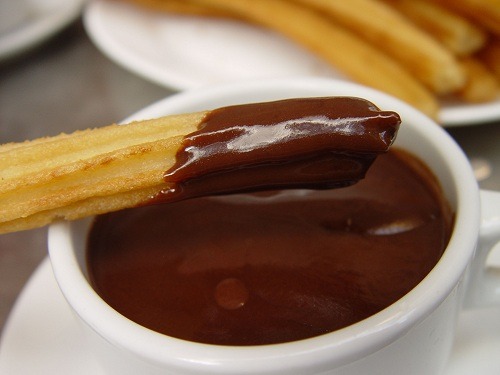
Churros with molten chocolate
Churros are the Spanish desserts, their version of doughnuts! These are delicious, although I would have to say: the fact that they are deep fried pastries = unhealthy refined sugars! You can even dip them in hot molten chocolate, like how I tasted mine! We bought ours while walking back from the annual Fiesta de Gracia, but they can also be dipped/eaten on the side with cafe latte! So when in Spain, have a taste of their famous Churros, but in moderation, of course!

Zesty Sangria with freshly cut fruit
Last but least, we had some Sangria!
Sangria is a wine punch served everywhere you go in Spain! There are many types of Sangria and lots of ingredients can go in this famous drink: white wine, ginger ale, 7 up, amaretto, etc. But it is usually made of:
  • Red wine, although there are some Sangria's made from champagne - the wine version tastes much better!
  • A small amount of brandy
  • Chopped fruit, like oranges, lemons, apples, cherries, strawberries, grapes, pineapple or - the best part - whatever fresh fruit you feel like!
  • With some orange juice or honey, sugar or syrup as a sweetener
Fruitful, colorful Mercat
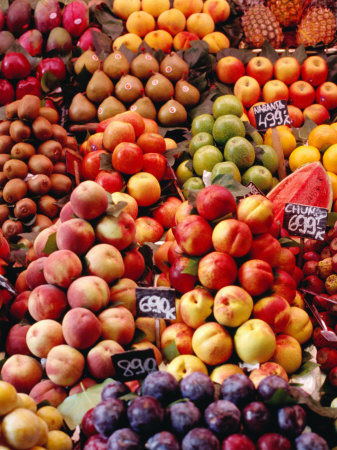
Either way, when in Spain, have yourself some good time, the beach is amazing, the churches are majestic, the monuments are historical and Gaudi's work is not-to-be missed! Bicycle around the city, enjoy some seriously Del-iii-cious food and make sure to pass by the colorful public market in Barcelona: La Boqueria Mercat!

Tuesday, August 30, 2011

Sugar, Not So Sweet Afterall!

Sugar is everywhere we look! We, by nature, like comfort foods, sweets and sugar! In fact, sweet is the first taste humans prefer from birth, so it's no surprise that we tend to gulp sweetened foods and beverages! 
But why!
Humans have this preference for sugar largely because carbohydrates stimulate the release of the feel-good brain chemical serotonin which affects brain cells related to mood, sexual function, sleep, memory and learning, temperature regulation, and appetite. Thus carbs and sweets affect us more than we know it! 

Some examples of when sugar can lurk around in foods and drinks are coffee, cocktails, milkshakes, regular soft drinks, iced tea, fruit juices, sports drinks, energy drinks, salad dressings, cake mixes, ice cream, chocolate bars, jelly, cookie, pastries, sweets, knefe, croissants, cornflakes, chocolate spreads! And even though sweetened beverages are just liquids, these drinks provide you with empty calories more than beneficial nutrients and can pass by unnoticed especially in hot, humid weather, gulping one drink after another!

But sugar can be tricky, so how to detect it?
Spotting added sugar on the food label requires a bit of detective work. Food and beverage manufacturers must list the product's total amount of sugar per serving on the nutrition facts label. This is why you will need to scan the ingredients list of a food or beverage to find that added sugar! Note that all ingredients are listed in descending order by weight, yup! Therefore the relative position of sugar in the ingredient list is crucial and can give you an idea of whether the food contains a lot of sugar or just a little as compared to the other ingredients.
Added sugars go by many different names, yet they are all a source of extra calories! So here's a small list of what sugar can go by:


Moreover, if the label says "no added sugars", it should not contain any of the above mentioned sugars, although the food could contain naturally occurring sugars (such as lactose in milk for example). However, note that although these foods don't contain high sugar ingredients and no sugar was added during processing/packaging, foods without added sugar may still be high in carbs!
So in order to know how much exactly is a gram of sugar: One teaspoon of granulated sugar equals 4 grams of sugar. To put it another way, 16 grams of sugar in a product is equal to about 4 teaspoons of granulated sugar, so do the math!
Remember, your body doesn't care what the label says, it's all just "sugar"! Read the ingredients and watch out for drinks and foods that are high in sugar. Having a lot of sugar whether from food or sweetened beverages can lead to gaining extra weight, even in active people!

References:

Sunday, June 26, 2011

Your Guide to Smart Ice cream-ing


Ice cream isn't the healthiest treat, but given that it is everywhere during summer, you might want to know how to deal with ice cream bombarding your path! With the summery hot season finally here, you must be overwhelmed by the variety of icy desserts in the market. There are many terms like “low fat”, “diet”, “fat free”, “sugar free”, which could in fact confuse you.

Ice cream is typically made with heavy cream and saturated fat (the kind of fat you want to avoid and that increases your blood cholesterol and your risk of diabetes type 2 and CVD - to name a few of course) and yes you can be shocked to find that some brands can go up to 15 g of saturated fat, 400 calories in only half a cup of ice cream! Now that’s too much for an ice cream snack! So let’s say you went to McDonald’s and had an innocent hot fudge sundae – well you’re in for 340 calories and 9 grams of saturated fat! 

Why all those Calories and Fat?!
  • Extra syrups, sauces, nuts, cookies and chocolate chips - A 330 mL cup McFlurry ice cream made with vanilla base (370 cals) + an Oreo mix (200 cals) + hot fudge (150 cals) = 720 cals without even adding nuts, cream, chocolate chips or other extras. Even an innocent spoon of whipped cream can add 50 calories to your treat. Keep in mind that calories are the least of your problems, don't forget all sugars, preservatives, colorants and chemicals added to those extras! So if you would like to add an extra taste to your ice cream, go for freshly cut up fruits such as melons or strawberries as well as some chopped raw buts, but whatever you do, don’t go crazy with your mix-ins!
  • Coating - The rich chocolate coating that adds texture to your ice cream stick is mostly made of fat. For example, a Haagen Dazs bar or Magnum can load you up with 21 g of fat, without nuts!
  • Know your Cone
A cake cone, usually served with soft ice cream, has 35 cals
A sugar cone, usually served with scooped ice cream, has 60 cals
A waffle cone can go up to 100 to 150 calories alone
A cone (60) dipped with chocolate (120) = 180 calories without having any ice cream served yet!

Well, best choice, ditch the cone and go naked with your ice cream!
Not really:p

The key is to:

Know that by law, the word "light" ice cream must contain at least 50% less fat or 33% fewer calories than regular full fat/original versions. This does not mean that ice creams with “light” on their labels are healthy. There are light versions of ice cream that still contain 200 cals and 7 grams of saturated fat in just ½ cup of this light ice cream so don’t be fooled and check your label! Just keep in mind that when any product is low fat/fat free, it's super processed. The kind of food you would want to have once in a blue moon!

However, it's good to know the lingo!

If you want to make sure that you are having ice cream with low fat content, read “low/reduced fat” on the label. This way you will get 3 g of fat per serving for sure! You also want to stick to the serving indicated on the label because the 3 g of fat and the 120 calories that you just read, are only in 1 serving of ice cream = ½ cup (1 cup = 240 mL) of ice cream.

You can also go for sorbet, which is a frozen fruit dessert made with fruit puree and sugar. It is fat free; usually, also a good source of vitamin C. Sorbet comes in a variety of flavors like lemon, orange, mango and strawberries. However, even though it is fat free, this doesn’t mean that it’s sugar free! Keep in mind that sherbet is different. It has fruit juice indeed but often contains milk, egg white or gelatin to thicken and enrich it. It is actually the creamy version of sorbet.

Popsicles can be regular, fat free to sugar free. Some contain dairy but they are usually made with sugar and ice. It is, however, important to read the nutrition facts label and ingredient list to make sure that they are made from real fruit juice and to ensure that the serving contains less than 120 cals. For a healthier popsicle version, you can make home made popsicles by freezing real fruit juice/fruit puree or sugar free lemonade. Healthy, easy to prepare, icy and a yum treat for everyone in the family!

Look for the label slow-churned, double-churned or cold-churned”. This refers to a process that reduces fat and calories while retaining the creamy texture of full fat varieties of ice cream. This process distributed the milk fat evenly throughout the product. So 1/2 cup has about 100 calories. Now I’ve looked for this "slow-churned" ice cream in Lebanon, but we still don’t have any so let's keep our hopes high!

While ice cream does contain calcium, it’s a bit ridiculous to recommend it for its calcium content, no? You can get your calcium from broccoli, dairy and dark green vegetables. I mean ice cream contains half the amount of calcium in an equivalent serving of milk so no point there!

I'm no fan of dairy nor of ice creams, but I know lots can't give up this treat during the summer. SO as a rule of thumb: Choose ice cream brands/products that contain per serving:
>> less than or equal to 120 calories
>> a maximum of 4 g of fat
>> 3 g of saturated and trans fats
>> 10 mg of cholesterol
>> 15 g sugar (equivalent to 3 teaspoons of table sugar!)

And the serving is ½ a cup so keep your portion sizes small so don't buy buckets of ice cream but rather, buy individual servings and read your nutrition facts label well!

For many more cartoons, please visit Randy's site @ www.glasbergen.com.

Sunday, March 13, 2011

St. Patrick's Day Green Cookies!

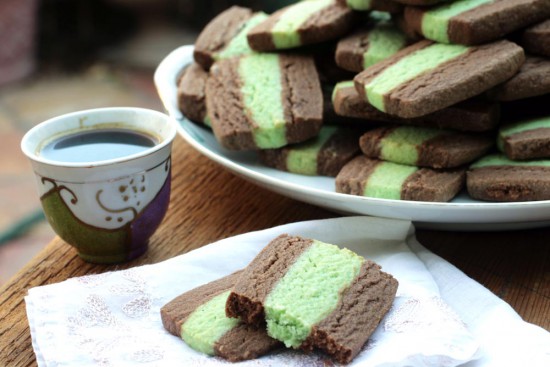
Courtesy of Taste of Beirut

It's pretty known that on March 17th,  St. Paddy's Day, you either Go Green or Go Home!

So in order to celebrate this day in a delicious crispy way, I think it's definitely fine to have something sweet. This is why I found this chocolate-minty cookies recipe which I highly recommend to check here, especially if you love the mixture crispy-chocolate sweet-refreshing minty taste!

However, you know I can't but add: A little chocolate is good for the heart, so have these cookies in moderation and try to avoid beer binge drinking on this lovely day!

Friday, February 25, 2011

Healthy Kids Snacks Ad in Beirut - Gone Wrong!

So I received an e-mail couple of days ago entitled: "*Company's Name* Beirut - Healthy Kids Snack". Intriguing, I said. Finally, some promotion for healthy snacks in my country for once!
Boy was I wrong! Unfortunately, all I got was what you see below.


  • So in their Ad, which is not shown above since I had to crop it out - their phone number was all over the poster, they said "Toss out the junk food and start making snack time fun again!"
    >> I'm sorry to say but what they are promoting FOR KIDS is what everyone calls junk food: Food high in refined carbohydrates, low in fiber, prepared with ghee/butter, high in sugar, high in trans and saturated fats!
  • They continued to market "When kids need that little something to get them through the day, this the collection to turn to"
    >> Wow! I mean whatever happened to the "common" ways of fueling your body with a bowl of skimmed milk, plain cornflakes and some fresh/dried fruits?
  • Now "All our products are freshly baked without preservatives and made with the best ingredients" Yummy! Best ingredients! I love those... but what are they again? Probably the best sugar or butter in the world? Yum-Yum!
  • Well from the huge variety given, you can only see one "your healthy cookies" description as a caption for the oat cookies -probably because these are the only ones with some fibers! So maybe- maybeee, these might be healthy, depending on how they are prepared.
Either way, I suggest that home-made cookies, plain cakes, cheesecakes, brownies and muffins should be taken in moderation for both adults and kids.

So next time it's SNACK TIME and "kids need that little something to get them through the day" 
>> Go for a cup of strawberries, a banana, a fruit salad, dried fruits, freshly squeezed juices, vegetable sticks, whole wheat toast with home made marmalade, multi-cereal kaak with a cup of skimmed milk, a handful mix of unsalted nuts, a cup of skimmed milk with plain cornflakes, a cup of plain skimmed yogurt with some mint and cucumbers, freshly made fruit smoothies, a cup of hot chocolate made with unsweetened cocoa! You can also mix "moderation with healthy" - a cup of milk with cookies, fruit dipped in dark chocolate or whole wheat pancakes with honey/marmalade/chocolate paste and fruit slices.

This way you will incorporate healthy eating in your kids' lifestyle, establish a healthy and clear idea of what healthy and unhealthy is, decrease any risk of childhood obesity and earlier onset of diseases, decrease dental caries risk, make sure they are getting enough vitamins, minerals, antioxidants, phytochemicals and fibers and above all "making their snack time fun"!

Sunday, February 6, 2011

Smart 3-Minute Brownies

I bumped into this "smart" 3 minute brownies on loled.net, so I thought of giving it a try - given that it will only take few minutes, so how hard can it be!
Turns out, it was easy, quick and d-e-licious!!

Ingredients
  • 4 tbsp all purpose flour
  • 5 tbsp sugar
  • 2 tbsp unsweetened cocoa
  • 1 egg
  • 3 tbsp powdered milk (go with low fat)
  • 3 tbsp oil 
  • Chopped walnuts (optional)
  • 3/4 cup of water (1 cup=240 mL)
  • 1 mug
Preparation:
  • Mix flour, sugar and cocoa together in the mug
  • Mix in 1 egg thoroughly
  • Mix the powdered milk with water separately then pour it in the mug (or you can mix the powdered milk with the flour, sugar and cocoa then add water - your call)
  • Pour oil and mix well
  • Add chopped nuts
  • Put in the microwave for 3 minutes on maximum power
  • Watch it rise and settle in the mug, then spoon your warm brownies out!
You don't have to be an experience cook to make it happen - deliciously if I might add. Best thing of all is portion-size control! No brownies left overs to stuff my face with later on. I just baked one mug of brownies and shared it with my mom and sister. It could actually be a smart idea if you have people over where each one will get to have his own small brownie. Just go with fancier microwaveable cups - not a home mug like mine.

Sunday, November 7, 2010

Oats - Newest Trend in Town?


Traditionally used in some countries in Central Europe for nervousness or insomnia as a sleeping mattress, it might not be a total coincidence!

Oats are among the most nutrient rich grains for they have more fat, more proteins and more carbohydrates compared to wheat. They are very rich in phosphorus, iron, folate, magnesium and zinc.
Oats is considered to be in the category of carbohydrates such as breads, pasta, legumes, rice, wheat, etc. Now due to its particular structure, these complex carbohydrates in this grain are easily assimilated and absorbed slowly. For this reason, oats provide energy for several hours. Eating oats as whole grains is perfect. They contain soluble and insoluble fibers that enable this grain to:
- Add bulk in your diet so that you would feel fuller for longer
- Retain water, making oats a lubricant and softener of stools in the lower digestive
- Speed the passage of foods thus reducing the transient time of foods traveling in your intestines
- Help in reducing cholesterol levels since it absorbs and removes bile acids that are used to manufacture cholesterol. Yes, but know that they are not your medicine, so don’t fall for such super claims and expect your cholesterol to suddenly drop down when you have some oats. They are of benefit as much as you change your lifestyle to a healthy one and combine it with exercise.

Now what about oat proteins?
Proteins in oats consist of 16.9% and they are easily digested. They contain essential amino acids but not all of them in optimal portions. They are rich in an amino acid called methionine but poor in others called lysine and threonine. Now, don’t strain your head with these names, just know that legumes like chickpeas, lentils or beans are, on the other hand, are rich in methionine and poor in lysine and threonine. So eating oats with legumes make them such a complete meal!

Oats also contain fat in small amounts; mainly unsaturated ones such as omega 6. They also contain lecithin and avenasterol, a vegetable substance similar to cholesterol, that both interestingly interfere with the absorption of cholesterol and thus help in reducing its blood levels.

Last but not least, not that I am considering oats as therapy, but yes, oats can help the digestive tract, constipation and the cholesterol levels like we already mentioned. It also aids the nervous system to stabilize especially that it contains small amounts of non-toxic alkaloid avenine that has mild sedative effects on the nervous system. Moreover, oats are well tolerated by diabetic especially if they are eaten as whole flakes including the bran in moderate amounts.
Oats are becoming more popular in Lebanon especially as breakfast ingredient in “muesli” that comes in packs such as cornflakes containing oats in addition to almonds, other grains, raisins and hazelnuts. They can also be part of granola bars or they can be boiled and used instead of rice or wheat.
Either way, oats are new for us, they are getting trendier and the best thing is that they are as nutritious as can be!