Showing posts with label Nutrilicious. Show all posts

Thursday, October 13, 2011

Happy Blog-aversary to US!

Paty M's Nutrition World is celebrating its ONE year blog-aversary today!!

With 158 blog posts and 38,000 views, we have tackled various topics in this nutrition world and started to focus on more Lebanese health-related concerns later this past year but hey, there's a lot to talk about in my world, so stay tuned for a far more interesting year (and topics) to come!


Better yet, due to my blog, I got to meet many new, fun and interesting people in the Lebanese blogosphere, to which I am very thankful! So not only did my blog give me more space to "babble" more about my passion: food, health and nutrition, but it also made it possible to meet wonderful people! So thank you all, and Happy Blog-aversary!
  
*Illustration by the left hand, red nose illustrator : Rodrigue Harb

Tuesday, February 8, 2011

Colorful Recipes to Try!


An untraditional cucumber salad recipe that makes you want to have one right now? Well I guess it's all because of the illustration and colors, no? This is thanks to They Draw and Cook blog which I found amazing by the way.
Nate and Salli realized how fun it is to draw food so they started thinking outside the box: illustrating a colorful recipe book for friends, family, clients and artists from all over the world. The project morphed into this lovely blog.
>> So if you are an illustrator wishing to contribute in their book or you're a foodie looking for an artistic and delicious recipe, this is your blog!

Recipe and illustration above by Sue Tincher Maib (from Alarm Cat Studio)

Thursday, January 20, 2011

Eating Right When Dining Out


Everybody loves eating out and there's not reason why you shouldn't - except the fact that most restaurant-foods are high in fat, salt, sugar or calories in general!
New health care legislation in the States will require (some time during this 2011) that big restaurant chains indicate how many calories each of their food items contains; however, it's not always possible to get the information you want.  

- Some fats are good for you while other are not - Monounsaturated fats, such as those found in avocados, nuts, olives and olive oils, can help lower your LDL and maintain your HDL and polyunsaturated fats in vegetable oils, fish, mixed nuts, edamame and seeds could help decrease your cholesterol in general. So ordering grilled seafood when you go out will offer you taste, heart healthy benefits and omega 3 fatty acids. Meanwhile, the fats you should be aware of are trans fats, saturated fats and cholesterol. These are found in greasy cheeses, palm oil, coconut oil, shortenings, butter, creamy sauces, stuffed with cheese, meats and whole dairy products. Fried foods  are the main concern here. Foods that are labeled as "golden crispy" to induce your mouthwatering appetite are fried with trans/saturated shortenings, ghee (clarified butter) or lard (pork fat) that will in return make your blood cholesterol spike!

- To make foods more palatable, salt (sodium) is the key. Restaurant foods can be very high in sodium. Now whether or not you are medically required to decrease your sodium intake because of high blood pressure for instance, research has shown that a low sodium diet can benefit any healthy youngster. However, the point here is to know how to spot high sodium foods. Foods that are pickled, creole sauce, smoked, marinated, teriyaki sauce, soy sauce, cocktail sauce, bacon, MSG (monosodium glutamate) added to meats or Chinese foods to give them their umami taste and canned foods are all high in salt. Therefore, don't add any table salt, ask your food to be done without extra salts and learn how to spot salty ones.

- Most restaurants label foods with extra symbols on the side: All you have to do is look for "Heart-healthy" or "Light" symbols: these are usually a red heart, a green butterfly, etc. These offer low fat, low salt and low cholesterol items making it easier for you to know which foods are the best to choose from. Watch out not to mistaken them with flags symbolizing most popular food choices.

- Don't be afraid to ask how the food is prepared and what ingredients are used. Tell your server that you are staying away from high caloric foods, high fatty/salty ones and ask for special requests for a lighter version of that meal. You can ask the chef to prepare foods using less oil, no butter, less sugar, less syrups, less salt, you name it! It's actually easy to be done so go for it next time you're eating out. You can also ask for healthier substitutions such as:
  • baked potatoes instead of a side french fries order
  • low fat milk instead of whole milk in your coffee
  • fresh salad instead of glazed or sautteed vegetables
And if there are no substitutions, eat smart:
  • peel off the chicken skin
  • ask your server to skip putting fries in your plate
  • skip the butter, cream, cheese, fried/sautteed vegetables, fatty fressings and dips
  • know your meats: skip high fat meats, rib-eye, pork, bacon, lamb, T-bone steaks and go for leaner ones
- Ask for your sauces, dressings, gravy or dips on the side! This way you can skip them or dip less than you would have if it were already all mixed together. In addition, know which dressings to order with your salad and which not to.
  • Ask for balsamic dressing, lemon-oil, light mayo, lemon, vinaigrette, citronette, mustard,tabasco, marinara with your pasta (tomatoes, garlic, onions), primavera without cream or small amounts (2 tbsps) of guacamole or low fat sour cream.
  • Skip dips and dressings: heavy creamy ones such as heavy lemon, heavy vinegar, thousand island, Caesar's, cocktail, tartar, bechamel, tempura, mayonnaise and  homestyle dressings.

    - Know menu linguistics for healthy and unhealthy foods: Restaurants often describe foods using specific words that aim to lure your appetite while explaining how the food has been prepared. 
    • Watch out for: fried, batter-fried, au gratin, in cheese sauce, marinated in oil, double crust, sauteed, braised, crispy, glazed, golden, deep fried, prime, rich, buttered, buttery, breaded, creamy, beurre blanc, bearnaise, with mayonnaise sauce, creamed, escalloped, cheesy, Hollandaise, pan fried, rich in butter sauce or pan roasted. 
    • Whereas go for foods that are: baked, braised, cooked in its own juices, dry boiled (in wine or lemon juice), lightly sauteed, stir-fried, broiled, barbecued, roasted, boiled, grilled, poached and steamed.
    Extra Dining out Tips:
    • Always start with a green salad on the side, it will help make you fuller for longer. Keep in mind that peas, corn, croutons, olives, avocados, couscous, cheeses and meats could be part of a salad but are not considered as greens (which have the least calories in your meal, thus will help you make full without extra calories).
    • Downsize portions: always think small. A double cheeseburger is around 600 calories while a cheeseburger is 340. Also, super fries could contain 540 calories whereas a small one accounts for 210 calories.
    • Ask for whole wheat/brown/mutli-cereal breads, pasta and doughs. 
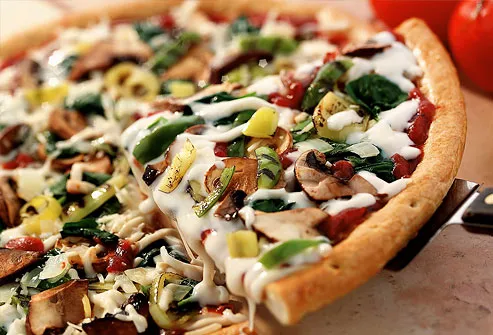
    • Order a thin crust pizza, no cheesy stuffings, with extra sauce, half the cheese topping, vegetables as toppings and skip the meats. Moreover, it's best if you stick to 2-3 slices max.
    • Occasionally have a small portion of lighter alternatives for desserts: a scoop of diet ice cream, 1/2 cup of fruits smoothies, a cup of fruit salad, leeches and avoid high fatty, creamy and sugary ones. 
    • Try to decrease fluids intake with your meal. However, if you choose to have a drink go for water, unsweetened tea or sugar and alcohol-free drinks.
    • Go for a small or medium portion of a meal or share a big one with a friend. Most meals nowadays are huge so don't over-indulge.
    1st pic from Healthy urban kitchen, the rest of the pictures & info from WebMD.

    Wednesday, January 5, 2011

    BANANAAA!


    Well, I'm a huge movies fan. I came across this last month after I saw the lovely Despicable me movie. However, I find that this short movie fits perfectly in my blog. Just let it buffer and check it out! I personally think we should all act this way around fruits: take them as snacks to work, school, university, wherever. They are trans/saturated fat/cholesterol/refined sugar- free and this way you will increase your intake of various minerals, vitamins and fibers!
    Just so that you know, bananas contain vitamin B6, vitamin C, potassium, magnesium and manganese in addition to lots of fiber! Check these Top 10 ways to enjoy Bananas!

    BANANAAAA... papple?

    (Oh and "papples" have other kinds of minerals and vitamins, so variation of fruits in your diet will give you new and different health benefits every time!)

    Five Ridiculously Good Foods!

    Avocado 
    These smooth, buttery fruits are a great source of not only "good" fats such as mono-unsaturated fats but other key nutrients as well. One Ohio State University study found that when avocado was added to salads and salsa, it helped increase the absorption of specific carotenoids, plant compounds linked to lower risk of heart disease and macular degeneration, a leading cause of blindness. “Avocados are packed with heart-protective compounds, such as soluble fiber, vitamin E, folate, and potassium,” says Elizabeth Somer, RD, author of 10 Habits That Mess Up a Woman's Diet.
    However, they are a bit high in calories. To avoid weight gain, use avocado in place of another high-fat food or condiment, such as cheese or mayo and always keep in mind that, after all, it's a fat.  


    Oatmeal 
    Fiber-rich oats are even healthier than the FDA thought when it first stamped them with a heart disease–reducing seal 10 years ago. According to new research, they can also cut your risk of type 2 diabetes. When Finnish researchers tracked 4,316 men and women over the course of 10 years, they found that people who ate the highest percentage of cereal fiber were 61% less likely to develop type 2 diabetes.

    To reap the benefits, eat 1/2 cup daily—preferably unsweetened. For a versatile breakfast, top with different combinations of fruit, yogurt, and nuts. You can also use oats to coat fish or chicken or add texture to meatballs. Check my more detailed article about Oats!


    Salmon
    Salmon is a rich source of vitamin D and one of the best sources of omega 3s fatty acids. These fats have a wide range of impressive health benefits: form preventing hear diseases to smoothing your skin, decreasing inflammation, aiding weight loss, boosting your mood and minimizing the effects of arthritis.
    Moreover, omega 3 aids in decreasing memory loss and slows the rate of digestion, thus, making you feel fuller for longer! Watch out to get plenty of fish - at least 2 to 3 servings per week, this way your body will take its needs of proteins and omega 3 altogether! 


    Apples
    One of the healthiest fruits you should be eating or you probably already are, hence the saying: "An apple a day keeps the doctor away!" Fortunately, it's abundant in Lebanon. The Iowa Women's Health Study, which has been investigating women for nearly 20 years, names apples as one of only 3 foods (along with pears and red wine) that are most effective at reducing the riskof death from heart disease among postmenopausal women. Other massive studies have found the fruit to lower the risk of lung cancer and type 2 diabetes, even help women lose weight! Apples are rich in fibers, vitamins, minerals and water, so it's actually a win-win situation when you have yourself one of these!

    However, keep in mind that one thing can make an apple unhealthy is when it's mixed with caramel, sugar, flour, butter or/& stuffed within a pie or on a tarte! Instead, have a fresh crunchy apple as a dessert or even added to salads!


    Dark Chocolate
    Yes, yes, dark chocolate! It is filled with flavonoid anti-oxidants that help keep platelets from sticking together, consequently clogging your arteries. It also can help decrease the risk of cancers with its anti-oxidative abilities. And there's more to add! According to a study from Denmark, it may also help you lose weight by keeping you fuller for longer! Researchers gave 16 participants 100 grams of either dark or milk chocolate and 2 hours later offered them pizza. Those who consumed dark chocolate ate 15 % fewer calories that those who had milk chocolate!
    So not to make a huge fuss about it, have a small portion of 70 % cocoa or more from time to time! Desserts should not be banned if you are trying to watch your diet, just know what and how much to have!

    Wait for more! Brought to you with amendment from Prevention website!

    Thursday, December 2, 2010

    Elmo Teams Up With "Superfoods"

    No wonder that the media has a huge effect on kids’ choices of food preferences: they always have sparkling lollipops and colorful characters advertising a chocolate.
    But starting December 8th, in just few days, the Sesame Workshop, associated with Sesame Street which we have all watched at some point of our lives, is rolling out FOUR new muppets!
    ·        A banana
    ·        A low fat cheese
    ·         A whole wheat bun
    ·        A stalk of broccoli
    So as you see, each member represents a group food!
    This is all as a part of a national initiative to support families who don’t have access to nutritious food thus alleviating food insecurity.

    These new muppets, given the name “Superfoods”, will start off their “career” in a clip that aims to emphasize the importance of healthy snacks, eating breakfast and dining together as a family and sharing a meal together. It also shows Elmo trying new foods more than once to see if he loves them.

    The exact scenario goes likes this: “The Super Foods help out by providing healthy tips, suggesting Elmo tries some of his kiwi to see if he'll like it or helping the Bear Family see that a meal together is the best way to get together. Although Super Grover finds them a nuisance, they end up helping him gain some super strength by eating some breakfast.”

    Now since the show reaches around 17 million kids in the country, teaching smart budgeting skills in order to adapt a healthy and balanced lifestyle is a wonderful and effective idea.

    You can read more on Health Land and Muppet Wikia.

    Monday, November 29, 2010

    Veggies Super-Power Still ON!

    No matter how much your mom has nagged about eating your veggies, well she wasn’t lying! Veggies still rank as top ONE! A new study released by the Archives of Internal Medicine reveals that people with high blood levels of the antioxidant alpha-carotene, found in lots a variety of vegetables, were less likely to die during a 14 year longitudinal study (cohort) study compared to people with low levels of carotenoids.


    Based on the study, a major factor causing chronic illnesses like cancers and heart problems may be related to high amounts of free radical oxygen that damage your DNA, protein and fat cells. Now it’s important that you know that free radicals’ production is totally normal in your body but the damage they cause can be alleviated by antioxidants’ action, hence carotenoids such as beta carotene, alpha carotene and lycopene. These nutrients are mostly loaded in fruits and vegetables such as carrots, squash, sweet potatoes, pumpkins and dark green leafy vegetables like broccoli and spinach.


    What researchers did in this study was monitor alpha-carotene levels in the blood of 15,318 adults, age 20 or older, who participated in the Third National Health and Nutrition Examination Survey Follow-up Study between 1988 and 1994. In 2006, researchers surveyed how many of their sample had died and from what cause. They found that 3,810 had died, and that people with the highest levels of alpha-carotene in the blood were significantly less likely to die than those with lowest levels. In addition they found that a lower risk of cancer and heart disease in people with high levels of alpha-carotene.
    So yes, yes having that extra bowl of salad every day in your plate will sure help in elongating your healthy life and in lowering heart and chronic illnesses risks.
    Brought to you with the help of: http://healthland.time.com/

    Monday, November 22, 2010

    Tabboule - the Lebanese Favorite Salad!


    With a little experience, like my mom and most Lebanese cooks prepare it, you can estimate the quantities of ingredients by eye when making this delicious and healthy salad: tabbouleh.

    Because it's Lebanon's Independence Day today, I decided to tell you more about our country's most delish and famous dish: our beloved tabboule! No doubt that every Lebanese person knows this salad for it's prepared every Sunday in almost every house in the country. After all, it has the same colors like our flag :)

    Ingredients
    • 2 cups of finely choped fresh parsley
    • 1/4 cup bulgur, uncooked, fine cracked wheat
    • 1 medium tomato, washed and finely chopped
    • 1/4 cup of finely chopped fresh mint leaves
    • 1/4 cup of finely chopped onions or scallions
    • 1/2 cup lemon juice
    • 1/2 to 1 tsp salt (or to your liking)
    • 1/4 to 1/2 tsp pepper
    • 2 tbsp olive oil
    • Fresh lettuce leaves or cabbage leaves on the side
    How to prepare it? It needs a total of 45 minutes with chopping and all!

    1. To chop parsley: Sharpen your knife well. Gather several stems of parsley in your hand and pull the stem ends down so that all the leaves are clustered evenly together on one side. Gather the leaves closely together and press against a cutting board. Holding the leaves in place with your left hand, use your right hand to very thinly slice the parsley leaves. Once you've chopped that bunch, you can go back and chop a few remaining big pieces, but avoid going back over the parsley, as further chopping will result in bruised leaves.
    It's best if you don't chop them in any automatic appliance, they'll only get bruised and darken.
    2. Chop your tomato, scallions and mint the same fine way. It's a good idea to wash all your vegetables before chopping them, this way you'll avoid losing water-soluble vitamins!
    3. Put the fine (not coarse) bulgur in a small bucket and wash it for few seconds with water, then drain them. Some people prefer soaking them in warm water for an hour, but this is your personal call.
    4. In a large bowl combine your parsley, scallions, tomatoes, mint and bulgur. Then pour in your lemon juice, olive oil, salt and pepper. Toss your mixture well.

    It's most delicious served in or with cabbage/lettuce leaves. It is rich with antioxidants like quercetin, lycopene, allium and lutein. These all sound weird/fancy but I'm not trying to mislead you with any. Just know that there are hundreds of antioxidants, some which are still being discovered. The whole point behind them is their potential ability to fight cancer, diseases and aging, so no matter how weird they sound, they definitely are good for you! Moreover,tabboule also has a lot of fibers, vitamin A, vitamin C, vitamin K and monounsaturated fatty acids.

    So you see, it looks mouth-watering, it tastes delicious and has such a nutritious value!
    You can check the NutritionData Widget on the right to assess the calories in your dish.

    Happy Independence Day!

    Friday, November 19, 2010

    Black Rice - Intriguing?

    We've all heard of white rice and brown rice but what about Black rice?

    This rice is originally from Asia yet not really black but more of a deep purplish color, giving a dark shade. It has been commonly used as a condiments or as decoration for meals and desserts.
    Black rice is rich in iron and fiber, but what is more important is its richness with antioxidants that fight free radicals, helping your body stay young, healthy and disease free! According to a study presented at the 240th National Meeting of the American Chemical Society (ACS), “one spoonful of black rice bran contains more antioxidants than a spoonful of blueberries." And knowing that blueberries has been the talk of antioxidant-interest communities, this is quite the break through! "Black rice offers more fibers and vitamin E antioxidants, but less sugar than blueberries.” I love it already!

    Here are some more facts about black rice brought from Blackrice.com
    • One serving of Black rice (1/4 c.) provides 1.5 g of fat, 2 g of fiber and 34 g of carbohydrate and 160 calories.
    • Black rice takes slightly longer time to cook than white rice and needs two cups of water of each cup of rice. It will take around 25-30 minutes to completely cook.
    • Most grocery stores do not yet carry black rice, but you may find it at an Asian market. It can also be ordered online.
    • Black rice is used in a number of products ranging from flour, black rice chocolate, noodles, tea, milk and soaps and skin creams.
    • In ancient times, black rice was considered a rare commodity and only reserved for royalty, in fact even stealing a handful of black rice was punishable by death.

    Thursday, November 18, 2010

    Chicken Caesar Salad - How Nutritious is it?

    Chicken Caesar salads are commonly thought to be a fairly healthy food, I mean they're called salads for a reason! However, it is quite important to know that certain components of this salad are considered healthy, but there are other parts you should watch out for in your diet.

    Ingredients
    Some common ingredients in a chicken Caesar salad include chicken, romaine lettuce, oil, Parmesan cheese, anchovies, garlic, lemon juice and eggs.
    So depending on the amounts of each of these ingredients, a chicken Caesar salad can be considered as a healthy option or a caloric nightmare.
    Restaurant Nutrition Facts
    The calorie count for a chicken Caesar salad depends on where you actually have it. The chicken Caesar salad at Chili's for example contains around 1010 calories and 76 grams of fat! Now that's too much! However, in other restaurants, its caloric content could go down to just 250 calories and 14 g of fat, which is more acceptable for a salad. Be sure to check the restaurant's nutrition facts, if any - in Lebanon, before you order your salad.

    Healthy Components
    • Lettuce is a low calorie, nutrient dense food. Many Caesar salads contain romaine lettuce, which is a very healthy type of lettuce. On another hand, if your salad contain Iceberg lettuce, well this type of lettuce has less antioxidant and phytochemicals. Just know that the deeper the color of your vegetables, the more rich in nutrients it is.
    • Chicken breast, which is often used in this salad, is a lean protein source, and grilled chicken options are healthy.
    • Anchovies contain heart-healthy omega 3 fatty acids and are a healthy part of Caesar dressing.
    • Also, look for dressings made with olive oil, which includes healthy monounsaturated fats, that can lower your risk of heart disease. Garlic and lemon are also part of you dressin. They are low in calories, thus they are healthy ingredients in many Caesar salads.

    Unhealthy Components
    • If your chicken is fried, well, I have bad news. Fried chicken can add loads of calories and fat to chicken Caesar salads, so it's best if you ask for your chicken breast to be grilled! And yes, you can actually do that: amend their chicken Caesar recipe.
    • Cheese, like Parmesan, is also a prime culprit that adds calories and fat to your salad. If you want, you can ask for your cheese to come on the side, this way you can choose how much of that cheese you want in your meal.
    • Last but no least, be sure to order your salad without croutons, that are often fried in oil or butter.
    Healthy Caesar Salad Recipe - Now this one, I love!
    Making your own healthy chicken Caesar salad can save you hundreds of calories. Combine fresh romaine lettuce with grilled chicken breast, and add the following ingredients to make a healthy Caesar dressing: 2 tsp reduced fat mayo, 1/4 tsp olive oil, 1/4 tsp red wine vinegar, 1/8 tsp Worcestershire sauce, 1/2 tsp lemon juice, garlic powder to taste and fresh black pepper. Add 1 tbsp of Parmesan cheese on top of the salad, and you have yourself a healthy chicken Caesar salad with 220 calories, 7 grams of fat and 25 grams of protein! Yum!
    Brought to you from: E how facts!

    Sunday, November 7, 2010

    Oats - Newest Trend in Town?


    Traditionally used in some countries in Central Europe for nervousness or insomnia as a sleeping mattress, it might not be a total coincidence!

    Oats are among the most nutrient rich grains for they have more fat, more proteins and more carbohydrates compared to wheat. They are very rich in phosphorus, iron, folate, magnesium and zinc.
    Oats is considered to be in the category of carbohydrates such as breads, pasta, legumes, rice, wheat, etc. Now due to its particular structure, these complex carbohydrates in this grain are easily assimilated and absorbed slowly. For this reason, oats provide energy for several hours. Eating oats as whole grains is perfect. They contain soluble and insoluble fibers that enable this grain to:
    - Add bulk in your diet so that you would feel fuller for longer
    - Retain water, making oats a lubricant and softener of stools in the lower digestive
    - Speed the passage of foods thus reducing the transient time of foods traveling in your intestines
    - Help in reducing cholesterol levels since it absorbs and removes bile acids that are used to manufacture cholesterol. Yes, but know that they are not your medicine, so don’t fall for such super claims and expect your cholesterol to suddenly drop down when you have some oats. They are of benefit as much as you change your lifestyle to a healthy one and combine it with exercise.

    Now what about oat proteins?
    Proteins in oats consist of 16.9% and they are easily digested. They contain essential amino acids but not all of them in optimal portions. They are rich in an amino acid called methionine but poor in others called lysine and threonine. Now, don’t strain your head with these names, just know that legumes like chickpeas, lentils or beans are, on the other hand, are rich in methionine and poor in lysine and threonine. So eating oats with legumes make them such a complete meal!

    Oats also contain fat in small amounts; mainly unsaturated ones such as omega 6. They also contain lecithin and avenasterol, a vegetable substance similar to cholesterol, that both interestingly interfere with the absorption of cholesterol and thus help in reducing its blood levels.

    Last but not least, not that I am considering oats as therapy, but yes, oats can help the digestive tract, constipation and the cholesterol levels like we already mentioned. It also aids the nervous system to stabilize especially that it contains small amounts of non-toxic alkaloid avenine that has mild sedative effects on the nervous system. Moreover, oats are well tolerated by diabetic especially if they are eaten as whole flakes including the bran in moderate amounts.
    Oats are becoming more popular in Lebanon especially as breakfast ingredient in “muesli” that comes in packs such as cornflakes containing oats in addition to almonds, other grains, raisins and hazelnuts. They can also be part of granola bars or they can be boiled and used instead of rice or wheat.
    Either way, oats are new for us, they are getting trendier and the best thing is that they are as nutritious as can be!

    Monday, November 1, 2010

    Fun Food Facts

    • Ice cream is a Chinese Food! When Marco Polo returned from China, he brought along a recipe of a Chinese dessert called “milk ice” which was made from rice and milk!
    • Coconut water (found inside coconuts not coconut milk) can be used in emergencies as a substitute for blood plasma because it’s sterile and has an ideal pH!
    • In the pre-Columbian era, cocoa beans were used as a currency!à100 beans were equal to one whole turkey.
    • The most expensive coffee in the world comes from Civet poop..and Civets are cat sized mammals! These cats only ingest fine ripe berries and excrete them partially digested. 1 pound sells between 120 and 600 $!
    • Cherries are part of the rose family.
    • The word “salary” comes from Salt! In the Roman times, salt was used as salary because it was very rare.
    • Cold temperature may affect your appetite and increase it.
    • It’s a tradition to serve slices of lemon with fish because people used to believe that the acid in the lemon would dissolve any bone swallowed by accident.
    • The earliest soup made dates back to 6000 BC and was made from hippopotamus!
    • Fortune cookies are not Chinese; they are invented by a LA noodle maker.
    • The color of a chili is not an indication of its spiciness. It’s actually the size >> the smaller the pepper, the hotter it is.
    • Lemons contain more sugar and less Vitamin C than strawberries.
    • American Airlines saved $40,000 in 1987 by eliminating one olive from each salad in first class.
    • You burn more calories sleeping than watching TV.
    • Consuming chocolate was considered to be a sin during the 16th and 17th century.
    • Chocolate contains the same chemical phenyl ethylamine that your brain produces when you fall in love.
    • Seaweed could be used to thicken ice cream.
    • Orange does not rhyme with any word.
    • Without food colorings, Coke’s original color is simply green.
    • While licking a stamp, you consume 1/10 calories.
    • The top 4 ice cream flavors in Japan are vanilla, strawberry, chocolate and.. green tea!
    • Peanuts are one of the ingredients of dynamite.
    • French fries are originally from Belgium and not France.
    • The only food that doesn’t spoil is honey!