Showing posts with label Infant and Child. Show all posts

Saturday, November 19, 2011

Food Colorants in my Cereal Bowl!

Cereals advertised for their
Calcium, Zinc and Iron content
I’ve probably had too many colorants in my system for quite some time when I was kid. My mom used to buy us Trix, and what was she thinking! When talking about snacks and cereals for kids – and possibly adults- one can’t ignore the topic of food dyes!
Colored breakfast cereals are attractive to kids, especially with those cartoon characters on their packages. Other than their high content of sugar and sodium, and putting aside that they are advertised by mentioning their high calcium, iron, zinc, fiber and ‘fruity’ content, my concern here is their dye content!
Testing Food Dyes
Food colorings are tested for safety by different parties and sometimes views on food color safety can get quite controversial.
  • In Europe, E numbers are given to European Union-approved natural and synthetic dyes. In fact, in European countries these colorings are considered hazardous until they can be proven safe.
  • In the US, FD&C are given to FDA-approved synthetic food dyes that do not exist in nature. In the US, it's totally the opposite >> The colorings are safe until proven otherwise!
So companies that do business in Europe use natural and safe colorings; however, they use harmful and synthetic ones elsewhere! And guess what, yes; Lebanon is considered an "elsewhere" country.
Allowed Common Artificial Food Dyes
In the USA, the following seven artificial colorings are permitted in food as of 2007. You can see E number, FD&C number or the dye’s name. So when you check your label, you can find any of the 3.
  • FD&C Blue No. 1 or E133 –Brilliant Blue (blue shade) 
  • FD&C Blue No. 2 or E132 – Indigotine (inidigo shade)
  • FD&C Green No. 3 or E143 – Fast Green FCF (turquoise shade) 
  • FD&C Red No. 40 or E129– Allura Red AC. This dye is approved by the EU in general, but Switzerland already banned it and the UK is on its way!
  • FD&C Red No. 3 or E127 – Erythrosine 
  • FD&C Yellow No. 5 or E102 – Tartazine
  • FD&C Yellow No. 6 or E110 – Sunset Yellow FCF (orange shade so it can also be called Orange E110). Now this is approved in the US; however, EU is considering its ban while Norway already banned it! 
  • [Blue no.1, red no.40, yellow no.5 and yellow no. 6 being the most popular]
Disallowed Common Artificial Food Dyes
The following 9 dyes have been disallowed by the FDA because of their adverse effects so keep them in mind, and let’s hope we don’t see them in any of our foods!
  • FD&C Red No. 2 – Amaranth 
  • FD&C Red No. 4
  • FD&C Red No. 32 
  • FD&C Orange No. 1 
  • FD&C Yellow No. 1, 2, 3 and 4 
  • FD&C Violet No. 1
Artificial Dyes Health Concerns
Certain artificial food dyes have been shown to be carcinogenic to animals, affect mood and intensify ADHD while few are associated with fertility. You can pick your favorite. Now these studies are not conclusive yet, but the fact many are showing weak to moderate association between the dyes and the suggested health concern while facing a lot of “food politics” pressure, is enough of a concern to me! 
  • The FDA requires that Yellow No. 5 be clearly labeled on food packaging along with other ingredients.  This label is just indicating Yellow 5 is in the food. This is not a warning label so now you’re warned. 
  • According to the Mayo Clinic, colorants that may increase hyperactive behavior include: Yellow No. 6, Yellow No. 10, Yellow No. 5 and Red No.40. So even though, these are allowed by the FDA, studies are showing that they might have hazardous effects! 
  • According to the Center for Science in the Public Interest, food coloring such as Blue No. 1, Red No. 40, Yellow No. 5 and Yellow No. 6 cause allergic reactions. Yellow food No. 5 has triggered asthma episodes in children. Red No. 40 may cause skin conditions such as eczema. Yellow No. 2 has been connected with male sterility and ADHD. Blue No. 1 and Blue No. 2 used in beverages and often in pet food have been associated with brain tumors in animal studies and Red No. 3 is linked with thyroid tumors. It’s quite the mess! Actually, according to the Center for Science in Public Interest, artificial dyes are best avoided. They also have a "Food Dyes and Behavior Report Form" to fill out if your child shows any change of behavior when food colorants are ingested.
Natural Food Dyes
Some brands have natural food dyes
There's a growing number of natural food dyes commercially produced, especially due to consumer concerns surrounding synthetic dyes. Some examples include:
  • E150 - Caramel coloring made from caramelized sugar, used in sodas 
  • E160b - Annatto: a reddish-orange dye made from the achiote seeds
  • E140 - Chlorophyll: a green dye made from algae 
  • E120: Cochineal a red dye derived from the cochineal insect 
  • E100 – Turmeric from curcuminoids 
  • E160a- Saffron (caratenoids) for a yellow to orange color 
  • E160c - Paprika 
  • Betanin extracted from beets to give a bluish-red to brown color 
Natural food colors, due to their organic nature, can sometimes cause allergic reactions and anaphylactic shock in sensitive individuals. Coloring agents known to be potential hazards include annatto and cochineal. However, natural colors are not required to be tested nor mentioned on the label in the US!

Colored Cereals in Lebanon
Now, long story short, I found these colorings in 6 different colored cereals in Lebanon:
  • Artificial colorings - Yellow E 102 (No. 5), Yellow E 110 (No. 6), Blue E 133 (No. 1), Red E 129 (No. 40)
    >> Although all these have been approved in the US, the
    Center for Science in Public Interest advises that they are best avoided! They are under the "Unsafe in amounts consumed or is very poorly tested and not worth any risk" category. Red 40 and Yellow 6 are being phased out in some European countries.
  • Natural colorings - Turmeric, Paprika, Spinach, Carrots, Blackcurrant
    >> All shown to be safe.

Food dyes are lurking everywhere in our diets!They can be found in granola bars, candies, jelly beans, chocolate, beverages, sodas, cakes, chewing gums, lollipops, syrups, icings, jams, dessert powders, ice cream and puddings. These could be quite obvious due to their flashy colors, but hey, colorants can be found in pale colored cereals, cheeses, chips and dips too! So you gotta become a label reader, especially for foods that you consume regularly. Don’t be fooled with words like ‘natural’ and ‘fruity’. You’ve become familiar with those names and numbers now, so watch out for them and try to limit your intake of processed foods. 

Info Sources

Saturday, October 29, 2011

Why Dieters Fail to Maintain their Reduced Weight


Worldwide, there are more than 1.5 billion overweight adults, including 400 million who are obese. In Lebanon, a study conducted in 2003 showed that overweight adult men were 60 % and overweight women were 50%. As for obesity (in which one's BMI greater than or equal to 30 kg/m2) was higher overall among women with 19 % than men with 14 %, a trend that became more evident with increasing obesity class!

Now although restriction of diet often results in initial weight loss, more than 80 % of obese dieters fail to maintain their reduced weight. Many studies are still digging to know why - and a recent study suggests it's all about your hormones!

A new study  published in the New England Journal of Medicine couple of days ago involved 50 overweight or obese adults with an average weight of 95kg, who enrolled in a 10-week weight loss program using a very low energy diet. The whole point was to monitor levels of appetite-regulating hormones before, during and at the end of the program  as well as after 1 year after initial weight loss.


>> Results showed that following initial weight loss of about 13 kgs, the levels of hormones that influence hunger changed in a way which would be expected to increase appetite! These changes were sustained for at least 1 year and thus this made participants more prone to regain weight by around 5kgs during the one-year period of study. This is because when we lose weight, our bodies think we are going in a starvation mode thus it tends to work its butt off to maintain our regular weight - even if it's not a healthy one! This is called the "set point theory" - a serious enemy of weight loss. It served us well during early ages, when food was scarce and famines were more prevalent, but it is sure not serving the obesity pandemic now!

 
Tackling childhood obesity
is the key!
Hormones have an immensely huge role in regulating dietary and behavioral changes, in order to reach the initial weight! Dr. Proietto, from the study, indicated that although health promotion campaigns recommended obese people adopt lifestyle changes such as to be more active and to change their dietary habits, this might lead to minimal changes and is unlikely to lead to reversal of the obesity epidemic! The key is to focus public health efforts to prevent children obesity in the first place!

Information and photo sources:

Saturday, October 1, 2011

Helping your KID to stay FIT

There’s a lot going on about the importance of building health build blocks since we are kids…so as parents, you can do it now!

Start teaching your kids how to be fit, healthy and happy.
Being fit is another way of saying that your kid eats healthy nutritious food, is active and has a healthy body weight. When they are fit, they feel good, they can do better performance in class and they can play and enjoy their time with friends.


BE the role model
Being a role model sets an example for your kids. Kids mirror you; just because you are “Mommy!” Eat healthy yourself, choose snacks nutritiously and live by hearty habits. It’s hard to convince your kids to eat the vegetables in their plate if you didn’t or to drink milk or fresh juices if they see you sipping sodas. It’s even harder to integrate active life in them when they don’t see you move it to some music with them or use the stairs instead of the elevator. Little things you do could become their habits. If you complain about exercising and eating healthy food, your kids might relate those to negative feelings and refrain from doing them. Therefore, step up and be your kid’s role model! Start simply by eating fresh fruits, adding more vegetables on every meal and even parking your car far and walking home!

YOU are the supply controller

You decide which foods to buy & serve and which foods stay out. Kids could be really influential on their parents to trick them in buying less nutritious foods and parents eventually agree with them often just to finish the grocery shopping and head home. Well, no, adults are in charge when deciding which foods are regularly stocked at home and no, kids won’t go hungry. They eat what is available in the fridge. However, it’s important not to deprive your kids. If their snack is not all that nutritious, it would be ok to buy it once in a while. Note that in such cases, this “not all nutritious snack” should not be used as a reward nor a punishment. Getting a good grade should be rewarded indeed but not with food. This could build in them the idea that reward equals junk food and grow to reward themselves with that. So it’s a good idea to keep foods neutral, they are not used for reward neither for punishment. Moreover, from the foods you buy; let your kids choose what they want to eat from them. This will give them the freedom to choose what they want to eat. So rewarding them with a nice trip to the amusement center could be a good idea.

Quit the all Lebanese “Clean the plate” rule
We are all used to our grandmas and moms telling us that we are not leaving the table unless we finish the last grain of rice on that plate. Well it’s time to change that! Let kids eat slowly and let them stop eating when they feel full. This would help them listen to their bodies, notice and respond to feeling of fullness and know what it really is to be comfortable full. Sometimes, people eat too much because they don’t notice or learned to ignore “the feeling” that signals the need to stop eating. Know that the stomach needs 20 minutes to tell your brain that you are full so letting your kid choose how much they way to eat will teach them not to overeat.

Offer variety young
Variety in food is important. It offers your kids a wide spectrum of nutrient that their bodies need to healthfully grow up. But what is more important is to start them young. Food preferences are developed very early in life. So the more flavors you offer, the less the chance to have “picky” eaters in the future! Don’t force them to eat it of course, but offer few bites. You may need to serve foods more than once, on different occasions and in different forms for you child to get used to the taste but it’s sure worth it.


Offer the activity of creative cooking
Cook with your kids! Whether it’s squeezing oranges, grinding garlic or mixing the ingredients of that cake you are baking, it all counts.
  • To start with, let them plan what is to be cooked. 
  • They could choose what fruit they want with their cornflakes or what goes in the vegetable salad and even write the shopping list.
  • Introduce them to new foods and how they are manufactured.
  • Add some “nutrition hints” for your kids on why these foods are good for them.
  • Teach them food safety and sanitation rules like how to wash their hands and even fruits and vegetables.
  • Make the kitchen their “learning laboratory”! They could read the ingredients of the recipe, check expiration dates, measure amount of salt or water used and set the timer.
  • Encourage their creativity. Let them draw faces with food items or more, encourage them to create their own recipe.
When children cook with you, they can’t wait till they taste them since they are most likely to eat foods they have helped in preparing. This way you could integrate more healthy foods in their diet. Don’t forget to give them compliments after their achievement; it gives them a sense of accomplishment and self confidence
In addition to that, it could even be a good idea to take your kids grocery
shopping with you! You might as well get your kids help to prepare them a quick snack that could be readily available when they feel like it. For example, keeping shiny carrots at the reach of your kids would encourage them more to eat them. The most important thing is to keep it safe. Always supervise them, give them age appropriate tasks and watch for sharp utensils and appliances.

Benefits of family meal time

Family meal time should be sacred. Make it a priority to eat altogether at least 4 times per week. If you are not eating together now just increase that gradually one day at a time but make sure to start this tradition. And if you know you can’t make it together for dinner, well plan an afternoon snack together or yet, plan breakfast. Yes you can have breakfast together, but if you think there’s not enough time, you could always prepare you breakfast’s ingredient on the table a night ahead! Kids need to know that there is a specific place where the whole family eats, away from school problems, television, games, etc.
Kids who eat at home with their families tend to eat more veggies and fruits, more fibers and less junk food. Moreover, when you eat together, this will give you a chance to show your kids that role modeling we talked about. You could display your good eating habits such as choosing medium portions of food, eating a variety of vegetables, or stopping when you are feel full. It is also important to know that get-togethers over lunch or dinner improve communication between family members. You get make it a fun time to joke and catch up on what happened during the day.


Play Station, TV, PC … Limit their time
Screen time is time spent on TV, video games, DVDs… all what is seen through a screen. The more time you and your kids spend on such “sitting” activities, the less time spent on “active” activities and thus the higher the risk of becoming overweight. So, don’t be a couch potato! Show your kids that moving is part of your and their life and encourage them to stay active. So to start with, try to limit your kids’ screen time to maximum of 2 hours per day. By doing this, you would avoid mindless snacking on TV and in the same time ensure that they are spending at least half an hour per day playing basketball, biking, running, swinging, swimming…any physical activity they love. 

Photos:

Sunday, August 28, 2011

"Breastfeeding Basics" Seminar

Even though breastfeeding is nature's way of providing nutritional needs for infants, the "art" of breastfeeding and the techniques may not come as naturally!
Therefore, Moms and to Be is organizing a public seminar targeting working mothers, mothers with newborns and moms to be planning to breastfeeding to provide them with credible, trust worthy information about breastfeeding basics, essentials and practical tips from a certified breastfeeding specialist!

So when and where is it?
It will be held in Sin El Fil cultural center, Lebanon on the 6th of October from 4.30 pm till 7.30 pm.

What's cooking in this seminar? 
  • Basic principles of breastfeeding
  • How to increase milk flow
  • Breastfeeding positions that are helpful for comfortable and successful lactation
  • Early hunger cues of babies
  • Babies needs of water and vitamins
  • Dad's role in the breastfeeding process
  • Feeding babies at night time
  • When to introduce bottle feeding
  • What to do if moms are sick
  • How to know if babies are getting enough milk for proper growth and development
  • The process of pumping and storing milk
  • The recommended duration for breastfeeding

The session will be fun and educational! Starting 4.00 pm, there will be a welcome coffee break and snacks will be ready for early arrivals and better yet, a special animation is foreseen for your kids all through the session! Free parking is also available at the center so for more information, contact 01.566 999!


Friday, August 5, 2011

Breastfeeding Week in Lebanon

Al-Safir Website [Link]
I love it when issues as important as increasing awareness about breastfeeding are emphasized on in Lebanon. In fact I got this online article via http://daasetsobbat.blog.com/ aka @Yara_Assi who actually participated in making this event a successful one!

Spread the word about breastfeeding and provide every mom and mom-to-be with this user friendly, very beneficial Hotline: 03.824100 that provides useful information and tips about breastfeeding!

The Art of Breastfeeding

Just like learning a new skill, knowledge, practice and support from family, friends and coworkers are the key to perfecting the "art" or techniques of breastfeeding.

It is important to discuss your decision with your doctor before delivery and inform your hospital staff in order to provide you with a breastfeeding friendly environment as soon as you arrive to the hospital!

Warming up & getting started 
To help ensure an adequate milk supply and build confidence, start nursing as soon after delivery as possible >> within 20-30 minutes after your baby is born, perhaps in the delivery room. This is why it is important to remind the hospital’s staff of “rooming in” with your infant.
The first feeding will be most probably short, for about 10 minutes. Find a comfy chair with a good arm and back support or lie down with pillows positioned to help support your baby. This way, you won’t feel any tension in your neck, back or shoulders and it’ll be easier to hold your baby while breastfeeding him/her. Keep in mind to plan to nurse your infant on demand, that is, whenever your baby decides it is time to eat.
Signs that your baby is hungry: If your baby is mouthing, rooting toward your breast, playing with his mouth and tongue and has an increased alertness. Usually, crying is a let sign of hunger so learning the earlier signs of hunger could be helpful to better understand your baby’s hunger schedule.
During the first months, be prepared to nurse very frequently: about 8 - 12 months every 24 hours. A newborn’s stomach is small and his nutritional needs are exceptional during this period of rapid growth and development. Frequent nursing helps establish your milk supply and keeps your breasts from becoming hard and swollen. 

Latching on 
Some newborns instinctively suckle when they are first put to their mother’s breast while others take time to get used to the process, but either way is normal. Latching on correctly helps your baby get enough milk and protects you from sore nipples.
>> Help your baby by stroking your baby’s cheek or lower lip nearest to your breast.
>> As your baby turns toward your nipple, guide your baby’s mouth. Newborns have a “rooting reflex” at the breast thus they open their mouths naturally.
>> Try to offer both breasts at each feeding. Let your baby nurse as long as he or she wants – about 10 to 20 minutes on each breast. The longer they stay the more of the “hind milk they take. This milk is higher in fat and helps the baby feel full and satisfied.
Make sure to wash your hands before nursing. 


Breastfeeding – About Your Baby 
Burp your baby when you change breasts and at the end of the feeding. This relieves any discomfort from air swallowed while nursing. Hold him or her upright on your shoulder or lay your baby tummy side down across your lap. Then gently rub or pat your baby’s back. It is normal for a baby to spit up a bit of milk.
Trust your baby to let you know when he had enough to eat.
Signs of fullness: Your baby may close his or her lips, turn away or even fall asleep. Sometimes babies rest during a feeding as well, so this makes it hard to know when one feeding stops and the next begins.

Breastfeeding – About You 
Because babies nurse more energetically when they start breastfeeding, alternate the breast you offer first.This will help ensure that both breasts are empties regularly and helps you prevent breasts stiffness. If your breasts feel tight and full, soften the by expressing a small amount of milk by hand or breast pump. Fullness and discomfort are signs of engorgement and may happen when your milk supply first comes in or if you have gone too long between feedings. Feed you baby often and if your baby is not hungry yet, you can store the milk in a clean container and refrigerate it, then offer it in a cup later on. 
Don't forget to hydrate yourself well during the day!


Book reference: Complete Food and Nutrition Guide, ADA
by Roberta Larson Duyff, 3rd ed.

Photo references:
World Breastfeeding Week Logo 
Mother and infant 
Breastfeeding Rocks

Monday, August 1, 2011

Breastfeeding – The Baby Friendly Way for August

The 1st week of August is the “Breastfeeding Week” when all countries around the world announce their pledge to the importance of breast feeding and its promotion around their nation.
Every country should put specific health objectives to increase the incidence of breastfeeding and this is increasing around Lebanon. This is a must to overcome any barriers that cause a decrease in breastfeeding norms such as:

•Lack of knowledge about the importance and benefits of breastfeeding
•Absence of work facilities or policies that support lactating women ( for example: extended maternity leave, part time employment, facilities for pumping breast milk, child care on site set, etc.)
•Advertising bottle feeding
•Lack of breastfeeding support 

Therefore, to promote breastfeeding, every maternity facility, hospitals, health professionals and dietitians should follow ten steps recommended by the World Health Organization:

•Hospitals should develop written breastfeeding policies that are communicated to all health care staff.
•Allow rooming in once the baby is born; that is, mothers and babies should be together in the same room 24 hours a day.
•Facilities should train its staff to implement such policies.
•Pregnant women should be educated and informed about the importance of breastfeeding and how to manage it in a successful way.
•Breastfeeding should be initiated half an hour after delivery and staff in hospitals should highly recommend that.
•Demonstrate to mothers how to breastfeed and to maintain lactation even if they should be separated from their children for medical reasons.
•Encourage breastfeeding on demand.
•Health care professionals should refrain from giving newborns any food or drink other than breast milk unless it is medically indicated.
•No artificial nipples or pacifiers should be given to breastfed newborns.
•Hospital staff should refer mothers to breastfeeding support groups or dietitians after being discharged.

Today, more than 20,000 maternity facilities worldwide report ever having achieved Baby-friendly status. So whether the hospital you deliver your baby in is baby-friendly or not, you know what the “Ten Baby-friendly Tips” are and yes, it is possible that you implement them yourself. Ask your doctor and the nurses helping for your own “baby-friendly” way. Go for breastfeeding for both you and your baby.

References:
Mom & infant photo

Friday, July 8, 2011

New mommies: Puréed foods has been made super easy!

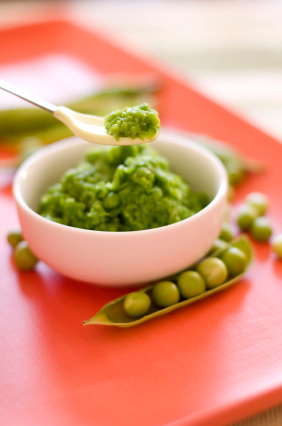
Weaning is all about getting your baby used to moving food around their mouth that is not liquid.  It will take time for your baby to perfect this new mouth action, so don’t worry if more food ends up on the floor, hands and clothes than in their mouth at the beginning! It’ll be messy but this is definitely your baby’s time to explore! When weaning, the best first foods to choose for your baby are puréed fruits and vegetables as well as non wheat cereals such as baby rice, which is hypoallergenic and thus has a low risk to promote food allergies. These are actually easy to prepare at home – fruits and vegetables are smooth when puréed and thus are of an "easy to swallow" consistency.  At first, offer few teaspoons (using a soft tipped spoon) once a day before a milk feed, and gradually increase the amount and frequency

Homemade purées
It’s easy to make purees and other foods for your baby and this way you know exactly what they are eating. You can make a variety of fruit and vegetable purees – try apple, pear, banana, mango, sweet potato, carrot, zucchini and more!  Some require the food to be cooked first (e.g. apple, carrot) but others require no cooking like bananas and mangos!


Method
  • Wash, peel and chop the fruit or vegetable of choice.  If it needs to be cooked first, steam or boil it until it is soft but not overcooked. I honestly prefer all organic fruit and veggies for the family, especially the kids to minimize unhealthy pesticides and genetically modified components (which are not labeled yet, alas!) 
  • Blend it in a liquidiser or mash if using soft fruits like banana
  • Allow the food to cool if cooked and check its temperature before giving it to your baby.
To save time – make purees in batches and freeze them in covered ice cube trays.  Allow the puree to cool before freezing and then pop the frozen cubes into freezer bags.  This way, you have a smart, quick and ready supply of different purees to feed your baby 
When you reheat the puree, allow to defrost first and make sure that it is piping hot and allow it to cool before giving to your baby.  Do not reheat foods for your baby more than once and discard any uneaten food. For purees that do not need to be heated (e.g. fruit purees), make sure it is fully defrosted before feeding to your baby. Heating baby food in the microwave is not recommended due to uneven distribution of heat. Therefore, warm baby’s meal in a bain-marie and when choosing to use the microwave, stir well in order to equally spread the heat!
So for all new mommies out there, puréed foods has been made super easy!

Friday, March 18, 2011

Fruits and Veggies - Blended Creatively in your Diet


Modifying recipes without compromising taste does not actually require extra time or effort, you just need few ideas to spark your creativity especially when it comes to fruits and vegetables and incorporating them in your family’s dietary habits. Focus has been put more on the importance of including fruits and veggies as a part of everyone’s personal eating habits with variety, moderation and balance built in.

Now even though fruits and vegetables’ content varies enormously, in general, they are low in fat, low in sodium, they are high in fiber and water, they supply many vitamins such as vitamin A, vitamin C, folate, B 6, potassium, calcium, magnesium, selenium and they provide lots of phytochemicals and antioxidants .

So here are few ideas that might help you fit a rainbow in your and your children’s diets:

Kalyn's Kitchen
Grate your way – Add grated shredded or chopped vegetables such as zucchini, spinach, carrots and cabbage to mashed potatoes, meat dishes, rice, bulgur, wheat or lasagna.
Be fruit saucy – It’s time to experiment with fruits: make strawberry puree, banana, apples, peaches or pears and try them on grilled seafood or poultry, pancakes, toasts or even mix them with skimmed milk and crushed ice!
Toss in dried fruits – Try adding dried mangoes, papaya, raisins, prunes or apricots in whatever meal you are having whether you are baking homemade breads or cakes or in salads, sandwiches, rice, pasta, milk or pancakes.
Creative pizza – You’ll probably think I’ll suggest adding zucchini, broccoli, asparagus, carrots, bell pepper strips and tomatoes to your pizza, and yes, it’s true. But I also suggest you trying to experiment with fruits as well! Try adding pineapple slices, raisins, mango bits or even apple wedges. They will sure taste different – good different.
Mix fruits and veggies – Make a quick stir fry or boiled rice or pasta and add both fruits and vegetables to them! Start with small bits of raisins and experiment with one meal as a start.
Expand – Try new vegetables that you haven’t tried in your life. These could be local or not; either way give them a shot in a stew, salad, with rice or rice!
Lunch then fruit – Make a habit of packing one fruit for every member of the family to have after lunch.
Toss up a vegetable, fruits and legumes – Add colorful vegetables, legumes and fruits in your salad. Try adding rocket with strawberries, kiwi with romaine lettuce, beets with cabbage and chickpeas or carrots with spinach, lentils and raisins. Weird, yet creative and delicious combination!
Check this recipe from Italian food net
Make dips and spreads – spicy salsas can be made with bell peppers, tomatoes, onions, garlic and spices. For a new twist, add pineapples, peaches or mangoes! You can make baba ghanouj form eggplants with tomatoes and pomegranates seeds as a topping or chickpeas hummus with mint and strawberry bits! 
Stuff omelette time with veggies – In Lebanon, we have the habit of scrambling eggs with mint, tomatoes, cucumbers and probably onions on the side. This time try mixing your choice of onions, bell pepper, tomatoes, carrots or spinach with the eggs and baking them altogether.

Through these “out of the box” creative and colorful recipes, you, as a family, will probably learn how to enjoy fruits and vegetables for their vibrant colors, crunch and wonderful different flavors and in the same have enough fruits and vegetables fit in your diet. This way, you will sure increase your intake of healthful foods and stick to a hearty diet!


Source: American Dietetic Association - Complete food and Nutrition Guide, Roberta Larson Duyff

Friday, February 25, 2011

Healthy Kids Snacks Ad in Beirut - Gone Wrong!

So I received an e-mail couple of days ago entitled: "*Company's Name* Beirut - Healthy Kids Snack". Intriguing, I said. Finally, some promotion for healthy snacks in my country for once!
Boy was I wrong! Unfortunately, all I got was what you see below.


  • So in their Ad, which is not shown above since I had to crop it out - their phone number was all over the poster, they said "Toss out the junk food and start making snack time fun again!"
    >> I'm sorry to say but what they are promoting FOR KIDS is what everyone calls junk food: Food high in refined carbohydrates, low in fiber, prepared with ghee/butter, high in sugar, high in trans and saturated fats!
  • They continued to market "When kids need that little something to get them through the day, this the collection to turn to"
    >> Wow! I mean whatever happened to the "common" ways of fueling your body with a bowl of skimmed milk, plain cornflakes and some fresh/dried fruits?
  • Now "All our products are freshly baked without preservatives and made with the best ingredients" Yummy! Best ingredients! I love those... but what are they again? Probably the best sugar or butter in the world? Yum-Yum!
  • Well from the huge variety given, you can only see one "your healthy cookies" description as a caption for the oat cookies -probably because these are the only ones with some fibers! So maybe- maybeee, these might be healthy, depending on how they are prepared.
Either way, I suggest that home-made cookies, plain cakes, cheesecakes, brownies and muffins should be taken in moderation for both adults and kids.

So next time it's SNACK TIME and "kids need that little something to get them through the day" 
>> Go for a cup of strawberries, a banana, a fruit salad, dried fruits, freshly squeezed juices, vegetable sticks, whole wheat toast with home made marmalade, multi-cereal kaak with a cup of skimmed milk, a handful mix of unsalted nuts, a cup of skimmed milk with plain cornflakes, a cup of plain skimmed yogurt with some mint and cucumbers, freshly made fruit smoothies, a cup of hot chocolate made with unsweetened cocoa! You can also mix "moderation with healthy" - a cup of milk with cookies, fruit dipped in dark chocolate or whole wheat pancakes with honey/marmalade/chocolate paste and fruit slices.

This way you will incorporate healthy eating in your kids' lifestyle, establish a healthy and clear idea of what healthy and unhealthy is, decrease any risk of childhood obesity and earlier onset of diseases, decrease dental caries risk, make sure they are getting enough vitamins, minerals, antioxidants, phytochemicals and fibers and above all "making their snack time fun"!

Friday, February 11, 2011

10 Great Tips to Get Your Kids to Eat Vegetables and Fruits


There is no doubt that fruits and vegetables are very important, so we’ve heard! However, recent studies indicate that children who ate the most vegetables and fruits had significantly healthier arteries as adults than children who ate the fewest. So you see, what your children eat during their childhood reflects on their lifestyle, eating habits and overall health as adults.  Therefore, here are 10 helpful and efficient tips formulated from the American Heart Association aiming to encourage your children to include more vegetables and fruits in their diet. This way, they will increase their intake of vitamins, minerals, antioxidants, water and fiber! 
1.   Make fruit and vegetable shopping fun and educative: Visit your grocery store with your children and show them how to select ripe fruits and fresh vegetables. This is also a good opportunity to explain which fruits and vegetables are available by season and how some come from countries with different climates. Make fruits and vegetables interesting: talk about where they come from, how they are planted, grown and cultivated.
2.   Involve kids in meal preparation: Find a healthy dish your kids enjoy and invite them to help you prepare it. There are many things children can help you with; it all depends on their age: younger kids can help with measuring, crumbling, holding and handing some of the ingredients to you while older kids can help by setting the table and cut fruits and vegetables into chunks, of course, when supervised by you. Make sure to teach them the right way to help and definitely praise them for their great help. This way, they will feel proud that they assisted you and participated in preparation a family meal. It will encourage them to eat a meal they have themselves made!
3.   Be a role model: Yes, you have a huge influence on your kids. Studies, whether recent or old, always assure the influence parents have on their children! If you are eating a wide range of fruits and vegetables, while surely enjoying them, your child would want to have a taste of what their parents are enjoying! You can’t push them to eat healthy when you show them it’s not your favorite. You are their idol so use it for your and their benefit.
4.   Create fun snacks: Schedule snack times for most kids like routines. Snacks are great when they are wisely chosen. Between meal snacks are a great opportunity to offer fruits and vegetables to your kids while enjoying them together.  To start with, make fruits and vegetables visible for your children. How? Place a bowl in the middle of your kitchen table at all times! Fill it with different kinds of fruits and vegetables and always remind your kids that it’s sitting right there. Moreover, kids like to pick up foods with their hands, so give them finger foods they can handle depending on their age. You can also cut up a fruit and arrange it on an attractive plate, make a colorful rainbow in their plate, make a smoothie or freeze a smoothie in ice cube trays. Be creative! Create a smiley face from cut-up vegetables and serve with a small portion of low-fat salad dressing, hummus or plain low fat yogurt or labne. 
5.   Give kids choices - within limits: Too many choices can overwhelm a small child. However, giving your children the freedom to choose from a short list is a great idea. This way you will be encouraging them to start formulating their own decisions while pushing them to eat healthy foods. Don’t go asking them what they want for lunch but don’t force them with one kind of food. Instead, offer them limited healthy choices for snacks, such as dried fruits with nuts, banana, strawberry with cereal or carrot fingers?
6.   Eat together as a family: If your schedules permit, family dining is a great time to help your kids develop healthy habits and attitudes about food and the social aspects of eating with others.  Make sure you are eating your fruits and vegetables constantly and in front of your children. Even if they aren’t eating certain vegetables yet or they are rejecting others, they will model your behavior sooner or later. This is why tip 10 is crucial no matter what!
 7.   Expect pushback: As your kids are exposed to other families’ eating habits, they may start to reject some of your healthy offerings. Without making a disparaging remark about their friends’ diet, let your children know that fruits and vegetables come first in your family. A positive experience with food is important. Never force your child to eat something, or use food as a punishment or reward
8.   Grow it: Start from the ground up — create a kitchen garden with your child and let them plant tomatoes and herbs, such as basil and oregano in window boxes. If you have space for a garden, help them cultivate their own plot and choose plants that grow quickly, such as beans, cherry tomatoes, snow peas and radishes. Provide child-size gardening tools appropriate to their age. 
9.   Covert operations: You may have tried everything in this list and more, yet your child’s lips remain zipped when offered a fruit or vegetable. Try sneaking grated or pureed carrots or zucchini into pasta or pizza sauces. Casseroles are also a good place to hide pureed vegetables. You can also add fruits and vegetables to foods they already enjoy, such as pancakes with blueberries, carrot muffins or fruit slices added to cereal. On occasions when you serve dessert, include diced fruit as an option. 
10. Be patient: Changes in your child’s food preferences will happen slowly. They may prefer sweet fruits, such as strawberries, apples and bananas, before they attempt vegetables. Eventually, your child may start trying the new vegetable. Many kids need to see and taste a new food a dozen times before they know whether they truly like it. Try putting a small amount of the new food — one or two broccoli florets — on their plate every day for two weeks; but don’t draw attention to it. 
Brought to you from the American Heart Association.

Wednesday, January 5, 2011

Safe Handling & Storage of Breast Milk


For all the mommies-to-be & breastfeeding mommies out there, just like you've heard, breastfeeding is very important. But as much as this is true, it’s also vital to handle breast milk with super extra care. So here are quick yet essential tips for you and your baby.


Safe Handling& Storage

  • To start with, wash your hands and breasts before expressing your milk.
  • If you are using a breast pump, carefully review the operation and cleaning manual.
  • If you are going to store the milk, it’s best to be put in plastic bottles specific for storing breast milk and refrigerate them. Make sure that the containers are totally clean even from their caps.
  • Store milk in moderate amounts; around 55 to 115 mL in one container. This will help avoid wasting milk after feedings.
  • Refrigerate milk if you are going to store it for maximum of 24 hours, otherwise it’s best to freeze it.
  • If freezing is your choice, plastic or glass bottles are good.
  • Either way, make sure to put a label on each container with the date of expressing the milk. This will ensure the FIFO rule: First In, First Out is followed and you will use the oldest milk you have first.
  • Now if you are a working mother or you need to be away for a certain period of time, consider freezing a large amount of breast milk supply especially during your maternity leave.
    If you are freezing for
    • Up to 2 weeks: put the milk bottles inside your freezer at -15 degrees Celsius (not in the door since it’ll be opened quite often)
    • Up to 3-6 months: if a special compartment having its own separate door inside the freezer at -18 degrees Celsius
    • 6 -2 months: freeze it in a separate deep freezer at – 20 degrees Celsius

Safe Thawing

  • Before thawing, shake the bottle gently to mix layers because the cream rises to the top.
  • If time allows it, thaw frozen breast milk by putting it in the refrigerator, by putting it under warm running water or by putting it in a “bain marie”; that is using a pan of water on the stove.
  • Avoid using the microwave to heat or thaw breast milk because it might lead to uneven thawing of the milk leading to either scalding the baby or damaging the milk. Moreover, excess heat may destroy nutrients in the milk.
  • Don’t just put it outside the fridge to thaw.
  • Once the milk is thawed, make sure not to refreeze it again and discard milk that stays more than 24 hours in the fridge.

You can also find this article published in Moms and to Be Magazine.
1st image courtesy of order valtrex
The 2nd is courtesy of sheknows.com