Showing posts with label Vegetables. Show all posts

Wednesday, September 10, 2014

Spinach, strawberries, almonds and feta...

I visited my brother few weeks back for a completely carefree vacation in Washington state where organic baby spinach and strawberries were in season! I know these are not in season in Lebanon right now, but I find it hard not to share this recipe especially that it's super easy to make, it's absolutely refreshing and I've been meaning to try it ever since I saw a similar salad up on Foodess.

What you need to have:

For the salad
  • 150 grams baby spinach, rinsed, dried and cut into bite-size pieces
  • 150 grams strawberries - cleaned, hulled and sliced
  • 75 grams almonds - roasted, unsalted and chopped
  • 100 grams feta cheese, crumbled or diced
Fro the dressing (all Jazmin's idea, and it fits the strawberry spinach blend perfectly!)
  • 2 tbsp extra virgin olive oil
  • 1 tbsp white wine vinegar
  • 1 tbsp mustard, whole grain Dijon
  • 1 lemon, juice with pulp
  • 1 clove of garlic, finely grated
  • 1 small shallot, finely grated
  • 1 tsp of salt
  • 1/2 tsp of black pepper

What you gotta do:
  • Mix the spinach and the strawberries together. Set them aside while you prepare the dressing.
  • Then whisk all the dressing's ingredients altogether. I actually shook them inside a tightly closed jar, so they turned out pretty creamy and well blended.
  • Drizzle the dressing on top of the salad and mix.
    Make sure not to add the dressing, unless everyone is prepared to start eating as the white vinegar will wilt the spinach if left for a long time.
  • Sprinkle the chopped roasted almonds and the crumbled feta on top of the salad, and please be generous. If you tend to be stingy, set aside 2 tiny bowls, one for feta and one for the almonds, just in case anyone wants to add some more.

And voila...
Pungent, tarty and refreshing for the taste buds!


Needless to say, the salad was a hit, the extra almonds and feta were much appreciated, summer was good and my trip was both relaxing and active at the same time. I took a photo of how my most relaxing day looked like at Lake Union's westernmost point in Freemont.


Statue of Peace Leader, Sri Chinmoy at Lake Union


Tuesday, November 1, 2011

Pumpkins this Halloween!

Yesterday I was intrigued to buy me some pumpkin to carve! You see them everywhere during Halloween but I actually never carved one myself, especially that it's not a tradition in Lebanon. However, it is sure gaining some popularity so why not have some fun!

I googled how to carve a pumpkin and got this step by step carving technique, it was pretty helpful and I have to admit, it turned out to be a fun - and not sooo messy - activity! 

My sister with our masterpiece
and a weird spooky ghost that
came out of nowhere!
It may be said that the remarkable nutritional value of the orange-yellowish pulp of the pumpkin is due in part to its composition, but also for what it does not contain! Pumpkins are among the lowest of any foods in fat and sodium! The nutrient content of a pumpkin is quite low - 6 % carbs, 1 % proteins and virtually no fat! However, it stands out for its fiber content which increase satiety and its richness in beta-carotene (provitamin A), vitamin C, vitamin E and minerals such as potassium, phosphorus and calcium. All these give pumpkins - no matter what their shades of yellow or orange is - their ability to aid in regulating blood pressure and coronary heart disease, to act as a laxative as well as a mild diuretic.
As for pumpkin seeds, which mom is currently sun-drying them, they are one of the most nutritious and flavorful seeds! They are a good source of beta carotene, vitamin K, omega 3 and minerals like magnesium and manganese, zinc and copper.

So over all, pumpkins are not just a pretty face - they can be nutritious as well! Vegetarian pumpkin kebbe, a dish made from pumpkin, bulgur and stuffed with swiss chard or spinach from Chicho's kitchen is my all time favorite! There's also my teta's favorite: pumpkin kebbe stuffed with labne or feta which I got from The Food Blog!

Sunday, October 16, 2011

Cancer Prevention Nutrition Tips

It's World Food Day and Blog Action Day while it's Breast Cancer Awareness Month - so I decided to combine all those together and blog about the healthiest diet that helps in cancer prevention! Of course, cancer is a mutli-factorial chronic disease with genetic factors as well as environmental, personal and dietary ones affecting its incidence. So why not control what is modifiable! Whatever the situation, your dietary choices matter! Some foods actually increase your risk of cancer, while others support your body. By making smart food choices, you can protect your health, feel better, and boost your ability fight off diseases.

Research shows that a large percentage of cancer-related deaths are linked to lifestyle choices such as smoking, drinking, lack of exercise and an unhealthy diet. Avoiding cigarettes, minimizing alcohol, and getting regular exercise are a great to an anti-cancer lifestyle. But to best support your health, you also need to look at your eating habits.

Focus on plant-based foods  - Plants have less fat, more fiber and more cancer-fighting nutrients. These 3 work together to support your immune system! The best diet that aid in preventing cancer is a plant-based diet that includes a variety of vegetables, fruits, whole grains, pulses, beans, seeds and nuts!You don't to go completely vegetarian, just aim to have at least 2/3rds of your intake of whole grains, vegetables, beans, or fruit while keep 1/3rd for dairy products, fish and meats.

A fresh bowl of salad will
boost up your fiber intake!
Bulk up on fiber - Another benefit of eating plant-based foods is that it will also increase your fiber intake. Fiber is the part of plants (grains, fruits, and vegetables) that your body doesn't have enzymes to digest. Fiber plays a key role in keeping your digestive system clean, healthy and it keeps food moving through your digestive tract thus moving cancer-causing molecules out with it.Now, the more natural and unprocessed your food is, the higher in fiber it is. So have fiber from more brown, bran, whole-grain, whole-wheat, whole, skin-containing fruits, vegetables, whole grains, pulses, seeds and nuts! And keep on mind that meat, dairy, sugary, and processed white foods (white bread, white rice, pastries, etc.) are very low in fibers! 

Cut down on meats - Research shows that vegetarians are about 50% less likely to develop cancer than those who eat meat. Why? Because meat lacks fiber and other nutrients that have been shown to have cancer-protective properties while having lots of fat - saturated ones. High-fat diets have been linked to higher rates of cancer especially saturated fat. Moreover, it also depends on how meat is prepared. When charred, those black bits are shown to be carcinogenic compounds!
So you can cut down your cancer risk substantially by reducing the amount of animal-based products you eat and by choosing healthier meats. Keep red meats to minimum, choose leaner options such as fish, chicken or turkey while avoiding processed meats (sausages, makanek, salami, deli meats, hotdogs) to the max!

Liquid fats - unsaturated ones -
are your best bet
Choose your fats wisely - A major benefit of cutting down on the amount of meat you eat is that you will automatically cut out a lot of saturated, unhealthy fat. However, don't cut down fat entirely, nope! In fact, some types of fat may actually protect against cancer. The wisdom lies in choosing your fats wisely and eat them in moderation.
-- Fats that increase cancer risk have been shown to be
: saturated fats and trans fats. Saturated fats are found mainly in animal products such as red meat, whole milk dairy products and eggs. Trans fats, could be also called partially hydrogenated oils (check your nutrition facts labels), are created by adding hydrogen to liquid vegetable oils to make them more solid and increase their shelf life - something food for industries but horrible for you.
-- Fats that help in decreasing caner risk are unsaturated ones, the more liquidy fats. They are from plant sources such as olive oil, canola oil, olives, nuts and avocados. Also focus on omega-3 fatty acids, which fight inflammation and support brain and heart health. Good sources include salmon, tuna and flaxseeds. 

Choose cancer-fighting foods - Your immune system does a great job to fight off unhealthy molecules but there are many ways in which you can help strengthen in even more. There is not miracle foods of course, only those that will help your body fight off diseases.So increase your anti-oxidants intake from fruits and vegetables, eat brighter-colored foods, throw in some spices in your meal (and be creative!) while drinking lots of water!

The way you cook your food is as important
as what you eat!
Don't forget that the way you cook/store your food is as important as what you choose to eat!
  • Eat raw fruits and vegetables, they have the least leached vitamins and minerals 
  • Steam foods with the least amount of water possible, you don't want to lose those cancer-fighting compounds!
  • Go for fresh meats and avoid processed and cured meats with preservatives such as hotdogs, deli meats, sausages and bacon!
  • Don't overcook your BBQ to burn or char your meats to be dead smoky!
  • Don't cook oils on high heat like deep/pan frying. Instead bake, broil, boil or steam!
  • Store your foods wisely - Store oils in dark, dry and cool places to decrease the risk of rancidity and avoid moldy foods. Keep foods fresh and cool!

-- You are what you eat, so make every bite count!

Information sources

Wednesday, September 28, 2011

Zuwwedet Aline - A Healthy Vegetarian Night in Lebanon


After working her magic last time with green beans and corn, Aline is preparing us another Zuwwede next Monday! She is making us some healthy vegetarian food on the 3rd of October from 8.00 pm till 11.00 pm at Tarek Booze in Gemmayze.
The theme this time revolves around a nutritious green leafy vegetable >> Spinach!


You'll enjoy the benefits of
  • Kebbé spinach - كبة سبانخ
  • Spinach salad - سلطة سبانخ
  • Spinach & potato with indian spices - سبانخ وبطاطا مع توابل هندية
  • And last but not least, some spinach wraps - لفافات سبانخ      


So what's up with Spinach!
Spinach is super rich in many vitamins, minerals and lots of antioxidants!
From vitamin K, vitamin A, vitamin C, vitamin E, to folate, niacin, magnesium, iron and calcium, the list goes on and on!
Moreover, not only is it low in calorie, but spinach is also high in fiber and provides a rich satiating taste when incorporated in your diet!


So give yourself a break from all those trans and saturated fats, refined carbs and unhealthy meals and enjoy some delicious vegetarian food because a well planned plant-based diet provides you protection against many chronic diseases such as cancer, cardiovascular diseases and diabetes!

For more info, you can call Tarek Booze at 03.148890
Info and Photo Source

Sunday, September 18, 2011

Your Nutrition Guide - Indian Style!

If you have noticed, we are all facing an ever ending flood of information about different dietary habits and guidelines from each end of the world! Different dietary systems seem to conflict entirely with each other.

I had the chance to visit the fascinating India this summer, in which I learned that, we are no where near the Indian cuisine and the community's dietary habits! Most Indians are vegetarians - No meat, fish, poultry, milk nor eggs!  Even non-vegetarians don't consume meats (beef, pork, lamb, mutton), rather, they have their proteins from legumes, fish and poultry. To top that, everything is super spicy, even if you ask for it to be spices-free, dream on! Herbs and spices are a major part of Indian dietary habits and cuisine - from cayenne to cinnamon, ginger, oregano, rosemary, chilli, cumin, cardamon and turmeric, the list is enormously long and extends to spices I have never heard of. Therefore, spices, herbs and their health benefits will have to be discussed in a separate article alright!

So long story short, according to Dr. Anjali Mukerjee, a nutritionist, medical doctor and alternative medicine specialist, she explains in her "Healing with Food" book how to energize your body Indian style! Some of the points that are helpful to both Indians and us are:

1. Drink enough amounts of water: Although many seem to forget the importance of this essential non-nutrient, drink at least 10 glasses of water daily in order to balance electrolytes, cleanse the kidneys and rehydrate your cells.

2. Have yourself some goodnight sleep: Dr. Mukerjee insists that there's no substitute for adequate sleep - no amount of healthy nutrients and no mutli-vitamins can rejuvenate your body like 7 hours of good sleep.

3. Avoid stimulants: such as alcohol, tobacco and caffeine which stimulate your body for a short period of time only to cause chronic fatigue if used for a long period of time! These stimulants promote dehydration and increase your blood pressure!

Breathe and relax
4. Relax and try to control your every day stress: In this section, i loved the statement: "Toxic emotions are worse than toxic food." Stress zaps all energy right our of our bodies! Work on controlling your stress, breathe, meditate and relax - don't just say life is too hectic to relax, find time.

5. Limit your sugar intake: Sugar may give you the instant energy but in the long run, sugar reduces the life span - that serious! Soft drinks, pastries, cakes, ice creams, dressings, low fat foods, etc. all contain added sugars that cause imbalances in our bodies, deteriorate our immune systems and increase our risk of gaining weight.

6. Avoid fried foods: that get digested slowly, prevent the digestion of other foods and lead to sluggishness, other than the very well known adverse effects of fries on weight, blood profiles and chronic diseases!

7. Limit your intake of red meats: like beef, lamb, pork and cold cuts which are loaded with saturated fats and which some (like processed meats, salami & packed meats) are hyped up with preservatives, additives and colorings. Red meats cause an increase in inflammatory agents, build up of uric acids, increase the risk of various types of noncommunicable diseases like hypertension, type 2 diabetes and cancers as well as mess up our blood profiles!

8. Limit milk and dairy products: that increase the formation of mucus, sinus problems, intensify acne problems and may trigger allergic reactions. Make sure to get your calcium from green leafy vegetables, broccoli, almonds and soybeans. Milk could be beneficial is small amounts, such that it aids in relaxation of muscles and sleeping well so limit your consumption (to 1-2 servings per day).

9. Multivitamins supplements: especially B vitamins decrease fatigue, help your body's metabolic reactions and convert your nutrient intake from food to energy! Have yourself some mutli-minerals and vitamins to complement your healthy diet, not to replace it.

10. Get movin': Have at least 40-50 minutes of exercise each day such as walking, swimming, jogging, etc. Increase your heart rate and sweat, but don't overdo it! Regular exercise creates balance between water & electrolytes in your body, aids in weight loss, helps your body to get rid of toxins and burn extra fat, promotes muscle mass and helps building calcium in your bones so you don't want to miss out on its benefits!


11. Eat food closest to its natural form: Eat whole foods - a point world-wide guidelines are now emphasizing on and a point in which we are so advantaged to have! Our Lebanese cuisine helps us in eating foods closest to their natural form from Mjaddara, Loubye, Fasolia stew, Koussa, Vine leaves, Tabboule, you name it! Eat foods with minimal processing such as whole grains, brown rice, brown bread, legumes (chickpeas, lentils, beans), fresh fruit and veggies, raw nuts and seeds. These foods provide your body with complete forms of energy while refined foods provide you with non-essential nutrients and with only the partial energy your body needs.


This book "Healing with Food" is seriously helpful with more of lots of information and tips on how to prevent and treat diseases through food, each disease at a time! Its ways are unconventional and in some points, it opposes the Western school of nutrition! For those who are advocates of the Western school of nutrition, I'm all with you - they are scientific based but as you can see, most studies end with "more research is needed" so we can't totally shut off the possibility of new, unconventional information! This information may complement what we already know, so it's up to us to wait for conclusive results, be less biased, less influenced by food politics and wise enough to learn from different nutrition schools!


Friday, March 18, 2011

Fruits and Veggies - Blended Creatively in your Diet


Modifying recipes without compromising taste does not actually require extra time or effort, you just need few ideas to spark your creativity especially when it comes to fruits and vegetables and incorporating them in your family’s dietary habits. Focus has been put more on the importance of including fruits and veggies as a part of everyone’s personal eating habits with variety, moderation and balance built in.

Now even though fruits and vegetables’ content varies enormously, in general, they are low in fat, low in sodium, they are high in fiber and water, they supply many vitamins such as vitamin A, vitamin C, folate, B 6, potassium, calcium, magnesium, selenium and they provide lots of phytochemicals and antioxidants .

So here are few ideas that might help you fit a rainbow in your and your children’s diets:

Kalyn's Kitchen
Grate your way – Add grated shredded or chopped vegetables such as zucchini, spinach, carrots and cabbage to mashed potatoes, meat dishes, rice, bulgur, wheat or lasagna.
Be fruit saucy – It’s time to experiment with fruits: make strawberry puree, banana, apples, peaches or pears and try them on grilled seafood or poultry, pancakes, toasts or even mix them with skimmed milk and crushed ice!
Toss in dried fruits – Try adding dried mangoes, papaya, raisins, prunes or apricots in whatever meal you are having whether you are baking homemade breads or cakes or in salads, sandwiches, rice, pasta, milk or pancakes.
Creative pizza – You’ll probably think I’ll suggest adding zucchini, broccoli, asparagus, carrots, bell pepper strips and tomatoes to your pizza, and yes, it’s true. But I also suggest you trying to experiment with fruits as well! Try adding pineapple slices, raisins, mango bits or even apple wedges. They will sure taste different – good different.
Mix fruits and veggies – Make a quick stir fry or boiled rice or pasta and add both fruits and vegetables to them! Start with small bits of raisins and experiment with one meal as a start.
Expand – Try new vegetables that you haven’t tried in your life. These could be local or not; either way give them a shot in a stew, salad, with rice or rice!
Lunch then fruit – Make a habit of packing one fruit for every member of the family to have after lunch.
Toss up a vegetable, fruits and legumes – Add colorful vegetables, legumes and fruits in your salad. Try adding rocket with strawberries, kiwi with romaine lettuce, beets with cabbage and chickpeas or carrots with spinach, lentils and raisins. Weird, yet creative and delicious combination!
Check this recipe from Italian food net
Make dips and spreads – spicy salsas can be made with bell peppers, tomatoes, onions, garlic and spices. For a new twist, add pineapples, peaches or mangoes! You can make baba ghanouj form eggplants with tomatoes and pomegranates seeds as a topping or chickpeas hummus with mint and strawberry bits! 
Stuff omelette time with veggies – In Lebanon, we have the habit of scrambling eggs with mint, tomatoes, cucumbers and probably onions on the side. This time try mixing your choice of onions, bell pepper, tomatoes, carrots or spinach with the eggs and baking them altogether.

Through these “out of the box” creative and colorful recipes, you, as a family, will probably learn how to enjoy fruits and vegetables for their vibrant colors, crunch and wonderful different flavors and in the same have enough fruits and vegetables fit in your diet. This way, you will sure increase your intake of healthful foods and stick to a hearty diet!


Source: American Dietetic Association - Complete food and Nutrition Guide, Roberta Larson Duyff

Saturday, March 5, 2011

Fattouch with Sumac - Most Delicious Salad in My World!

Photo courtesy of DKS and Greedy Gourmet blogs

Fattouch - a pretty famous salad we have here in Lebanon - is my favorite salad of all time! It's quite rich in various vitamins, minerals, fiber, antioxidants and water because of all the vegetables in it.

If you want the recipe, and I highly recommend giving it a try, you can check Dirty Kitchen Secrets's Beth's post on the Greedy Gourmet blog! The salad is pretty easy to prepare and contains the rainbow you need to include in your plate: lettuce, purslane, mint, tomatoes, cucumber, radishes, onions, pomegranate molasses, bread, lemon, olive oil, salt, pepper and Sumac. Some (like my Mom) even throw in pomegranate seeds, parsley, rocket and sometimes cabbage.

Now this salad would not have been the same without Sumac!
Sumac is dried and ground from dark red-purple berries from the sumac bush but could be somewhat hard to find outside the Middle Eastern countries such as Lebanon, Syria, Turkey and Italy. It adds a very tarty astringent delicious taste to any dish whether it is rubbed on meats, potatoes, eggs, hummus, vegetables, in thyme to make our famous zaatar for the man'ouche, in pies (fatayer), in soups or in salads, you name it! It can be added in the cooking process or sprinkled at the end.
If it's not available, it is often replaced by lemon or vinegar, though it is not really as sour; nothing can actually compensate for the rich taste sumac gives!
It is quite rich in antioxidants such as tannins that show antibacterial and antiviral potential; aiding the body to fight diseases. It also contains vitamin C, magnesium, calcium and phosphorus!
Note that sumac should be bought from a store and not picked from roadsides because some of the bush's varieties could be poisonous. 

Wednesday, March 2, 2011

Fruit and Veggies' Month


During this National Nutrition Month of eating right with color, don't forget to include various fruit and vegetables more abundantly in your dietary habits.

Most fruits and vegetables are naturally low in sodium, low in fat, free from cholesterol, high in fiber, important sources of vitamin C, vitamin A, vitamin E, potassium and folate, increase your fullness factor and are an integral part in any healthy and or weight loss diet program.

Recommendations differ between one person and another, by age, height, weight, gender and physical activity.
However, in general, daily recommendations are:
>> 2-3 servings of fruit per day
>> 3-4 servings of vegetables per day

 (but what counts as serving?? This will follow next week)

& 30 mL of water per kilogram of your weight! Water is essential; especially when you gradually start to increase your fiber intake.


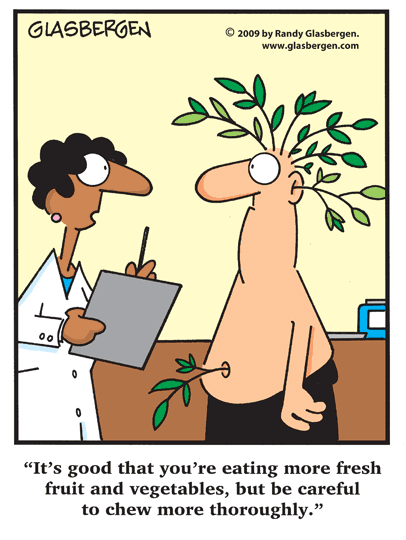
For many more cartoons, please visit Randy's site @ www.glasbergen.com.

Tuesday, March 1, 2011

Rainbow Plates this March!


March is considered to be the annual month of Nutrition with this year’s theme being “Eat Right with Color”. A rainbow of fruits and vegetables creates a palette of nutrients, vitamins, minerals, antioxidants and phytochemicals on your plate, each with a different bundle of healthful benefits.
It is important to know that variety within each food group is essential because each offers unique nutritional benefits and supply different nutrients.
Green produce indicates antioxidant potential and may help promote healthy vision and reduce cancer risks. Fruits and vegetables that are green are rich in phyto-nutrients and antioxidants that
Fruits include avocado, green apples, green grapes, green pears, kiwifruit and limes whereas vegetables include artichoke, asparagus, zucchini, dark green leafy vegetables, spinach, mloukhiye, green peppers, broccoli, parsley, rocket, peas, okra, cabbage, mint and the list goes on! This is the most abundant variety we have in Lebanon from which we can benefit a lot when making our famous Fattouch salad!
Orange and deep yellow fruits and vegetables contain nutrients that promote healthy vision, healthy heart, better immunity and reduce the risk of some cancers.
Fruits include oranges, mango, cantaloupe, tangerines, pineapple, apricots, peach, papaya and yellow figs while orange vegetables include carrots, yellow pepper, pumpkins, sweet corn and sweet potatoes.
The rich orange color offers antioxidants such as carotenoids, bioflavonoids and the antioxidant vitamin C. The deeper the yellow/orange color, the more carotenoids these foods have!
Purple and blue options may have antioxidant and anti-aging benefits and may help with memory, urinary tract health, recurring infections and reduced cancer risks. Fruits that are purply are blackberries, blueberries, plums, raisin and purple figs while vegetables are eggplants and purple cabbage. These contain phenolic antioxidants and anthocyanins, which is responsible for the dark purple color.
Red and pink color indicate produce that may help maintain a healthy heart, vision, immunity and may reduce cancer risks. This color group delivers lycopene, a powerful carotenoid, as well as anthocyanin. Reddish fruits include strawberries, pomegranate, cranberries, red or pink grapes and watermelon and the vegetables can include beets, red onions, red bell pepper and tomatoes
Last but not least, the last member of the palette is white, tan and brown foods that contain nutrients promoting heart health and reduce cancer risks. These include fruits such as banana, pears, dates and white peaches in addition to vegetables such as cauliflower, mushroom, onions, turnips, potatoes and garlic. Selenium in mushrooms and allicin in garlic and onion are of great antioxidant potential.
In whatever meal you are having, always include a bowl of colorful mixed vegetables followed by a snack of delicious fruits!
For more information, check Eat right.org

Kalyn's Kitchen Creative Salad Recipes

Recipe for napa cabbage, red cabbage and peanuts from Kalyn's Kitchen
Since it's fruit and vegetables' month with eating with colors and all, one smart and creative blog I love to get inspired from is Kalyn's Kitchen, especially her exhaustive salad selection.
In her blog, salads are divided either with:
  • Tomatoes and cucumbers
  • Fruits and vegetables
  • Greens (arugula, spinach, cabbage, lettuce, etc.)
  • Carbs source (pasta, grains, beans, rice, etc.)
  • Or with a protein source (cheese, eggs, different types of meats)
Now if you select one one the above mentioned types, hundreds of salad recipes appear, and that's the best part! I mean how creative can you really be?
Just check the Salads with Tomatoes and Cucumbers for instance and get inspired.

As for my personal favorite, I love the selection of "salads with vegetables and fruits" because salads are divided by fruit/vegetable type: whether with radishes, asparagus, avocado, snow peas, carrots, celery and the list goes on!


Who said you can't have one different salad every day of the year?
So here are few delicious photos of few salad ideas from Kalyn's!


Friday, February 11, 2011

10 Great Tips to Get Your Kids to Eat Vegetables and Fruits


There is no doubt that fruits and vegetables are very important, so we’ve heard! However, recent studies indicate that children who ate the most vegetables and fruits had significantly healthier arteries as adults than children who ate the fewest. So you see, what your children eat during their childhood reflects on their lifestyle, eating habits and overall health as adults.  Therefore, here are 10 helpful and efficient tips formulated from the American Heart Association aiming to encourage your children to include more vegetables and fruits in their diet. This way, they will increase their intake of vitamins, minerals, antioxidants, water and fiber! 
1.   Make fruit and vegetable shopping fun and educative: Visit your grocery store with your children and show them how to select ripe fruits and fresh vegetables. This is also a good opportunity to explain which fruits and vegetables are available by season and how some come from countries with different climates. Make fruits and vegetables interesting: talk about where they come from, how they are planted, grown and cultivated.
2.   Involve kids in meal preparation: Find a healthy dish your kids enjoy and invite them to help you prepare it. There are many things children can help you with; it all depends on their age: younger kids can help with measuring, crumbling, holding and handing some of the ingredients to you while older kids can help by setting the table and cut fruits and vegetables into chunks, of course, when supervised by you. Make sure to teach them the right way to help and definitely praise them for their great help. This way, they will feel proud that they assisted you and participated in preparation a family meal. It will encourage them to eat a meal they have themselves made!
3.   Be a role model: Yes, you have a huge influence on your kids. Studies, whether recent or old, always assure the influence parents have on their children! If you are eating a wide range of fruits and vegetables, while surely enjoying them, your child would want to have a taste of what their parents are enjoying! You can’t push them to eat healthy when you show them it’s not your favorite. You are their idol so use it for your and their benefit.
4.   Create fun snacks: Schedule snack times for most kids like routines. Snacks are great when they are wisely chosen. Between meal snacks are a great opportunity to offer fruits and vegetables to your kids while enjoying them together.  To start with, make fruits and vegetables visible for your children. How? Place a bowl in the middle of your kitchen table at all times! Fill it with different kinds of fruits and vegetables and always remind your kids that it’s sitting right there. Moreover, kids like to pick up foods with their hands, so give them finger foods they can handle depending on their age. You can also cut up a fruit and arrange it on an attractive plate, make a colorful rainbow in their plate, make a smoothie or freeze a smoothie in ice cube trays. Be creative! Create a smiley face from cut-up vegetables and serve with a small portion of low-fat salad dressing, hummus or plain low fat yogurt or labne. 
5.   Give kids choices - within limits: Too many choices can overwhelm a small child. However, giving your children the freedom to choose from a short list is a great idea. This way you will be encouraging them to start formulating their own decisions while pushing them to eat healthy foods. Don’t go asking them what they want for lunch but don’t force them with one kind of food. Instead, offer them limited healthy choices for snacks, such as dried fruits with nuts, banana, strawberry with cereal or carrot fingers?
6.   Eat together as a family: If your schedules permit, family dining is a great time to help your kids develop healthy habits and attitudes about food and the social aspects of eating with others.  Make sure you are eating your fruits and vegetables constantly and in front of your children. Even if they aren’t eating certain vegetables yet or they are rejecting others, they will model your behavior sooner or later. This is why tip 10 is crucial no matter what!
 7.   Expect pushback: As your kids are exposed to other families’ eating habits, they may start to reject some of your healthy offerings. Without making a disparaging remark about their friends’ diet, let your children know that fruits and vegetables come first in your family. A positive experience with food is important. Never force your child to eat something, or use food as a punishment or reward
8.   Grow it: Start from the ground up — create a kitchen garden with your child and let them plant tomatoes and herbs, such as basil and oregano in window boxes. If you have space for a garden, help them cultivate their own plot and choose plants that grow quickly, such as beans, cherry tomatoes, snow peas and radishes. Provide child-size gardening tools appropriate to their age. 
9.   Covert operations: You may have tried everything in this list and more, yet your child’s lips remain zipped when offered a fruit or vegetable. Try sneaking grated or pureed carrots or zucchini into pasta or pizza sauces. Casseroles are also a good place to hide pureed vegetables. You can also add fruits and vegetables to foods they already enjoy, such as pancakes with blueberries, carrot muffins or fruit slices added to cereal. On occasions when you serve dessert, include diced fruit as an option. 
10. Be patient: Changes in your child’s food preferences will happen slowly. They may prefer sweet fruits, such as strawberries, apples and bananas, before they attempt vegetables. Eventually, your child may start trying the new vegetable. Many kids need to see and taste a new food a dozen times before they know whether they truly like it. Try putting a small amount of the new food — one or two broccoli florets — on their plate every day for two weeks; but don’t draw attention to it. 
Brought to you from the American Heart Association.

Wednesday, January 5, 2011

Five Ridiculously Good Foods!

Avocado 
These smooth, buttery fruits are a great source of not only "good" fats such as mono-unsaturated fats but other key nutrients as well. One Ohio State University study found that when avocado was added to salads and salsa, it helped increase the absorption of specific carotenoids, plant compounds linked to lower risk of heart disease and macular degeneration, a leading cause of blindness. “Avocados are packed with heart-protective compounds, such as soluble fiber, vitamin E, folate, and potassium,” says Elizabeth Somer, RD, author of 10 Habits That Mess Up a Woman's Diet.
However, they are a bit high in calories. To avoid weight gain, use avocado in place of another high-fat food or condiment, such as cheese or mayo and always keep in mind that, after all, it's a fat.  


Oatmeal 
Fiber-rich oats are even healthier than the FDA thought when it first stamped them with a heart disease–reducing seal 10 years ago. According to new research, they can also cut your risk of type 2 diabetes. When Finnish researchers tracked 4,316 men and women over the course of 10 years, they found that people who ate the highest percentage of cereal fiber were 61% less likely to develop type 2 diabetes.

To reap the benefits, eat 1/2 cup daily—preferably unsweetened. For a versatile breakfast, top with different combinations of fruit, yogurt, and nuts. You can also use oats to coat fish or chicken or add texture to meatballs. Check my more detailed article about Oats!


Salmon
Salmon is a rich source of vitamin D and one of the best sources of omega 3s fatty acids. These fats have a wide range of impressive health benefits: form preventing hear diseases to smoothing your skin, decreasing inflammation, aiding weight loss, boosting your mood and minimizing the effects of arthritis.
Moreover, omega 3 aids in decreasing memory loss and slows the rate of digestion, thus, making you feel fuller for longer! Watch out to get plenty of fish - at least 2 to 3 servings per week, this way your body will take its needs of proteins and omega 3 altogether! 


Apples
One of the healthiest fruits you should be eating or you probably already are, hence the saying: "An apple a day keeps the doctor away!" Fortunately, it's abundant in Lebanon. The Iowa Women's Health Study, which has been investigating women for nearly 20 years, names apples as one of only 3 foods (along with pears and red wine) that are most effective at reducing the riskof death from heart disease among postmenopausal women. Other massive studies have found the fruit to lower the risk of lung cancer and type 2 diabetes, even help women lose weight! Apples are rich in fibers, vitamins, minerals and water, so it's actually a win-win situation when you have yourself one of these!

However, keep in mind that one thing can make an apple unhealthy is when it's mixed with caramel, sugar, flour, butter or/& stuffed within a pie or on a tarte! Instead, have a fresh crunchy apple as a dessert or even added to salads!


Dark Chocolate
Yes, yes, dark chocolate! It is filled with flavonoid anti-oxidants that help keep platelets from sticking together, consequently clogging your arteries. It also can help decrease the risk of cancers with its anti-oxidative abilities. And there's more to add! According to a study from Denmark, it may also help you lose weight by keeping you fuller for longer! Researchers gave 16 participants 100 grams of either dark or milk chocolate and 2 hours later offered them pizza. Those who consumed dark chocolate ate 15 % fewer calories that those who had milk chocolate!
So not to make a huge fuss about it, have a small portion of 70 % cocoa or more from time to time! Desserts should not be banned if you are trying to watch your diet, just know what and how much to have!

Wait for more! Brought to you with amendment from Prevention website!

Tuesday, December 21, 2010

Spinach, Strawberry & Ricotta Salad

This salad is the easiest to prepare, gorgeous to the eyes and yummylicious to your taste buds! I got it from Live to Eat Blog. Since the holidays are near, you can prepare this simple salad if you are hosting Christmas dinner or New Year's Eve party!

In order to prepare 2 servings, you will be needing:
  • 20 big sized spinach leaves
  • 20 pieces of strawberry, fresh or frozen
  • Ricotta cheese, 2 to 3 tbsp
For the dressing, it's preferable to mix all the ingredients together and refrigerate them for an hour before serving.
  • 1 tbsp olive oil
  • 1 tbsp red wine or balsamic vinegar
  • 1 tsp lemon juice
  • honey and cinnamon powder are optional, yet they add a sharp taste to your salad
Now the preparations:
  • Wash the spinach leaves thoroughly and pat dry them. Then break or cut them into desired sizes and place them in your salad bowl.
  • Wash your strawberries if fresh and keep in mind that strawberries are very perishable, thus you should not wash them until right before preparing this salad. Don't remove their caps and stems till you are done with washing them under cool running water. Simply pat dry them to prevent them from absorbing extra water, degrading their texture and flavor. Now cut them in half.
  • Arrange the strawberries and ricotta on your bed of spinach leaves.
  • Toss them all together and when you want to serve, drizzle your bowl with the prepared dressing and serve!
You can go for rocket leaves instead of spinach or feta cheese instead of ricotta. Feta will give it a saltier taste combining it with the sweetness of those strawberries.


So when you prepare this salad, not only will you satisfy your taste buds, but you will also get lots of nutrients on the side. You will get extra fibers from both the spinach and strawberries. The spinach will also provide vitamin A, E and K along with calcium, folate and iron while the strawberries will provide you with potassium and vitamin C & A. As for the ricotta cheese, it is considered a medium fat cheese that is rich in calcium, proteins, phosphorus and Vitamin A.
Bon appetite!
I owe this delicious recipe and colorful image to Live to Eat Blog!