Showing posts with label Beverages. Show all posts

Thursday, June 28, 2012

Fight Sugar, Know the Facts

Everyone is fighting sugar this summer, and it's about time!
More campaigns are targeting both parents and children to decrease their intake of sugar, especially those added sugars from sweetened beverages, cokes, candies, chocolate, ice tea, cookies, biscuits, jelly beans, cereals, pastries, doughnuts, croissants, cakes, flavored yogurts, milk shakes, ice creams, cereals, coffee drinks, canned foods, and we both know the list goes on!  Sugar is even found in condiments such as ketchup and salad dressings!

Two of the beautiful, smart campaigns again excess sugar intake are:

Cereal FACTS - Debunking all types of sweetened and unhealthy cereal and cereal products, especially those advertised for children. You can find top and bottom 10 lists of cereals by brands. Their information target both consumers and researchers with reports stating what is most advertised to children and which brands contain the most sugar content so let's hope they're not being lobbied by any side! You can heck their website here.
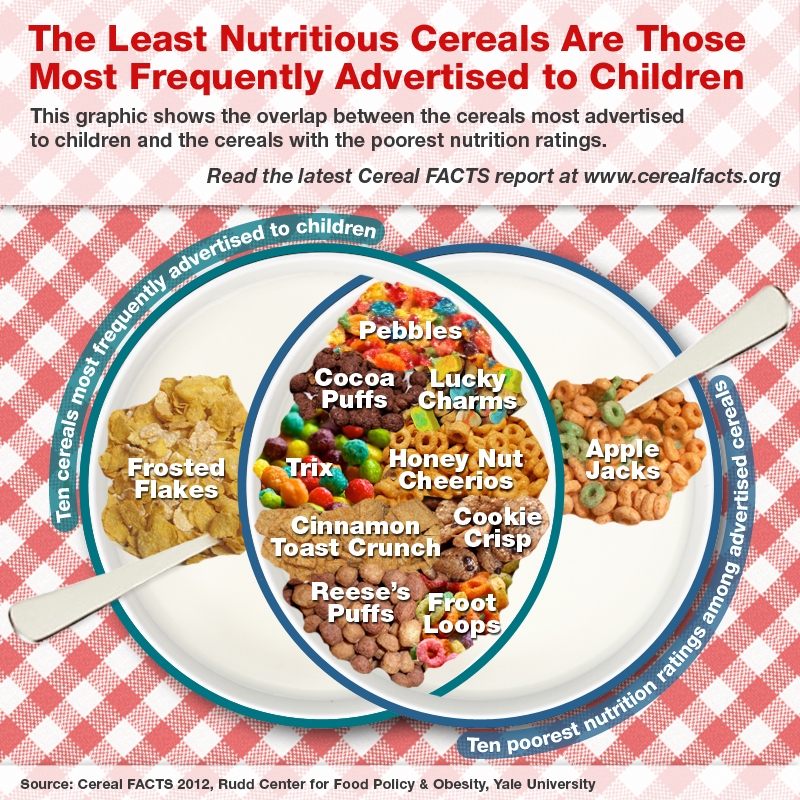
Photo from: Cerealfacts.org


Soda Free Summer  - Urges people to 'Rethink their drink' by fighting added sugars whether in carbonated beverages or other sweetened juices and drinks! Most people don't realize that they tend to gulp their calories in. In fact, half on the American population over the age of 2 consume sugary drinks everyday! Soda Free Summer explains how much calories and sugar various contain nowadays, how much exercise you need to burn them off, the unhealthy toxic effects of excess sugar intake as well as beneficial school tools. You can check their website, their twitter and their facebook page.

  
So why do we really care about added sugars?
  • Sugar increases tooth decay
  • Promotes weight gain
  • Acidifies your blood, such that your body will need to extract some minerals from your bones to buffer that acidity!
  • Increases triglycerides and therefore, increasing the risk of heart diseases and inflammation [Source]
  • Decreases your immune system by acting as a substrate for bacteria in your body
  • Increases the risk of skin aging, a much less famous crime
  • Increases the risk of cognitive impairment 
  • Some sugars like HFCS (High Fructose Corn Syrup) have been linked to increased risk of abdominal fat, increased insulin resistance and diabetes type 2, increased metabolic syndrome, fatty liver and increased LDL cholesterol.
  • More research is finding association with increased risk of cancer and more cancer! well. For instance, pancreatic cancer's risk increase by 2 times with increased sugar intake!
  • People who consume large amounts of added sugars tend to eat less nutritious food, resulting in poor nutrition as well as vitamin/mineral deficiencies.
  • Last but not least, very recent research links high sugar (mainly high fructose corn syrup - HFCS) intake to stupidity! High HFCS intake may highly affect the mind's long term ability to learn and remember! 

But why do they even add sugar to food?
Sugar tend to preserve foods, increase fermentation, give pastries and baked goods texture, add a unique flavor to foods [especially that we tend to prefer sweet tastes innately], and yea, because it's addictive so you'll definitely come back for more!

So the whole point out of this article is for you to Cut Down on your Sugar Intake.

1- Know the different names of sugar!Sugar can be simply called sugar/brown sugar, or its gazillion alternative tricky names from dextran, fructose, glucose, lactose, galactose, molasses, invert sugar, sucrose, corn syrup, high fructose corn syrup, beet sugar, barley malt, maltose, maltodextrin, honey, agave nectar, cane, cane juice crystals, caramel, maple syrup, sorghum syrup, turbinado, treacle, muscovado, panocha - some of which I can't even recognize!
Photo from: RefreshKansas.org

2- Check what ONE serving is! What manufacturers tend to do is mention how much calories, nutrients, sugars, vitamins, etc. there are per serving. But what consumers tend to think is that a whole package is one serving - and it's almost always NOT.
So let's take a look at the photo on the right. First, check what one serving is, in green. 1 serving is referred to as 'Serving Size'. This serving has 26 g grams of sugar, as shown in pink. Now the actual package has 2.5 servings, not just one, so do the math!

3- Know the linguistics
  • Sugar-free: there must be less than 0.5 grams of sugar per serving.
  • No added sugars/ Without added sugar is used if no sugar was added during processing
  • Reduced/less sugar is used when there is at least 25% less than a similar reference food so it doesn't mean it is low in sugar!
Photo from: Thearrowsoftruth.com


4- Know the ingredients' order
So when you check your label, which I'm hoping you will from now on, know that ingredients are listed in descending order of weight. On the right, you can find a coke's label where you can see that the 2nd ingredient is HFCS (High Fructose Corn Syrup)!
  

Sugar can definitely harm you, just like tobacco and alcohol so it must be regulated! Why isn't it regulated, you ask? Well, because the industry is making huge profits from their 'suga-baby' and taxing it would lead to less profit! In fact, in a report by the USDA (pdf file), taxing sweetened beverages could end up in decreasing total caloric intake and an estimate of 2 kilograms of adult and child weight per year, aiding in decreasing the worldwide epidemic obesity.

And no, don't go saying that sugar will give you the energy you need! Excess sugar intake will definitely increase your blood sugar steeply, only to cause a quick drastic decrease causing hypoglycemia - characterized by fatigue, nervousness, sweating, hunger and trembling! So pledge to start decreasing your intake gradually - you will benefit greatly!


Monday, January 16, 2012

Fake Resveratrol's Heath Benefits?

Turns out the benefits of red wine due to its content of resveratrol may be fake/falsified after all! Nothing is sure yet but last week, on Jan. 11, after an investigation that lasted 3 years, Dipak K Das, PhD, “one of the world’s great red wine and resveratrol researchers with more than 150 PubMed articles was charged for allegedly doctoring results in at least 26 peer-reviewed resveratrol papers over 7 years!

Resveratrol is a phytoestrogen and an antioxidant found in the skins of grapes and therefore, has been known to its cardioprotective properties of red wine. It is also found in various types of berries such as cranberries and blueberries, as well as a little amount in peanuts. According to Dr. Das's articles, resveratrol has been shown to be a very important and potent antioxidants, capable of scavenging free radicals that, when accumulated, increase oxidation of the cells, causing premature aging disrupting the cell's functions. Therefore, Dr. Das has been working on more than hundreds of studies to show how resveratrol can be the next anti-cancer/ anti-cardiovascular/ anti-inflammatory molecule! The man was about to replace aspirin with resveratrol!

Investigations are still in progress and you can read the detailed 50 page report about the Special Review Board Report Investigation of Allegation of Research Misconduct by the Office of Research Integrity.
Dr. Dipak's work as the director of Connecticut's Cardiovascular Research Center is now suspended as well as as his 900,000 $ research programs!

We'll just have to wait and see about the future of resveratrol (and red wine) and their nutritional potential!


References: Investigation Report, CTmirror.org, Chicagotribune, Nutraingredients
Photos: Red Wine

Monday, January 9, 2012

Yansoun w Joz!

During this cold in Lebanon, I love to curl up with a warm drink! Today I went for a cup of an after infusion of anise with some raw walnuts on the side, it's actually my dad's favorite.
I just took 1 teaspoon of yansoun seeds, slightly crushed them to release their volatile oils and boiled them in water for 5 minutes. Antonio Tahhan preferred to have his anise with a man2ouche on the side; nevertheless, you can check here how he prepared his anise infusion a la Libanaise!

Anise benefits
Not only is it sweet with no sugar at all, it's absolutely warming! 
  • Anise seeds have antioxidant effects, according to a 2007 study published in the journal "Food Chemistry". Its powder and extract exhibit significant antioxidant activity, with at least 25 antioxidants such as flavonoids like quercetin, and cumarins !
  • Anise active compound, anthole, has been found to be antifungal and antimicrobial.
  • The seeds contain vitamin C, B1, B2 as well as iron, potassium, sulfur and phosphorus. They also have galactogenic properties to induce milk production in breastfeeding women.
  • Anise seeds have been used to relief indigestion, colic, gases, abdominal cramps and nausea. However, in Lebanon, it is quite the tradition to boil anise seeds and add them with infant formulas to help in relieving infants' colic. But it's not the wisest decision - anise infusions cannot be filtered properly by infants' kidneys and thus it is advised to let go such 'tradition'.
  • As for anise oils (not its seeds), they may work as an expectorant, helping to cough up of mucus in conditions like asthma, bronchitis and the common cold. Keep in mind that when using anise oils, large quantities may cause nausea and vomiting, seizures and even pulmonary edema so don't go buying oils and using them on your own. Always consult your health care provider!

As for walnuts
  • Walnuts are 62% fat, mainly polyunsaturated fatty acids, such as linoleic acid (omega 6) and linolenic acid (omega 3). Omega 3 is known for its ability to aid in reducing cholesterol levels in the blood, preventing formation of clots and reducing inflammatory processes. Actually, walnuts is one of the best vegetable sources of omega 3, along with canola oil!
  • Walnuts are also a good source of proteins, more than peanuts but the same as almonds. They may lack some essential amino acids, but when combined with whole grains, it's a complete source of proteins.
  • Walnuts are also a good source of vitamin B1 (thiamin) that is necessary for the function of the heart and stability of the nervous system and especially B 6 (pyridoxine) that is involved red blood cell production and proper brain functioning! This is why walnuts have been associated with helping in coronary heart diseases and disorders of the nervous system.
  • As for minerals, walnuts are rich in phosphorus and potassium, while being low in sodium -  a great combination for promoting heart health. They also contain magnesium, iron, calcium, zinc, copper and manganese, an absolutely rich cocktail!
  • Walnuts are the nuts with the highest caloric content, due to their high fat (oil) content. In fact, ONE walnut (with 2 halves) contains 26 calories! This is why just don't place the whole walnuts bag in front of you, it's very easy to overeat. Just place a small handful of nuts on the side of your cup and enjoy!

Sunday, October 30, 2011

Warm Hot Chocolate in this Cold Weather!

Deliciousness in a warm cup
With rain all over the country, one can't but want a warm cup of tea, coffee or in my case hot chocolate! Tea and instant coffee mixes can sure provide you with a low calorie warm drink if prepared right, but I was craving some delicious cocoa and there's no better idea than to make a hot cup of chocolate! Better yet, there is no better news than the fact that cocoa is indeed a great source of antioxidants. Some cocoa powders - like natural ones from Nestle or Hershey's for example - have more antioxidants than others - Dutch processed cocoa - due to the different processing techniques that could reduce the polyphenolic compounds such as flavonoids. Nevertheless, unsweetened cocoa dry powder is the cocoa type to choose. Try to go for organic ones, I prefer those to be honest!


Preparation is simple and quick! Just mix 3 tbsp of milk (I usually go for almond or rice milk and not animal-source milk - so this is great if you're a vegetarian or vegan), 1 tbsp of unsweetened cocoa powder and 1 tsp of sugar (or agave if you are vegan) in a warm cup of water! This way, you'll end up with a rich warm cup of hot chocolate, enough to provide you with calcium, proteins and antioxidants all in around 100 calories! Now, for some, it's a big deal to switch to nut/rice milk, but, hey, you will be cutting off at least 100 calories and lots of cholesterol and saturated fats!

Keep in mind to lay low on those marshmallows, biscuits and cream that could lurk around your hot chocolate. Either way, when you're craving a sweet chocolate taste, hot chocolate made with skim milk and unsweetened cocoa powder is a healthier sweet source than a commercial chocolate bar.


Monday, October 24, 2011

Right Nutrition When You Have the Flu!

So the flu season is here! I've been sneezing and coughing all day and I found myself super tired, with watery eyes, a sore throat and no appetite at all! Obviously, when you're sick, you're too tired to think about healthy eating! Now, a healthy lifestyle - with lots of fruits, vegetables and lean protein, accompanied by regular exercise – will help in increasing your immune system. Alas, colds and flus are possible and it’s natural to let good nutrition slide when coping with illness. But when your body battles flu symptoms for days or weeks, your diet is essential to help you achieve speedy recovery especially with work, school or university - these guys just don't seem to take a break!

Nutrition tips to boost your strength and immunity!

Protein is crucial - Because protein is crucial for building and repairing cells, it can help prevent the loss of muscle mass. It also helps maintain fluid balance and improves your body's ability to heal, especially that antibodies needed to find germs are actually made of proteins themselves!Some sources of protein are fish, chicken, lean meat. Eggs and dairy products such as milk, labne and cheese are also easily digestible forms of animal protein, but I'm not a big fan. You can go for animal sources of protein such as quinoa, legumes and nuts. The key is to combine legumes, beans and nuts with whole grains such as bulgur, whole wheat or rice. This way, legumes and grains will complement each other in providing you with complete source of proteins.

In addition, by eating foods high in protein, you also get the benefit of other healing nutrients such as vitamins B6 and B12, both of which contribute to a healthy immune system. Proteins also contain minerals such as selenium and zinc that work to keep your immune system strong!

Getting Enough CaloriesWhen trying to lose weight, counting calories could become a habit. So if you are a calorie counter, it’s time to ditch this habit! When you are sick, instead of trying to cut your total energy intake down, it’s time to increase it. Because your body is working harder to fight off germs and boosting your strength, you will sure need the extra nutrients!
Moreover, when you are sick, your appetite might decrease which could cause unintentional weight loss leaving you weak and exhausted! Therefore, boost your protein in your diet, have fruit and yogurt, whole milk and cream soups with vegetables and chicken!

Keep your Fiber in Check - Fiber is good for you both in the short and the long term. It helps keep you regular and prevents constipation. In the long run, it may lower the risk of intestinal problems, diabetes, and other diseases.But when you're feeling sick, it's easy to forget about the fiber. These diet changes, along with lower fluid intake and less exercise, can lead to constipation. So focus on having enough proteins, nutrient and energy dense foods as well as best sources of fiber such as fruits, vegetables, legumes, whole grains and nuts!
Having warm nutritious
soups can revitalize you!
Lots of fluids are a must - Water, soups and teas help keep your system stay well hydrated and counteract any fever you have. Warm teas help in opening congested airways, thin mucous secretions, coat the throat, soothe and warm up your aching stomach, help in decreasing any flu-related nausea and drain mucous secretions faster. Hence, the chicken soup: warm fluids with veggies as fibers and chicken as proteins!
In some people, dairy products increase mucus production. If this happens to you, avoid dairy for a few days. Dairy products may also make nausea and vomiting worse so know thy self!

Supplements - Vitamins and minerals are important for health; calcium, potassium, and vitamins A, C, D and E are just a few of them. But don't make the mistake of relying on supplements, instead you should concentrate on getting nutrition from whole foods. Lots start popping vitamin C tablets with their drinks and with every meal possible! Well, vitamin C  is protective if taken adequately as part of your daily dietary intake and not as a last minute resort! With whole foods, you’ll have the perfect combination of nutrients, vitamins, minerals, antioxidants and fiber! But hey, always check with your doctor before starting supplements or any alternative treatment!
Have lots of rest,
you need it!

Your sense of taste may be off since your nasal passages are plugged. So don't be surprised if some or your favorite foods don't taste the same.Remember to get plenty of rest, your body needs it!Everyone needs to get enough sleep, vitamins and nutrients and this is truer than ever when you're sick.


Photo sources

Sunday, September 18, 2011

Barcelona is Del-iiii-cious!

Barcelona is an amazing historical city! It is pretty easy to move around it even if you haven't been there before thanks to their touristic buses! There's a lot to see here -from monuments, beaches, parks, ancient churches and all the beloved work of Antoni Gaudi, you cant' but fall in love with the city! 

Better yet, the food is not to be missed! Barcelona is famous for many: Tapas, Paella, Churros, Sangria, and the list goes on and on so I couldn't but have "me" some, right?

Tapas Tapas, yum yum!
Tapas are small snacks given when ordering a drink in a bar, in our case it was given with wine Sangria (as opposed to champagne Sangria). As you can see in the photo, any kind of food -seriously- can be served on a delicious baguette as a form of a snack or appetizer served either with or before your meal/drink! In some restaurants, they are offered for free (so we've heard) but in the resto we visited, we ordered them - you just can't visit Spain without having yourself some good Tapas! With any round of drinks, tapas are usually presented, even if it's just a small tapa. They can be served both hot or cold, depending on the type of food served on your tapa.
My 2 favorites were Tortilla de patatas (potato omellete) made from potatoes and eggs served on a white baguette with onions, spinach and cheese as well as the Gambas al ajillo (shrimps) served cold with some creamy garlic bed, yum!

Seafood paella, all the seafood you can have
Paella is another seriously good meal you have to taste when in Spain, after all it's the Spanish daily dish! There are three widely known types of paella: Valencian paella (paella Valenciana), seafood paella (paella de marisco) and mixed paella (paella mixta), along with other types of course.
Valencian paella consists of white rice, green veggies, meat (could be chicken, duck or rabbit) with snails and beans, while seafood paella has no veggies, beans, meats, snails, but instead some an exquisite bouquet of seafood! As for the paella mixta,it's actually free styler with a combination of meats, veggies, seafood and beans! 
What makes the rice yellowish is the addition of saffron to the dish.Some olive oil could go into this dish as well so yes, peeps, it is super delicious!

Churros with molten chocolate
Churros are the Spanish desserts, their version of doughnuts! These are delicious, although I would have to say: the fact that they are deep fried pastries = unhealthy refined sugars! You can even dip them in hot molten chocolate, like how I tasted mine! We bought ours while walking back from the annual Fiesta de Gracia, but they can also be dipped/eaten on the side with cafe latte! So when in Spain, have a taste of their famous Churros, but in moderation, of course!

Zesty Sangria with freshly cut fruit
Last but least, we had some Sangria!
Sangria is a wine punch served everywhere you go in Spain! There are many types of Sangria and lots of ingredients can go in this famous drink: white wine, ginger ale, 7 up, amaretto, etc. But it is usually made of:
  • Red wine, although there are some Sangria's made from champagne - the wine version tastes much better!
  • A small amount of brandy
  • Chopped fruit, like oranges, lemons, apples, cherries, strawberries, grapes, pineapple or - the best part - whatever fresh fruit you feel like!
  • With some orange juice or honey, sugar or syrup as a sweetener
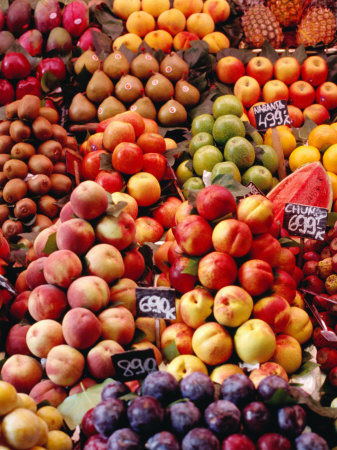
Fruitful, colorful Mercat
Either way, when in Spain, have yourself some good time, the beach is amazing, the churches are majestic, the monuments are historical and Gaudi's work is not-to-be missed! Bicycle around the city, enjoy some seriously Del-iii-cious food and make sure to pass by the colorful public market in Barcelona: La Boqueria Mercat!

Tuesday, August 30, 2011

Sugar, Not So Sweet Afterall!

Sugar is everywhere we look! We, by nature, like comfort foods, sweets and sugar! In fact, sweet is the first taste humans prefer from birth, so it's no surprise that we tend to gulp sweetened foods and beverages! 
But why!
Humans have this preference for sugar largely because carbohydrates stimulate the release of the feel-good brain chemical serotonin which affects brain cells related to mood, sexual function, sleep, memory and learning, temperature regulation, and appetite. Thus carbs and sweets affect us more than we know it! 

Some examples of when sugar can lurk around in foods and drinks are coffee, cocktails, milkshakes, regular soft drinks, iced tea, fruit juices, sports drinks, energy drinks, salad dressings, cake mixes, ice cream, chocolate bars, jelly, cookie, pastries, sweets, knefe, croissants, cornflakes, chocolate spreads! And even though sweetened beverages are just liquids, these drinks provide you with empty calories more than beneficial nutrients and can pass by unnoticed especially in hot, humid weather, gulping one drink after another!

But sugar can be tricky, so how to detect it?
Spotting added sugar on the food label requires a bit of detective work. Food and beverage manufacturers must list the product's total amount of sugar per serving on the nutrition facts label. This is why you will need to scan the ingredients list of a food or beverage to find that added sugar! Note that all ingredients are listed in descending order by weight, yup! Therefore the relative position of sugar in the ingredient list is crucial and can give you an idea of whether the food contains a lot of sugar or just a little as compared to the other ingredients.
Added sugars go by many different names, yet they are all a source of extra calories! So here's a small list of what sugar can go by:


Moreover, if the label says "no added sugars", it should not contain any of the above mentioned sugars, although the food could contain naturally occurring sugars (such as lactose in milk for example). However, note that although these foods don't contain high sugar ingredients and no sugar was added during processing/packaging, foods without added sugar may still be high in carbs!
So in order to know how much exactly is a gram of sugar: One teaspoon of granulated sugar equals 4 grams of sugar. To put it another way, 16 grams of sugar in a product is equal to about 4 teaspoons of granulated sugar, so do the math!
Remember, your body doesn't care what the label says, it's all just "sugar"! Read the ingredients and watch out for drinks and foods that are high in sugar. Having a lot of sugar whether from food or sweetened beverages can lead to gaining extra weight, even in active people!

References:

Monday, August 1, 2011

7 Things You Gotta Know About Coffee


  • Coffee has its different national days in some counties that are actually public holidays. In Japan, for instance, October 1st is 'Coffee Day'. In Ireland, it is September the 19th, and in Costa Rica it is 12th September.There's no such thing in Lebanon, at least not yet!
  • A cup of black coffee does not contain any calories if served without sugar, yet is still contains the caffeine. And even if you decide to go decaf, you'll still get some of that caffeine. In fact, if you drink 5-10 cups of decaffeinated coffee, you could get as much caffeine as from 1-2 cups of caffeinated one.
  • More than 1.4 billion cups of coffee are consumed each day worldwide and it takes around 40 roasted coffee beans to make just one single espresso shot!
  • Caffeine is not the main bitter compound in coffee; it's just responsible for 15 % of the bitterness you taste. The rest is due to antioxidants that form during the roasting the coffee beans.
  • The traditional espresso machine was actually invented in France, not in Italy, bummer! However, the Italians took this idea, perfected it & made it their own and nowadays, the best espresso coffee machines are still made in Italy. Note that espresso in Italy is rather too important to be consumed with a meal. It is treated as a separate event and is given its own time after the meal.
  • The most expensive coffee in the world comes from Civet poop. Civets are cat sized mammals that only ingest fine ripe berries and excrete them partially digested. Yup the partially digested berries are those fine coffee beans! Believe it or not 1 pound (around 1/2 kg) sells between 120 and 600 $.
  • Last but not least, here's a quick mini poster that would help you to decipher all those coffee options next time you're ordering/making one: Make sure to go decaf, get yourself some skimmed milk & lay low on those added sugar, cream, syrups, toppings and chocolate chips! You can read more about what to choose when ordering/preparing your coffee here.
Illustration by Lokesh Dhakar


References:

Monday, July 18, 2011

Skinny Drinks this Summer!


This summer time is full of concerts and partays! Fun summer times I bet, yet with hidden calories especially from drinks and beverages you may be having on daily basis.
Choosing the right drinks can help you reduce your total caloric intake, so WebMD divided drinks into 2 categories: Spoilers and Helpers and thus helping us decide what to drink and what not to when we’re watching our diets!
Soda VS Water
A can of soda can contain up to useless/non-nutritious 150 calories of sugar! You can definitely switch to diet versions of these fizzy drinks, yet research is still lost on whether this switch can actually help weight loss! While replacing soda with water can cut those calories, boost your metabolism and make you feel fuller for longer because of the distention it causes to your stomach!


Fruit VS Vegetable JuicesWell juice can have “healthy” written all over them. However, juice can have as many calories as soda (with more nutrients, vitamins, antioxidants to offer of course). So look for 100 % fruit juices (with extra fibery pulp) and mix them with water! However, with half the calories you get from fruit juices, vegetable juices like tomato for example offers you nutritious vitamins, antioxidants and minerals. At WebMD, they even compared that 1 cup of tomato juice has 41 cals while 1 orange juice cup contains 122 cals! Talk about cutting down your calories by more than half!
 
Smoothies VS Low fat milkWith their fruits: bananas, watermelon and strawberries can “seem” the healthy choice for your cocktail! Yea, well, not really. When you blend your own smoothie at home, whether you add alcohol or not, you can actually control the ingredients; whereas, in pubs and restaurants, smoothies can have enormously huge amount of calories especially that they could be done with honey, ice cream and lots of sugar. Go for skimmed milk when you ask for a smoothie or a cocktail containing milk. You can definitely control the content of your drink while enjoying it too!

Energy drinks VS Black Coffee - Energy drinks are “calorie bombs” like soda. Never mix your energy drinks with liquor like vodka for example, they have seriously opposite effects on your body leading to heart arrhythmia, chest pain and sweating! So when you need a shot of caffeine, coffee is a better choice than soda/energy drinks. Black coffee is calorie free and rich in antioxidants, so yea it is a much better choice than energy – useless- drinks.

Cocktails VS Beer - A shot of hard liquor has fewer calories than wine or wine coolers, but once you mix it with soda or cream, watch out for sky rock calories! A glass of white Russian made with light cream has 715 calories so a less fattening option is to mix rum or vodka with diet soda. As for light beer, well OK, so beer is not really going to help you lose weight per se but it’s always my first choice after diet soda! If you are in the mood for alcohol and you’re out with friends, a beer contains 150 cals while a light beer contains 100 cals so go for beer! 


Check here for more drinks and their caloric content!

References: WebMD

Friday, May 6, 2011

Hydration this Summer!

Summer is almost here and WATER is all we need to stay hydrated and fresh! But did you know that water does more than just hydrate your body?

To start with, dehydration can in fact make you feel drained, depleted and very fatigue. Water can help your blood transport oxygen and essential nutrients your cells need. If you are getting enough water, your health also doesn’t need to work as hard to pump your blood throughout your body, thus helping your blood pressure!

If you are trying to lose weight, waters revs up your metabolism and helps you feel full. It can actually smartly replace high caloric drinks, it can be used to attenuate cocktails and drinks high caloric content, and if you drink a glass before meals, water can help you feel fuller and hence eat less! Drinking more water also helps speed up your metabolism - especially if your glass is icy cold. Your body must work to warm the water up, burning a few extra calories in the process.

Water can also help lower your stress! Because the brain is 85% water, if you are dehydrated, both your mind and body will spike with tiredness. Now if you are feeling thirsty, bad news is that you are already dehydrated because thirst is a late sign of dehydration! If you are pretty busy at work or studying, keep a small bottle or glass of water next to you and sip on it regularly.

Drinking water helps prevent muscle cramping and lubricates joints in the body. When you’re well hydrated, you can exercise longer and stronger without feeling extra soreness or experiencing spasms!

Water will also replenish your skin! Wrinkles are prone to increase with dehydration thus water in nature’s own beauty cream. Drinking water hydrates skin cells and plumps them up, making your face look younger. It also flushes out impurities and toxins, improving circulation and blood flow and leaving your face clean, clear, and glowing.

Water dilutes the salts and minerals in your urine that form the solid crystals known as kidney stones. So drinking enough water during the day can simply help you avoid kidney stones problems!

Last but not least, to adopt healthier eating habits, along with whole grains, fruits and vegetables, aka rich in fibers, you gotta drink enough water needed for good digestion! Water helps dissolve waste particles and passes them smoothly through your digestive tract.If you’re dehydrated, your body absorbs all the water, causing an increased risk of constipation!

So, are you drinking enough water?
It is best to drink 30 mL per kilogram of your weight per day! Divide them throughout your day and know that if you are exercising, feverish, living in a humid or hot weather, you might need to increase your water intake even more!

You can also have up to 3 cups (250 mL each) skimmed or low fat milk/yogurt per day, a maximum of 1 cup of freshly squeezed juice (equivalent to 2-3 whole fruits) and 3 cups of preferably unsweetened coffee or tea per day!

Info brought to you from www.webmd.com

Saturday, April 23, 2011

Working Out? Hydration is a Must!

As you exercise, whether to lose weight, to be fit, to have fun or as an athlete, be alert for conditions that increase fluid loss through sweating. With more perspiration, your body dehydrates faster.

Temperature: The higher the temperature around you and the more humid it is, the greater you sweat
Intensity: As you increase intensity of your workout, this increases fluid losses
Body size: The larger your size, the more you sweat. In addition, males by nature sweat more than females
Duration: As you increase the time of your workout, this increases perspiration
Fitness: Well-fit people sweat more because they sweat at lower body temperatures. This occurs because sweating cools off your body and thus well trained athletes cool their body more efficiently than untrained individuals
Now it’s important to know that if you are a swimmer, you are just like any athlete that perspires to keep your body from overheating. However, you probably don’t notice that you are sweating because you are all surrounded by water!
Moreover, even if you are exercising in a cold environment, you sweat. It could be ice skating, skiing or even ice hokey, you need to stay hydrated especially that winter sports clothes may not allow your body to breathe efficiently.
Now, we have been talking about how important it is to stay hydrated!
But what are we going to drink to ensure proper hydration?


Water is simply a good choice to replenish the fluids that are lost. It helps you lower and normalizes your body’s elevated temperature due to exercise and moves water quickly into your tissues. Now we have heard that cold water causes stomach cramps. Well, luckily that’s just a myth. Stomach cramps may be just caused by dehydration and this is good news because statistics actually shows that athletes prefer cold water, refreshes them and enhances their performance. However, if you are performing some “cold sports” make sure to rink luke warm water to avoid hypothermia (low body temperature)

Sports Drinks can benefit athletes especially in hot and humid conditions. If you are exercising for more than one hour and your workout’s intensity in high, sports drinks are usually helpful to increase endurance.

What is important is that you make sure that your sports drink’s content of carbohydrates ranges from 6-8%; that is, 14-19 g in 240 mL). This is better than diluted juice drinks because they contain around 8 % of carbohydrates which might lead to a decrease in stomach emptying, decrease the rate of fluid absorption into your tissues, diarrhea, and cramps. Now glucose in these drinks (which is the carbohydrate), fuels you in energy and for muscle glycogen that is how glucose is stored inside your muscles. This will help prevent any depletion of this glycogen, increase your endurance capacity and aid fluid restoration.
Well, that’s not all. Sports drinks contain electrolytes as well. Usually a normal balanced diet could replenish the electrolytes you lose in your sweat and by perspiration, so if you are exercising for fun, for weight loss and just for around and hour/day, drinking water + a good diet would be great. However, if you are an athlete working out intensely, sports drinks are what you need. And don’t go for vitamin enriched drinks, that’s nothing. You don’t lose vitamins while you exercise. One more thing to pay attention to are sports drinks with caffeine. Don’t go there either. One, yes, caffeine is a stimulant but you don’t really know how it affects you during exercising and two, caffeine is considered a diuretic which means it flushes water away from your body, and I am pretty sure you don’t want that.

As for alcohol, get out of here!
- Calories from alcoholic drink do not fuel your muscles
- Alcohol is a diuretic as well
- Alcohol does not have much carbs to fuel you
- It highly impairs your coordination
- And last but not least, your liver would start working on detoxifying what you had just drunk and will not be able to provide extra glucose to help you endure your workout, leading to unpreventable fatigue!
So as you see it’s easy to know what to choose to stay hydrated while you work out, just replenish and revitalize yourself!

Friday, March 11, 2011

Coffee - Everyone's Morning Ritual

An innocent cup of coffee can become a morning ritual, right? Well it has probably happened to you! However, it's important to know the facts!


A cup of plain black coffee contains around 10 to 15 calories tops! And moderate intake of coffee - a cup or 2 per day - provides you with rich antioxidants and is actually linked with lower risk of diabetes type 2, heart diseases and Alzheimer's! But be warned, this is only linked to plain black coffee!


BUT - Ordering from the fancier side of the menu, say at Dunkin Donuts perhaps, you decided to go to a coffee coolatta with cream. Well, sorry to burst your bubble, but this contains 400 calories, 23 grams of fat and 43 grams of sugar! Even if you chose the skim milk version, you will end up with 210 calories and 49 grams of sugar!


So let's say you dropped by Starbucks:
If you go for its Frapuccino, we are talking about 450+ calories and even if you decide to go for "lighter" or simpler options such as the iced falvored Latte with only 2% fat milk, this is more like 250 calories with 6 grams fat and 34 grams of sugar! Cocoa whole milk (venti) is 600 calories, Mocha whole milk (venti) is 500 cals, caramel Machiato whole milk (grande) is 300 cals, mint Mocha chip frappucino (grande) is more like 500 cals and white chocolate mocha with whipped cream is 470 cals, I mean just to name a few!


So now you're probably asking "What can I order then?"
  • First of all, stick to one cup a day! Skip all the rituals of one cup in the morning, one on the break and another in the afternoon! You don't need this much caffeine in your body. Keep in mind that too much caffeine is linked to bone loss, fertility problems, headaches, irritability, little sleep, back pain, heartburn and ulcerpain! Moreover, try to avoid other caffeinated foods and beverages throughout your day such as carbonated sodas, tea and chocolate
  • Watch your order size, always go for the smallest cup
  • Ask for skim milk or 1% fat milk (low fat)
  • Avoid adding sugar
  • Avoid the whipped cream topping
  • Avoid sugary syrups like the chocolate/caramel/vanilla ones!
  • AND, lay off the extra doughnuts, croissants, muffins, brownies, cookies and cakes that may accompany it! Just think of the blueberry muffin at Starbucks: it's 360 cals, apple bran muffin 470 cals, apple fritter 490 cals, butter croissant 350 cals and vanilla cupcake 340 cals!
So enjoy a good warm cup of coffee without those fancy mixings and extra calories, fat and sugar!


Source: Everyday Health

Sunday, January 16, 2011

Richer Tea From Now ON!

Tonight, it's cold outside and as much as I love cold weather, all I'd want to have is a warm cup of tea. I usually boil water and just place a sachet of tea to blend in, simple and quick.

However, tonight I bumped into a rich mixture of green tea Satya suggested in her Super Yummy Recipes blog and decided to give it a shot. It was a wise thing to do because that's how I want my tea every time: simple, delicious and quick!


Ingredients:
  • 1 tsp honey
  • 1/2 tsp cinnamon powder
  • 1/2 tsp freshly squeezed lime juice
  • 1 cup hot water
  • 1 sachet green tea
  • 1/2 tsp anis, aromatic seeds (this one was an improvise)
The cooking procedure is actually simple, and better yet: it takes the same time you would actually take to prepare a simple - plain tasted cup of tea!
  • Boil water with the anis seeds and set it aside
  • Put the green tea (or plain tea whatever you prefer) in it, and let it blend in for 2-3 minutes.
  • Meanwhile, mix your honey and cinnamon well in your favorite mug.
  • Pour the green tea water into your mug and stir nicely till the honey & cinnamon paste mix well.
  • And last but not least, pour in your lime juice, serve warm and Bonne Appetite!
We usually don't put much input in simple warm drinks like tea; however, this recipe is simple and gives tea such a rich & sharp taste.


Now when you have this delicious cup of tea, not only will you get a warm up effect, but you will also get some nutritive benefits out of it! 
  • Warm green tea has a warm and calming effect to start with. In addition, it's rich in anti-oxidants that help your body fight diseases and may help protect your body cells from damage done by free radicals. Different blends of tea offer different combination of antioxidants, polyphenols and flavonoids. Tea may also supply fluoride which helps strengthen tooth enamel! Moreover, it aids to hinder cavity forming bacteria thus it reduces plaque formation.
  • Honey is 80% natural sugar, 20% water and 2% vitamins and minerals such as vitamin c,vitamin B 6, riboflavin, manganese, calcium, iron, copper, zinc and potassium. These are in small amounts so think of them as bonus! Natural honey has anti-inflammatory and anti-bacterial potential; however, you should keep in mind that it has the same effect on blood sugar as any other sugar and there are 22 calories in 1 tsp of honey.
  • Adding lime juice or any citrus juice adds up for flavor and smart nutrition! Tea's flavonoids partly inhibit the absorption of nonheme iron. A squeeze of Vitamin C rich lemon, orange or lime in your tea can counteract some of this action. Lime also contains a bit of potassium, folate, magnesium and vitamin B 6.
  • Cinnamon powder and anis seeds both contain lots of anti-oxidants and have a cleansing effect on your body so having a small pinch of each will add taste and health to your cup! Cinnamon also offers a bit of manganese, iron, calcium and Vitamin K; whereas anis seeds are rich in anethole and limonene antioxidants with a pinch of many vitamins and minerals such as thiamin, riboflavin, niacin, vitamin C, vitamin A, manganese, iron, magnesium, potassium, zinc and copper.