Friday, March 11, 2011

Coffee - Everyone's Morning Ritual

An innocent cup of coffee can become a morning ritual, right? Well it has probably happened to you! However, it's important to know the facts!


A cup of plain black coffee contains around 10 to 15 calories tops! And moderate intake of coffee - a cup or 2 per day - provides you with rich antioxidants and is actually linked with lower risk of diabetes type 2, heart diseases and Alzheimer's! But be warned, this is only linked to plain black coffee!


BUT - Ordering from the fancier side of the menu, say at Dunkin Donuts perhaps, you decided to go to a coffee coolatta with cream. Well, sorry to burst your bubble, but this contains 400 calories, 23 grams of fat and 43 grams of sugar! Even if you chose the skim milk version, you will end up with 210 calories and 49 grams of sugar!


So let's say you dropped by Starbucks:
If you go for its Frapuccino, we are talking about 450+ calories and even if you decide to go for "lighter" or simpler options such as the iced falvored Latte with only 2% fat milk, this is more like 250 calories with 6 grams fat and 34 grams of sugar! Cocoa whole milk (venti) is 600 calories, Mocha whole milk (venti) is 500 cals, caramel Machiato whole milk (grande) is 300 cals, mint Mocha chip frappucino (grande) is more like 500 cals and white chocolate mocha with whipped cream is 470 cals, I mean just to name a few!


So now you're probably asking "What can I order then?"
  • First of all, stick to one cup a day! Skip all the rituals of one cup in the morning, one on the break and another in the afternoon! You don't need this much caffeine in your body. Keep in mind that too much caffeine is linked to bone loss, fertility problems, headaches, irritability, little sleep, back pain, heartburn and ulcerpain! Moreover, try to avoid other caffeinated foods and beverages throughout your day such as carbonated sodas, tea and chocolate
  • Watch your order size, always go for the smallest cup
  • Ask for skim milk or 1% fat milk (low fat)
  • Avoid adding sugar
  • Avoid the whipped cream topping
  • Avoid sugary syrups like the chocolate/caramel/vanilla ones!
  • AND, lay off the extra doughnuts, croissants, muffins, brownies, cookies and cakes that may accompany it! Just think of the blueberry muffin at Starbucks: it's 360 cals, apple bran muffin 470 cals, apple fritter 490 cals, butter croissant 350 cals and vanilla cupcake 340 cals!
So enjoy a good warm cup of coffee without those fancy mixings and extra calories, fat and sugar!


Source: Everyday Health

Monday, March 7, 2011

How to Manage Your Diet This Lent

It’s the first day of Christian fasting (aka Lent) here in Lebanon, and most people are confused about how this could affect their overall health. So I got a good straight to the point newsletter from Sohi Wa Sarih Clinics and elaborated on it a bit. You can actually check their website and apply to get their healthy weekly newsletter as well.

Now there are mainly 4 types of fasting that can be applied separately or together, depending on your own preference, physical condition, age and/or religious sect:
• Fasting until 12 pm
• Deprivation of food(s) you like
• Abstinence from meat for the whole fasting season
• Deprivation of all types of animal products, including meats, dairy products and eggs

Fasting until 12 pm:
Well, it has no effect on health at all since your body will not reach its starvation mode yet. It may be harder on night workers or people who wake up really early but it’s usually not recommended to exceed a period of 14 hours without food between dinner and breakfast. So keep track of how long you are staying without providing your body with food and fix your diet accordingly!
Giving up chocolate
Deprivation of food you like (could be chocolate, potato chips, soft drinks):
These foods are not necessary, and yes guys, they can be left out of your diet. They will sure not affect your health or physical well-being, on the contraire, they will push you to focus on healthier food options such as fruits and vegetables as snacks! This way you'll cut the junk and increase your intake of vitamins, minerals, fibers and anti-oxidants!
Abstinence from meat:
Some people could also choose to cut down on their meats. Meats contain iron, a mineral essential for the body, found in legumes and vegetables too, but in a different and less effectively absorbed form. So when you give up meats, make sure to have enough legumes (7boub, such as beans, chickpeas, peas and lentils, along with dark green leafy vegetables). Throw a lemon on the side because Vitamin C enhances the absorption of iron whether it's in its meaty or vegetable form! Moreover, make sure to have at least 2 servings of grilled or canned fish (I mean if you haven’t given them up as well) to ensure appropriate amount of proteins and omega 3 in your diet.
All vegan diet
Deprivation of all types of animal products (Vegan Diet):
This type of fasting consists of abstinence from red meat, chicken, fish, eggs, milk, cheese, butter and all animal products whatsoever. This would compromise protein, calcium, zinc and vitamin B 12. Animal foods provide all 9 “essential” amino acids (protein building blocks) needed to make “complete proteins”, whereas plant foods are considered as incomplete, meaning they lack one or more essential amino acids.
 
Lentils and Rice. Don't forget
the complementary lemon-y salad
on the side!
Now to outsmart this >> Go for “complementary” protein sources, such as grains and legumes consumed together in the same meal, thus providing adequate amounts of all the essential amino acids. For example mix beans with rice (fasolia w rez) or lentils with rice (mjadara or mdardara) along with cabbage salad with lemon juice on the side (remember the Vitamin C effect on iron in legumes) 
As for milk and milk products, calcium should not be a concern if abstinence is limited to the 50 days’ fasting period. Osteoporosis takes much longer than 50 days to develop!  However, keep in mind that dark green vegetables such as broccoli and canned sardines (with bones) provide considerate amounts of calcium in your diet.

Drink at least 8 to 10 cups
of water per day
Last but not least, consume slow-digesting foods having fibers such as vegetables, legumes, whole wheat carbs and fruits more than fast-digesting food like juices, white bread, sweets and sugary drinks because the fast digesting ones make us feel hungry again (low filling effect) after 2 to 3 hours of eating and increase the risk of constipation!
And even if you are fasting till 12 noon (and maybe fasting from drinking water as well) make sure to drink enough water, 30 ml/kg X your weight in kilograms throughout your day!

Saturday, March 5, 2011

Fattouch with Sumac - Most Delicious Salad in My World!

Photo courtesy of DKS and Greedy Gourmet blogs

Fattouch - a pretty famous salad we have here in Lebanon - is my favorite salad of all time! It's quite rich in various vitamins, minerals, fiber, antioxidants and water because of all the vegetables in it.

If you want the recipe, and I highly recommend giving it a try, you can check Dirty Kitchen Secrets's Beth's post on the Greedy Gourmet blog! The salad is pretty easy to prepare and contains the rainbow you need to include in your plate: lettuce, purslane, mint, tomatoes, cucumber, radishes, onions, pomegranate molasses, bread, lemon, olive oil, salt, pepper and Sumac. Some (like my Mom) even throw in pomegranate seeds, parsley, rocket and sometimes cabbage.

Now this salad would not have been the same without Sumac!
Sumac is dried and ground from dark red-purple berries from the sumac bush but could be somewhat hard to find outside the Middle Eastern countries such as Lebanon, Syria, Turkey and Italy. It adds a very tarty astringent delicious taste to any dish whether it is rubbed on meats, potatoes, eggs, hummus, vegetables, in thyme to make our famous zaatar for the man'ouche, in pies (fatayer), in soups or in salads, you name it! It can be added in the cooking process or sprinkled at the end.
If it's not available, it is often replaced by lemon or vinegar, though it is not really as sour; nothing can actually compensate for the rich taste sumac gives!
It is quite rich in antioxidants such as tannins that show antibacterial and antiviral potential; aiding the body to fight diseases. It also contains vitamin C, magnesium, calcium and phosphorus!
Note that sumac should be bought from a store and not picked from roadsides because some of the bush's varieties could be poisonous. 

Friday, March 4, 2011

Taste Lebanon - A Culinary Journey Across Lebanon


Dirty Kitchen Secrets, in collaboration with the Lebanese Ministry of Tourism, is organizing the 2nd edition of Taste Lebanon - a culinary journey across Lebanon for all the foodies out there who would love to combine tourism with food appreciation.
It will take place from April 28th till May 6th 2011.

Now what I found interesting is that this tour will be very personalized where people will be invited to Lebanese homes across the country to learn the authentic cooking techniques. 

The 7-day tour will include some of these activities, depending on seasonal variation:
  • Fish your own - boat trip
  • Harvest your own - with a short discussion on local farming
  • Demonstration on Arabic bread and Saj bread, sujuk and basterma (Armenian sausage and cured meat), Kebbe making, Baklawa and/or halewet el jebn (Lebanese sweets)
  • Kitchen workshop on Lebanese mezza (delicious range of appetizers)
  • Visits to old and new souks
  • Dairy farm visit
  • Visit to a butcher and a bakery in order to watch the process of making the Lebanese sfiha (miniature minced lamb pies)
  • Visit oil groves and olive oil pressing
  • Visit a vineyard with wine tasting
  • Visit an Arak distillery (Lebanon's national alcoholic drink - similar to ouzo and pastis)
  • Visit wild Zaatar (thyme) fields
  • Demonstration of how to make Moune like Kkshek, bulgur, awarma. etc. (traditional Lebanese food storage techniques)
Amazing and exhaustive list of foods you always see in Lebanese delicious recipes, yet you never know their origins. So it's a great way to visit Lebanon and get more acquainted with our yummy food! More details for costs, hotel, meals, detailed schedule, terms and conditions, etc. please check Dirty Kitchen Secrets (DKS).
You can also check the DKS blog for many creative recipes!

Roadster Diner Goes Light


Roadster Diner in Lebanon introduced a new light menu section of burgers & sandwiches!
These include beef grilled patties & chicken breasts for burgers and sandwiches of either chicken, tuna, turkey and beef filet. This is great news for those who are watching their diets and figures because all these items contain less than 500 calories, served with vegetables in brown breads and buns!

I loved the Fit n' Burger made with grilled patty, rocket leaves, grilled onions, grilled tomatoes, grilled fresh mushrooms and their light sauce served in a mutli-cereal brown bun.Yum yum! 

Now calories and health aside,I have one tiny note:
Should all light/healthy meals in Lebanon be really that expensive? This is probably a very important aspect to tackle. I mean if you saw the same burger in a menu:
  • The first considered as unhealthy and dipped in saturated fat, luring you with extra mayo, bacon and cheese
  • And the second is all grilled, healthy in brown bread - BUT - around 5000 LL more expensive??
It's not that we can't afford it, it's more like making it impossible for people to make healthier and lighter choices without making them pay extra for it!

Wednesday, March 2, 2011

Fruit and Veggies' Month


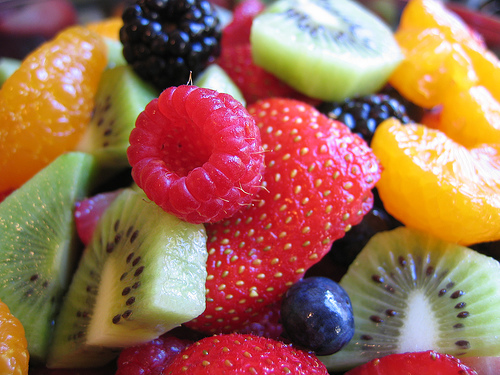
During this National Nutrition Month of eating right with color, don't forget to include various fruit and vegetables more abundantly in your dietary habits.

Most fruits and vegetables are naturally low in sodium, low in fat, free from cholesterol, high in fiber, important sources of vitamin C, vitamin A, vitamin E, potassium and folate, increase your fullness factor and are an integral part in any healthy and or weight loss diet program.

Recommendations differ between one person and another, by age, height, weight, gender and physical activity.
However, in general, daily recommendations are:
>> 2-3 servings of fruit per day
>> 3-4 servings of vegetables per day

 (but what counts as serving?? This will follow next week)

& 30 mL of water per kilogram of your weight! Water is essential; especially when you gradually start to increase your fiber intake.


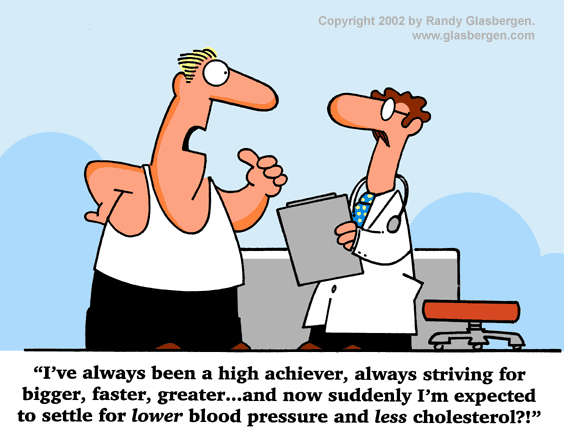
For many more cartoons, please visit Randy's site @ www.glasbergen.com.

Tuesday, March 1, 2011

Rainbow Plates this March!


March is considered to be the annual month of Nutrition with this year’s theme being “Eat Right with Color”. A rainbow of fruits and vegetables creates a palette of nutrients, vitamins, minerals, antioxidants and phytochemicals on your plate, each with a different bundle of healthful benefits.
It is important to know that variety within each food group is essential because each offers unique nutritional benefits and supply different nutrients.
Green produce indicates antioxidant potential and may help promote healthy vision and reduce cancer risks. Fruits and vegetables that are green are rich in phyto-nutrients and antioxidants that
Fruits include avocado, green apples, green grapes, green pears, kiwifruit and limes whereas vegetables include artichoke, asparagus, zucchini, dark green leafy vegetables, spinach, mloukhiye, green peppers, broccoli, parsley, rocket, peas, okra, cabbage, mint and the list goes on! This is the most abundant variety we have in Lebanon from which we can benefit a lot when making our famous Fattouch salad!
Orange and deep yellow fruits and vegetables contain nutrients that promote healthy vision, healthy heart, better immunity and reduce the risk of some cancers.
Fruits include oranges, mango, cantaloupe, tangerines, pineapple, apricots, peach, papaya and yellow figs while orange vegetables include carrots, yellow pepper, pumpkins, sweet corn and sweet potatoes.
The rich orange color offers antioxidants such as carotenoids, bioflavonoids and the antioxidant vitamin C. The deeper the yellow/orange color, the more carotenoids these foods have!
Purple and blue options may have antioxidant and anti-aging benefits and may help with memory, urinary tract health, recurring infections and reduced cancer risks. Fruits that are purply are blackberries, blueberries, plums, raisin and purple figs while vegetables are eggplants and purple cabbage. These contain phenolic antioxidants and anthocyanins, which is responsible for the dark purple color.
Red and pink color indicate produce that may help maintain a healthy heart, vision, immunity and may reduce cancer risks. This color group delivers lycopene, a powerful carotenoid, as well as anthocyanin. Reddish fruits include strawberries, pomegranate, cranberries, red or pink grapes and watermelon and the vegetables can include beets, red onions, red bell pepper and tomatoes
Last but not least, the last member of the palette is white, tan and brown foods that contain nutrients promoting heart health and reduce cancer risks. These include fruits such as banana, pears, dates and white peaches in addition to vegetables such as cauliflower, mushroom, onions, turnips, potatoes and garlic. Selenium in mushrooms and allicin in garlic and onion are of great antioxidant potential.
In whatever meal you are having, always include a bowl of colorful mixed vegetables followed by a snack of delicious fruits!
For more information, check Eat right.org

Kalyn's Kitchen Creative Salad Recipes

Recipe for napa cabbage, red cabbage and peanuts from Kalyn's Kitchen
Since it's fruit and vegetables' month with eating with colors and all, one smart and creative blog I love to get inspired from is Kalyn's Kitchen, especially her exhaustive salad selection.
In her blog, salads are divided either with:
  • Tomatoes and cucumbers
  • Fruits and vegetables
  • Greens (arugula, spinach, cabbage, lettuce, etc.)
  • Carbs source (pasta, grains, beans, rice, etc.)
  • Or with a protein source (cheese, eggs, different types of meats)
Now if you select one one the above mentioned types, hundreds of salad recipes appear, and that's the best part! I mean how creative can you really be?
Just check the Salads with Tomatoes and Cucumbers for instance and get inspired.

As for my personal favorite, I love the selection of "salads with vegetables and fruits" because salads are divided by fruit/vegetable type: whether with radishes, asparagus, avocado, snow peas, carrots, celery and the list goes on!


Who said you can't have one different salad every day of the year?
So here are few delicious photos of few salad ideas from Kalyn's!


Monday, February 28, 2011

The Oscars ... & Weight Loss!

Watching the Oscars!
Great dresses, of course, which you can check live on the amazing fashion blog: The T Project!
But I can't get over Jennifer's Hudson's transition, she has lost 80 pounds or around 36 kilograms and she's looking good!


WAY TO GO Weight Watchers! 
PS: Oh and if you are a huge movies' fan,like me, I am sure you will love Anis Tabet's Let's Talk About Movies blog!
The before...


And the after...


Friday, February 25, 2011

One Quick Reminder during the "Heart Month"

One last reminder during the "Heart Month":
  • Have an active lifestyle and exercise 30-60 minutes every day
  • Lose extra weight by balancing calorie intake and physical activity
  • Sleep at least 8 hours per day
  • If you smoke, quit. If you don't, avoid passive smoking
  • Try to decrease stress as much as you can - learn stress management, breathing and relaxation techniques
  • Aim for normal glucose level, normal blood pressure, low LDL cholesterol, high HDL cholesterol and low triglycerides
  • Decrease your sodium intake (table salt, canned foods, fermented foods, fast food) and increase your potassium through fruit and vegetables
  • Limit fat intake to 25-30% of your diet with less than 10% from saturated fats, less than 1 % from trans fat and less than 300 mg of cholesterol
  • Consume baked fish at least twice per week
  • Choose lean meats
  • Roast, bake, steam, grill, broil, boil instead of frying, deep frying, sauteing, glazing
  • Use  mono and poly-unsaturated fats such as vegetable oils, nuts, fish, olives, avocado
  • Select fat free (skim) and 1 % fat milk, yogurt, cheeses, labne, chanklish and dairy products
  • Increase your fiber intake and have whole wheat non-refined carbohydrates
  • Have plenty of vegetables on every meal and 2-3 servings of fruits per day
  • Increase your intake of legumes and beans
  • Limit your intake of sweetened beverages and increase your intake of water
  • Limit your intake of carbonated and caffeinated beverages
  • Limit your intake of fatty/sugar sweets and desserts
  • Limit your intake of junk and fast food
  • If you consume alcohol, do so in moderation: max 2 drinks for men & 1 drink for women
  • Watch out for how food is prepared when you eat outside
For many more cartoons, please visit Randy's site @ www.glasbergen.com.

    Healthy Kids Snacks Ad in Beirut - Gone Wrong!

    So I received an e-mail couple of days ago entitled: "*Company's Name* Beirut - Healthy Kids Snack". Intriguing, I said. Finally, some promotion for healthy snacks in my country for once!
    Boy was I wrong! Unfortunately, all I got was what you see below.


    • So in their Ad, which is not shown above since I had to crop it out - their phone number was all over the poster, they said "Toss out the junk food and start making snack time fun again!"
      >> I'm sorry to say but what they are promoting FOR KIDS is what everyone calls junk food: Food high in refined carbohydrates, low in fiber, prepared with ghee/butter, high in sugar, high in trans and saturated fats!
    • They continued to market "When kids need that little something to get them through the day, this the collection to turn to"
      >> Wow! I mean whatever happened to the "common" ways of fueling your body with a bowl of skimmed milk, plain cornflakes and some fresh/dried fruits?
    • Now "All our products are freshly baked without preservatives and made with the best ingredients" Yummy! Best ingredients! I love those... but what are they again? Probably the best sugar or butter in the world? Yum-Yum!
    • Well from the huge variety given, you can only see one "your healthy cookies" description as a caption for the oat cookies -probably because these are the only ones with some fibers! So maybe- maybeee, these might be healthy, depending on how they are prepared.
    Either way, I suggest that home-made cookies, plain cakes, cheesecakes, brownies and muffins should be taken in moderation for both adults and kids.

    So next time it's SNACK TIME and "kids need that little something to get them through the day" 
    >> Go for a cup of strawberries, a banana, a fruit salad, dried fruits, freshly squeezed juices, vegetable sticks, whole wheat toast with home made marmalade, multi-cereal kaak with a cup of skimmed milk, a handful mix of unsalted nuts, a cup of skimmed milk with plain cornflakes, a cup of plain skimmed yogurt with some mint and cucumbers, freshly made fruit smoothies, a cup of hot chocolate made with unsweetened cocoa! You can also mix "moderation with healthy" - a cup of milk with cookies, fruit dipped in dark chocolate or whole wheat pancakes with honey/marmalade/chocolate paste and fruit slices.

    This way you will incorporate healthy eating in your kids' lifestyle, establish a healthy and clear idea of what healthy and unhealthy is, decrease any risk of childhood obesity and earlier onset of diseases, decrease dental caries risk, make sure they are getting enough vitamins, minerals, antioxidants, phytochemicals and fibers and above all "making their snack time fun"!

    Wednesday, February 23, 2011

    Improve your Heart's Health

    According to the Center for Disease Control and Prevention, American life expectancy is increasing, yet we are living longer with more diseases. Heart disease and cancer are still the number 1 cause of death in the United States. 
    Now since February is the "Heart Month", it's essential to know how you can live a heart-healthy life! Excess weight, lack of physical activity, high blood pressure, high sodium diet, high cholesterol/saturated/trans fats consumption are all major risk factors for heart disease!

    Therefore, these tips will help you keep a healthy lifestyle one step at a time!

    Increase Fiber: Foods that are a good source of fiber contain at least 3 grams of fiber per serving. Check the Nutrition Facts label on a food or beverage package to ensure that you are getting at fiber in your diet. Adult men (ages 19-50 years old) need at least 38 grams of fiber, and women of the same age should aim for at least 25 grams per day. The best sources are brown rice, brown pasta, multi-cereal breads, whole grain toast, fruits and vegetables. Legumes such as beans, chickpeas, lentils,etc. are also an excellent source of dietary fiber.

    Grains:
    The Dietary Guidelines for Americans recommends that half of your grains are whole grains. Making simple switches like choosing 100 percent whole wheat bread and pasta can help you increase your whole grain intake.

    Soy:
    According to the Food and Drug Administration 25 mg of soy protein can help reduce the risk of heart disease. Try adding a packet of soy, edamame or use soy milk in your diet, especially if you haven't given them a shot yet!

    Potassium: Many fruits and vegetables such as bananas, potatoes, beats, beans, oranges, spinach, and apricots can help blunt the effects of sodium on blood pressure. All forms of fruits and vegetables, whether fresh, canned, frozen, dried, or 100 percent juice can assist you in your effort to promote heart health. However, it's best to have whole fruits and vegetables as your first choice in order to benefit from their fibers as well.

    Dark Chocolate:
    Certain phytonutrients in cocoa, known as flavanols, can help promote healthy circulation. When enjoyed in moderation, dark chocolate can be part of healthy diet that promotes heart health.

    Spread Some Heart Love:
    Plant sterols are cholesterol-reducing food ingredients that come from plant-based foods such as vegetables, nuts and seeds. Plant sterols lower your body’s cholesterol levels by competing with dietary cholesterol for absorption. You can add plant sterols to your eating plan by looking for food products that contain added plant sterols, such as granola bars, orange juice or vegetable oil spreads. Just get to know your food labels more!

    Go Nuts:
    A handful of nuts (about 1½ ounces) such as almonds, hazelnuts, peanuts, pecans, pistachios & walnuts every day may also help reduce the risk of heart disease. Portion out servings at the beginning of the week and keep them in your desk draw for a heart-healthy snack at work.

    Take 30 for heart health: Have and active lifestyle overall and find the time to fit at least 30 minutes of exercise into your daily routine. This can be done in 10 minute increments three times a day. Try finding ten minutes in the morning before work for a quick walk around the neighborhood and follow this up with a ten minute walk during lunch and another one after dinner. It's actually pretty easy to integrate separate-several 10 minutes of exercise in your day. 

    This lovely article has been brought with slight amendment from Food Insight.

    Friday, February 11, 2011

    Deep Fried Beer - Come Again?

    Huffingtonpost.com
    Ravioli-shaped salty dough filled with beer - then deep fried at 375 degrees for 20 seconds!
    Yes, they managed to invent this recipe in Texas and apparently beer pours out of the pocket when you take a bite. The Texas Alcoholic Commission ruled that one must be over the age of 21 to be able to purchase this meal.

    I can't imagine this combination of refined carbs + alcohol + salt + deep frying
    >> high caloric, non-nutritious, fatty, hypertension-y
    >> definite recipe for chronic diseases!

    10 Great Tips to Get Your Kids to Eat Vegetables and Fruits


    There is no doubt that fruits and vegetables are very important, so we’ve heard! However, recent studies indicate that children who ate the most vegetables and fruits had significantly healthier arteries as adults than children who ate the fewest. So you see, what your children eat during their childhood reflects on their lifestyle, eating habits and overall health as adults.  Therefore, here are 10 helpful and efficient tips formulated from the American Heart Association aiming to encourage your children to include more vegetables and fruits in their diet. This way, they will increase their intake of vitamins, minerals, antioxidants, water and fiber! 
    1.   Make fruit and vegetable shopping fun and educative: Visit your grocery store with your children and show them how to select ripe fruits and fresh vegetables. This is also a good opportunity to explain which fruits and vegetables are available by season and how some come from countries with different climates. Make fruits and vegetables interesting: talk about where they come from, how they are planted, grown and cultivated.
    2.   Involve kids in meal preparation: Find a healthy dish your kids enjoy and invite them to help you prepare it. There are many things children can help you with; it all depends on their age: younger kids can help with measuring, crumbling, holding and handing some of the ingredients to you while older kids can help by setting the table and cut fruits and vegetables into chunks, of course, when supervised by you. Make sure to teach them the right way to help and definitely praise them for their great help. This way, they will feel proud that they assisted you and participated in preparation a family meal. It will encourage them to eat a meal they have themselves made!
    3.   Be a role model: Yes, you have a huge influence on your kids. Studies, whether recent or old, always assure the influence parents have on their children! If you are eating a wide range of fruits and vegetables, while surely enjoying them, your child would want to have a taste of what their parents are enjoying! You can’t push them to eat healthy when you show them it’s not your favorite. You are their idol so use it for your and their benefit.
    4.   Create fun snacks: Schedule snack times for most kids like routines. Snacks are great when they are wisely chosen. Between meal snacks are a great opportunity to offer fruits and vegetables to your kids while enjoying them together.  To start with, make fruits and vegetables visible for your children. How? Place a bowl in the middle of your kitchen table at all times! Fill it with different kinds of fruits and vegetables and always remind your kids that it’s sitting right there. Moreover, kids like to pick up foods with their hands, so give them finger foods they can handle depending on their age. You can also cut up a fruit and arrange it on an attractive plate, make a colorful rainbow in their plate, make a smoothie or freeze a smoothie in ice cube trays. Be creative! Create a smiley face from cut-up vegetables and serve with a small portion of low-fat salad dressing, hummus or plain low fat yogurt or labne. 
    5.   Give kids choices - within limits: Too many choices can overwhelm a small child. However, giving your children the freedom to choose from a short list is a great idea. This way you will be encouraging them to start formulating their own decisions while pushing them to eat healthy foods. Don’t go asking them what they want for lunch but don’t force them with one kind of food. Instead, offer them limited healthy choices for snacks, such as dried fruits with nuts, banana, strawberry with cereal or carrot fingers?
    6.   Eat together as a family: If your schedules permit, family dining is a great time to help your kids develop healthy habits and attitudes about food and the social aspects of eating with others.  Make sure you are eating your fruits and vegetables constantly and in front of your children. Even if they aren’t eating certain vegetables yet or they are rejecting others, they will model your behavior sooner or later. This is why tip 10 is crucial no matter what!
     7.   Expect pushback: As your kids are exposed to other families’ eating habits, they may start to reject some of your healthy offerings. Without making a disparaging remark about their friends’ diet, let your children know that fruits and vegetables come first in your family. A positive experience with food is important. Never force your child to eat something, or use food as a punishment or reward
    8.   Grow it: Start from the ground up — create a kitchen garden with your child and let them plant tomatoes and herbs, such as basil and oregano in window boxes. If you have space for a garden, help them cultivate their own plot and choose plants that grow quickly, such as beans, cherry tomatoes, snow peas and radishes. Provide child-size gardening tools appropriate to their age. 
    9.   Covert operations: You may have tried everything in this list and more, yet your child’s lips remain zipped when offered a fruit or vegetable. Try sneaking grated or pureed carrots or zucchini into pasta or pizza sauces. Casseroles are also a good place to hide pureed vegetables. You can also add fruits and vegetables to foods they already enjoy, such as pancakes with blueberries, carrot muffins or fruit slices added to cereal. On occasions when you serve dessert, include diced fruit as an option. 
    10. Be patient: Changes in your child’s food preferences will happen slowly. They may prefer sweet fruits, such as strawberries, apples and bananas, before they attempt vegetables. Eventually, your child may start trying the new vegetable. Many kids need to see and taste a new food a dozen times before they know whether they truly like it. Try putting a small amount of the new food — one or two broccoli florets — on their plate every day for two weeks; but don’t draw attention to it. 
    Brought to you from the American Heart Association.

    New Syndicate for Dietitians in Lebanon


    After long awaited years, the syndicate of Dietitians in Lebanon has been founded.
    If interested, you can join their facebook page: Syndicate of Dietitians.

    These are the official papers that you need to join the syndicate.


    I'll update you soon with services provided.
    For more information, contact Christelle BachiMichel GedeonSuzanne Kabrite or Sabine Dagher.

    Tuesday, February 8, 2011

    Colorful Recipes to Try!


    An untraditional cucumber salad recipe that makes you want to have one right now? Well I guess it's all because of the illustration and colors, no? This is thanks to They Draw and Cook blog which I found amazing by the way.
    Nate and Salli realized how fun it is to draw food so they started thinking outside the box: illustrating a colorful recipe book for friends, family, clients and artists from all over the world. The project morphed into this lovely blog.
    >> So if you are an illustrator wishing to contribute in their book or you're a foodie looking for an artistic and delicious recipe, this is your blog!

    Recipe and illustration above by Sue Tincher Maib (from Alarm Cat Studio)

    Sunday, February 6, 2011

    Smart 3-Minute Brownies

    I bumped into this "smart" 3 minute brownies on loled.net, so I thought of giving it a try - given that it will only take few minutes, so how hard can it be!
    Turns out, it was easy, quick and d-e-licious!!

    Ingredients
    • 4 tbsp all purpose flour
    • 5 tbsp sugar
    • 2 tbsp unsweetened cocoa
    • 1 egg
    • 3 tbsp powdered milk (go with low fat)
    • 3 tbsp oil 
    • Chopped walnuts (optional)
    • 3/4 cup of water (1 cup=240 mL)
    • 1 mug
    Preparation:
    • Mix flour, sugar and cocoa together in the mug
    • Mix in 1 egg thoroughly
    • Mix the powdered milk with water separately then pour it in the mug (or you can mix the powdered milk with the flour, sugar and cocoa then add water - your call)
    • Pour oil and mix well
    • Add chopped nuts
    • Put in the microwave for 3 minutes on maximum power
    • Watch it rise and settle in the mug, then spoon your warm brownies out!
    You don't have to be an experience cook to make it happen - deliciously if I might add. Best thing of all is portion-size control! No brownies left overs to stuff my face with later on. I just baked one mug of brownies and shared it with my mom and sister. It could actually be a smart idea if you have people over where each one will get to have his own small brownie. Just go with fancier microwaveable cups - not a home mug like mine.

    Wednesday, February 2, 2011

    New 2010 Dietary Guidelines


    Earlier this week, the new 2010 USDA Dietary Guidelines for Americans were released, after 5 awaited years. The new guidelines are "tools to give better information about how to stay healthy, how to become healthier, how to make children better students and be prosperous in the future."  
    • It primarily recommended limiting daily sodium intake to less than 2,300 milligrams (about 1 teaspoon) a day for most people and to less than 1,500 milligrams among people aged 51 or older, all blacks and people who have high blood pressure, diabetes or chronic kidney disease, regardless of their age. Given the current chronic health problems, the 1500 mg recommendation applies to half the US population! In fact, today the average American is consuming 3,400 mg per day! On another hand, the American Heart Association, believes that "the 1,500 mg recommendation should apply to all Americans: children & adults. 
    • More emphasis on getting people to choose healthier types of fats >> no more than 10 % of calories should come from saturated fat and, in their place, eating monounsaturated fats and polyunsaturated fatty acids.  
    • Americans are also being urged to eat more seafood, particularly cold water fish, "in an attempt to increase the consumption of healthier fats like omega-3 fats. This was not specifically stated in past guidelines. 
    • More recommendations focused on eating smaller portions, reducing calorie consumption and increasing physical activity.
    Specifically, the guidelines suggest: 

    - Making half your plate fruits and vegetables and eating more whole grains to get more of needed nutrients. 
    - Eating more lean meats and poultry, legumes and nuts and seeds.
    - Using fat-free or low-fat (1 %) milk. 
    - Staying away from added sugars, refined grains and solid fats, which tend to have many calories but few essential nutrients. 
    - Making sodium comparisons for foods such as canned soup and frozen meals, then select those foods with the least salt. 
    - Consuming less than 300 milligrams per day of cholesterol. 
    - Avoiding trans fatty acids. 
    - Gleaning nutrients primarily from eating nutritious food, instead of relying on supplements. 
    - Consuming alcohol only in moderation, meaning one drink or less for women per day and two drinks for men. 
    - Drinking water instead of sugary sodas or other sweetened drinks. 
      "This is very much what many health professionals have been saying for years. But these guidelines are evidence-based, they're based on science  of healthy eating, weight loss and how nutrients promote our health but tend to get lost among all the hypes of the fad diets out there."
      Brought to you from MedlinePlus; you can download the whole DietaryGuidelines pdf.