Sunday, October 9, 2011

Why Wait for Sunday Gatherings - Souk El Tayeb, Authentic Lebanese Food in the Heart of Beirut!

A lot of us long for Sundays to have those authentic gatherings with our extended families, around a table rich in traditional Lebanese food, from tabboule, fattoush, hummus, home-made mana’ich, to kebbe, grilled meats and Lebanese sweets; especially with brilliant cooks like our moms and tetas!


Food is indeed a very important part of our daily lives, better yet; food constitutes a crucial part of our identity and heritage! So what about a place, cozy and authentic, that prepares your Sunday lunches every day?  This is what Tawlet is all about!


On Saturday 1st of October, Cynthia from Strawberry Blu, my friend, dietitian, food scientist and amazing blogger decided to visit Tawlet, located in Mar Mechael street in Gemmayze, Lebanon! And what an amazingly delicious experience it was! We had lunch and a casual chit chat with Mr. Kamal Mouzawak, chef, writer and founder of Souk el Tayeb- Tawlet, and here’s how it went…


Tawlet Overview
Tawlet (Arabic for Table) is a farmer’s kitchen that simply revolves around “Shou tabkha el mama el yom?” (English “What’s mom cooking today?”). Each day, different food producers, cooks and also well known chefs come from all over the country to prepare traditional Lebanese home-made food from their own region or village.
 
The Menu
Visitors can serve themselves food buffet-style from a menu that varies daily, depending on the regional specialty for that specific day.
 
Tawlet's open buffet
You can definitely find foods that you are familiar with, but what is most exciting are those foods that are unique to every region of Lebanon! Such as Bemye bi debess el remmen (Okra with pomegranate molasses) from Jezzine, Koussa bel zet (Zucchini in oil) from Maaser El Chouf and Kebbe arnabiye (Kebbe with sesame paste and sour orange juice) from Kfaratra!


You can have some lemonade, jellab, arak or wine while the water is free to pour some from the traditional “bri2” (which is a rounded glass bottle with a tight neck and a nozzle from which you can pour water, mainly found at our granny’s!)
Tawlet uses preservative & chemical-free (products) produce in all the foods prepared! That’s why you don’t find any place for carbonated beverages, such as cokes and sodas, for they are not part of our cuisine, right? As for dessert, you can find the finest fruits, fruit salad, as well as Arabic sweets such as knefe, so we definitely had some! 


Delicious fruit, knefe, cakes and Lebanese sweets!
To wrap up, the menu is full of delicious authentic Lebanese dishes that you don’t get to have every day and which you can actually check weekly on facebook!


Tawlet's Environment
The place's interior is earthy, green and warm! The chairs and tables are wooden with plants and flowers all over the, might I add, smoking-free dining area. You can find meticulously arranged bri2 stand, a beautifully arranged Lebanese wine collection as well as a stand for various home-made Lebanese mouneh (pickled and preserved produce and pantry). Moreover, what I loved is that the kitchen is right there in front of your eyes! Whatever food is being prepared, heated or cooked is out there for all of the visitors to see!


Beautifully arranged wine collection
Warm, green and homey!
Maya Zankoul's illustrations
decorating one of Tawlet's walls
Tawlet under the Umbrella of Souk El Tayeb
Tawlet's kitchen actually falls under Souk El Tayeb (Tayeb meaning tastes good/delicious) that includes a farmer's market, wine tasting classes, cooking workshops, food feasts and school programs! Cynthia and I will make sure to visit this market very soon in Biel (which opens every Saturday in Biel from 9 am till 2 pm) to check their mouneh, pastries, sweets, dairy products, and their fresh, local and organic fruit and vegetables.


Kamal Mouzawak is doing his share of preserving our Lebanese culture and traditional cuisine by supporting local farmers, organic and fresh produce and by focusing on the importance of our Lebanese character and identity! So what are we doing to preserve our culture?


Tawlet Contact Details
Opening hours:
Monday to Saturday: 1 pm - 4 pm
Cynthia (right) and I (left)
enjoying Tawlet's kitchen
At night, it is open for private dinners and exhibitions
Price range:
  • "Producer's buffet" and "Saturday's Souk Brunch": 27 USD $
  • "Plate du jour": 10 USD $
Phone number: 01-448 129
Address: Beirut, Sector 79 -  Naher Street #12 (Jisr el- hadeed), Ground floor facing Spoiler center, Beirut, Lebanon
*Photos courtesy of Paty M's Nutrition World and Strawberry Blu.
Strawberry Blu's similar post about Tawlet [here].

Blog Action Day 2011 - All about FOOD!


Blog Action Day is an annual event in which all bloggers around the world post about the same topic during the same day (this year it's October 16) - and this year it all revolves around FOOD!!

This event aims to increase awareness about hot topics worth discussing globally, topics that affect us all and impact our lives everyday, hoping that such discussions would generate new ideas, plans and actions, kind of like a global brainstorming! Since 2007, topics such as poverty, water, environment and climate change in which more than 10,000 bloggers have participated!

So why FOOD?!
Food is part of our daily lives, part of our culture and identities!
The topic of food is broad: from celebrating feasts, cooking, famines, obesity, food politics, food production, food chemistry, to the nutrients it provides us with or the toxins and unhealthy components it may contain, I mean the list is endless!

Blog Action Day even provided us with a list just to inspire all bloggers out there! Some of which are:
  • Obesity or famines
  • Favorite foods and recipes
  • Hunger and poverty
  • Healthy vs junk food
  • How industries and politics affect food
  • Traditional/cultural food
  • Your relationship with food, what it means in your life
  • Growing your own food
  • Will we able to feel 9 billion people in 2050
  • Are you a vegetarian or a meat eater and why
  • Strangest thing you've ever eaten
  • Delicious food you had on your last trip
  • Your struggle with food
  • Foods that are good for your health or immunity
  • Awareness you would love people to know about food 

No one can deny that food has a huge impact on each of our lives and hence that's what Blog Action Day is all about! So register your blog here and take part of this global action!
If you're on twitter, don't forget to hash tag your post with #BAD11 so we can all get a glimpse of what each of us has written!

Info source: Blog Action Day

Saturday, October 1, 2011

Helping your KID to stay FIT

There’s a lot going on about the importance of building health build blocks since we are kids…so as parents, you can do it now!

Start teaching your kids how to be fit, healthy and happy.
Being fit is another way of saying that your kid eats healthy nutritious food, is active and has a healthy body weight. When they are fit, they feel good, they can do better performance in class and they can play and enjoy their time with friends.


BE the role model
Being a role model sets an example for your kids. Kids mirror you; just because you are “Mommy!” Eat healthy yourself, choose snacks nutritiously and live by hearty habits. It’s hard to convince your kids to eat the vegetables in their plate if you didn’t or to drink milk or fresh juices if they see you sipping sodas. It’s even harder to integrate active life in them when they don’t see you move it to some music with them or use the stairs instead of the elevator. Little things you do could become their habits. If you complain about exercising and eating healthy food, your kids might relate those to negative feelings and refrain from doing them. Therefore, step up and be your kid’s role model! Start simply by eating fresh fruits, adding more vegetables on every meal and even parking your car far and walking home!

YOU are the supply controller

You decide which foods to buy & serve and which foods stay out. Kids could be really influential on their parents to trick them in buying less nutritious foods and parents eventually agree with them often just to finish the grocery shopping and head home. Well, no, adults are in charge when deciding which foods are regularly stocked at home and no, kids won’t go hungry. They eat what is available in the fridge. However, it’s important not to deprive your kids. If their snack is not all that nutritious, it would be ok to buy it once in a while. Note that in such cases, this “not all nutritious snack” should not be used as a reward nor a punishment. Getting a good grade should be rewarded indeed but not with food. This could build in them the idea that reward equals junk food and grow to reward themselves with that. So it’s a good idea to keep foods neutral, they are not used for reward neither for punishment. Moreover, from the foods you buy; let your kids choose what they want to eat from them. This will give them the freedom to choose what they want to eat. So rewarding them with a nice trip to the amusement center could be a good idea.

Quit the all Lebanese “Clean the plate” rule
We are all used to our grandmas and moms telling us that we are not leaving the table unless we finish the last grain of rice on that plate. Well it’s time to change that! Let kids eat slowly and let them stop eating when they feel full. This would help them listen to their bodies, notice and respond to feeling of fullness and know what it really is to be comfortable full. Sometimes, people eat too much because they don’t notice or learned to ignore “the feeling” that signals the need to stop eating. Know that the stomach needs 20 minutes to tell your brain that you are full so letting your kid choose how much they way to eat will teach them not to overeat.

Offer variety young
Variety in food is important. It offers your kids a wide spectrum of nutrient that their bodies need to healthfully grow up. But what is more important is to start them young. Food preferences are developed very early in life. So the more flavors you offer, the less the chance to have “picky” eaters in the future! Don’t force them to eat it of course, but offer few bites. You may need to serve foods more than once, on different occasions and in different forms for you child to get used to the taste but it’s sure worth it.


Offer the activity of creative cooking
Cook with your kids! Whether it’s squeezing oranges, grinding garlic or mixing the ingredients of that cake you are baking, it all counts.
  • To start with, let them plan what is to be cooked. 
  • They could choose what fruit they want with their cornflakes or what goes in the vegetable salad and even write the shopping list.
  • Introduce them to new foods and how they are manufactured.
  • Add some “nutrition hints” for your kids on why these foods are good for them.
  • Teach them food safety and sanitation rules like how to wash their hands and even fruits and vegetables.
  • Make the kitchen their “learning laboratory”! They could read the ingredients of the recipe, check expiration dates, measure amount of salt or water used and set the timer.
  • Encourage their creativity. Let them draw faces with food items or more, encourage them to create their own recipe.
When children cook with you, they can’t wait till they taste them since they are most likely to eat foods they have helped in preparing. This way you could integrate more healthy foods in their diet. Don’t forget to give them compliments after their achievement; it gives them a sense of accomplishment and self confidence
In addition to that, it could even be a good idea to take your kids grocery
shopping with you! You might as well get your kids help to prepare them a quick snack that could be readily available when they feel like it. For example, keeping shiny carrots at the reach of your kids would encourage them more to eat them. The most important thing is to keep it safe. Always supervise them, give them age appropriate tasks and watch for sharp utensils and appliances.

Benefits of family meal time

Family meal time should be sacred. Make it a priority to eat altogether at least 4 times per week. If you are not eating together now just increase that gradually one day at a time but make sure to start this tradition. And if you know you can’t make it together for dinner, well plan an afternoon snack together or yet, plan breakfast. Yes you can have breakfast together, but if you think there’s not enough time, you could always prepare you breakfast’s ingredient on the table a night ahead! Kids need to know that there is a specific place where the whole family eats, away from school problems, television, games, etc.
Kids who eat at home with their families tend to eat more veggies and fruits, more fibers and less junk food. Moreover, when you eat together, this will give you a chance to show your kids that role modeling we talked about. You could display your good eating habits such as choosing medium portions of food, eating a variety of vegetables, or stopping when you are feel full. It is also important to know that get-togethers over lunch or dinner improve communication between family members. You get make it a fun time to joke and catch up on what happened during the day.


Play Station, TV, PC … Limit their time
Screen time is time spent on TV, video games, DVDs… all what is seen through a screen. The more time you and your kids spend on such “sitting” activities, the less time spent on “active” activities and thus the higher the risk of becoming overweight. So, don’t be a couch potato! Show your kids that moving is part of your and their life and encourage them to stay active. So to start with, try to limit your kids’ screen time to maximum of 2 hours per day. By doing this, you would avoid mindless snacking on TV and in the same time ensure that they are spending at least half an hour per day playing basketball, biking, running, swinging, swimming…any physical activity they love. 

Photos:

Wednesday, September 28, 2011

Zuwwedet Aline - A Healthy Vegetarian Night in Lebanon


After working her magic last time with green beans and corn, Aline is preparing us another Zuwwede next Monday! She is making us some healthy vegetarian food on the 3rd of October from 8.00 pm till 11.00 pm at Tarek Booze in Gemmayze.
The theme this time revolves around a nutritious green leafy vegetable >> Spinach!


You'll enjoy the benefits of
  • Kebbé spinach - كبة سبانخ
  • Spinach salad - سلطة سبانخ
  • Spinach & potato with indian spices - سبانخ وبطاطا مع توابل هندية
  • And last but not least, some spinach wraps - لفافات سبانخ      


So what's up with Spinach!
Spinach is super rich in many vitamins, minerals and lots of antioxidants!
From vitamin K, vitamin A, vitamin C, vitamin E, to folate, niacin, magnesium, iron and calcium, the list goes on and on!
Moreover, not only is it low in calorie, but spinach is also high in fiber and provides a rich satiating taste when incorporated in your diet!


So give yourself a break from all those trans and saturated fats, refined carbs and unhealthy meals and enjoy some delicious vegetarian food because a well planned plant-based diet provides you protection against many chronic diseases such as cancer, cardiovascular diseases and diabetes!

For more info, you can call Tarek Booze at 03.148890
Info and Photo Source

Tuesday, September 27, 2011

Paty's Hearty Meals


Since it's our first year anniversary next month, yes it's been a year already,we're launching a new category in our blog called "Paty's Hearty Meals".

What happened is that I've noticed that eating outside in Lebanon is quite the fuss! Almost everyone who is trying to lose weight or fix their dietary habits avoids eating outside or ends up ruining his/her healthier habits if they do, mainly because they think food everywhere is fattening, with lots of fats or sugar.

This is particularly true- Yes food in restaurants is dipped in fats and sugar, but I'm "faithful" that somewhere in that menu, I will find that healthy meal which you and I can enjoy, guilt-free. So every month, or twice per month, I'll be visiting casual Lebanese restaurants, where friends and family go out just to hang, and I will choose a healthy meal they offer, take pictures, ask about means of cooking and ingredients and estimate how many calories, saturated fat, cholesterol, sugar, sodium, etc. are actually in this particular meal. I will also mention if I did any modifications to that meal, so if I substituted a dressing or a type of bread for another, I will sure mention what and why I did it.

We all love and enjoy food, so this section will be helpful for everyone in Lebanon, whether for people who are trying to lose weight, watch their figures, regulate their cholesterol or triglycerides levels or simply, people who just want to have a light meal!

So if you have any suggestions, ideas or feedback that will make this new section better and more beneficial for all of us, I would love to hear them!

For many more cartoons, please visit Randy's site @ www.glasbergen.com.

Sunday, September 25, 2011

Late Night Trips to That Yum Fridge!

Stepping towards the kitchen at the end of the night may start as a simple habit; I mean you just want to have that midnight snack! However, when this recurs more often, it starts to spell a nightmare - the Night Eating Syndrome (NES). By far the most frequent of eating disorders, NES has been a thrilling subject of many current studies and although it can affect all ages and both genders, NES is more common among young women.


There are no specific guidelines that characterize NES especially that it is not considered an “official” eating disorder by the medical community; however, if night eating trips recur often for 2 months or more, Night Eating Syndrome could be it! There are, however, some NES characteristics: 
  • Little or no appetite for breakfast: Night-eaters often lack the desire to eat until lunch time and can often go several hours after waking before their first meal
  • Eat more than 25% of the required total daily calories after 7 pm or dinner in general
  • Frequent night time awakenings to eat: Feeling the urge to wake up at least once a night and not being able to go back to sleep unless you grab that midnight snack!
  • Having a greater caloric intake than others: Therefore, night eaters tend to be overweight. Binging on carbs, cereals and sugary foods can be more of a preference because these food types can trigger the brain to produce neurochemicals that decrease stress, anxiety and mood swings.
  • Spreading eating over several hours at night rather than just one typical eating binge like in other eating disorders. Night eaters tend to have separate "trips" into the fridge throughout the night - not just one large binge!
 
So what are the causes of NES?

Night Eating Syndrome can be caused by different factors, including hormone imbalances, excessive stress and eating and mood disorders such as depression, anxiety, self-starvation and food addiction.

  • Hormonal changes related to sleep, hunger, sadness and stress causing a decrease in melatonin, serotonin, leptin and increase in cortisol! All fancy names that disrupt hunger and satiety signals and that alter normal sleep/wake cycles. This tempts night eaters to get up and get that food they're craving for!
  • Heredity causes could also be a factor contributing to NES, but there's not fine proof yet!
  • Stressful lifestyles at work or at home can cause a person to turn to night eating in order to cope with such stress. You are most likely not peaking to grab a tomato, you're looking for something sweet, fatty and/or salty to give you a good taste of life.
  • Strict, unbalanced dieting throughout the day + not having a healthy eating schedule can lead a person to overeat at night to compensate the lack of energy intake. So yes, having breakfast as well as regular meals spread smartly throughout your day can definitely help.

OK, so we got what NES is all about! Now what to do?

>> The first step in treating Night Eating Syndrome is to consult a physician to get a proper diagnosis. Once you are properly diagnosed, your physician can determine what is causing this huge urge for night munching and can develop an appropriate strategy for managing your eating and sleeping habits.
>> A dietitian can also help night eaters develop a winning strategy tailored specifically for your needs to gradually start eating breakfast and consuming all your daily calories before bedtime, of course gradually changing your habits.
>> On the other hand, a psychologist can help you manage stress as well. Common treatments for NES are all dependent on the cause leading to night eating. Therefore treating could be through hormonal supplements, medications, psychotherapy, behavioral therapy and nutritional counseling to help you establish and maintain a healthier relationship with food.

Sunday, September 18, 2011

Your Nutrition Guide - Indian Style!

If you have noticed, we are all facing an ever ending flood of information about different dietary habits and guidelines from each end of the world! Different dietary systems seem to conflict entirely with each other.

I had the chance to visit the fascinating India this summer, in which I learned that, we are no where near the Indian cuisine and the community's dietary habits! Most Indians are vegetarians - No meat, fish, poultry, milk nor eggs!  Even non-vegetarians don't consume meats (beef, pork, lamb, mutton), rather, they have their proteins from legumes, fish and poultry. To top that, everything is super spicy, even if you ask for it to be spices-free, dream on! Herbs and spices are a major part of Indian dietary habits and cuisine - from cayenne to cinnamon, ginger, oregano, rosemary, chilli, cumin, cardamon and turmeric, the list is enormously long and extends to spices I have never heard of. Therefore, spices, herbs and their health benefits will have to be discussed in a separate article alright!

So long story short, according to Dr. Anjali Mukerjee, a nutritionist, medical doctor and alternative medicine specialist, she explains in her "Healing with Food" book how to energize your body Indian style! Some of the points that are helpful to both Indians and us are:

1. Drink enough amounts of water: Although many seem to forget the importance of this essential non-nutrient, drink at least 10 glasses of water daily in order to balance electrolytes, cleanse the kidneys and rehydrate your cells.

2. Have yourself some goodnight sleep: Dr. Mukerjee insists that there's no substitute for adequate sleep - no amount of healthy nutrients and no mutli-vitamins can rejuvenate your body like 7 hours of good sleep.

3. Avoid stimulants: such as alcohol, tobacco and caffeine which stimulate your body for a short period of time only to cause chronic fatigue if used for a long period of time! These stimulants promote dehydration and increase your blood pressure!

Breathe and relax
4. Relax and try to control your every day stress: In this section, i loved the statement: "Toxic emotions are worse than toxic food." Stress zaps all energy right our of our bodies! Work on controlling your stress, breathe, meditate and relax - don't just say life is too hectic to relax, find time.

5. Limit your sugar intake: Sugar may give you the instant energy but in the long run, sugar reduces the life span - that serious! Soft drinks, pastries, cakes, ice creams, dressings, low fat foods, etc. all contain added sugars that cause imbalances in our bodies, deteriorate our immune systems and increase our risk of gaining weight.

6. Avoid fried foods: that get digested slowly, prevent the digestion of other foods and lead to sluggishness, other than the very well known adverse effects of fries on weight, blood profiles and chronic diseases!

7. Limit your intake of red meats: like beef, lamb, pork and cold cuts which are loaded with saturated fats and which some (like processed meats, salami & packed meats) are hyped up with preservatives, additives and colorings. Red meats cause an increase in inflammatory agents, build up of uric acids, increase the risk of various types of noncommunicable diseases like hypertension, type 2 diabetes and cancers as well as mess up our blood profiles!

8. Limit milk and dairy products: that increase the formation of mucus, sinus problems, intensify acne problems and may trigger allergic reactions. Make sure to get your calcium from green leafy vegetables, broccoli, almonds and soybeans. Milk could be beneficial is small amounts, such that it aids in relaxation of muscles and sleeping well so limit your consumption (to 1-2 servings per day).

9. Multivitamins supplements: especially B vitamins decrease fatigue, help your body's metabolic reactions and convert your nutrient intake from food to energy! Have yourself some mutli-minerals and vitamins to complement your healthy diet, not to replace it.

10. Get movin': Have at least 40-50 minutes of exercise each day such as walking, swimming, jogging, etc. Increase your heart rate and sweat, but don't overdo it! Regular exercise creates balance between water & electrolytes in your body, aids in weight loss, helps your body to get rid of toxins and burn extra fat, promotes muscle mass and helps building calcium in your bones so you don't want to miss out on its benefits!


11. Eat food closest to its natural form: Eat whole foods - a point world-wide guidelines are now emphasizing on and a point in which we are so advantaged to have! Our Lebanese cuisine helps us in eating foods closest to their natural form from Mjaddara, Loubye, Fasolia stew, Koussa, Vine leaves, Tabboule, you name it! Eat foods with minimal processing such as whole grains, brown rice, brown bread, legumes (chickpeas, lentils, beans), fresh fruit and veggies, raw nuts and seeds. These foods provide your body with complete forms of energy while refined foods provide you with non-essential nutrients and with only the partial energy your body needs.


This book "Healing with Food" is seriously helpful with more of lots of information and tips on how to prevent and treat diseases through food, each disease at a time! Its ways are unconventional and in some points, it opposes the Western school of nutrition! For those who are advocates of the Western school of nutrition, I'm all with you - they are scientific based but as you can see, most studies end with "more research is needed" so we can't totally shut off the possibility of new, unconventional information! This information may complement what we already know, so it's up to us to wait for conclusive results, be less biased, less influenced by food politics and wise enough to learn from different nutrition schools!


Barcelona is Del-iiii-cious!

Barcelona is an amazing historical city! It is pretty easy to move around it even if you haven't been there before thanks to their touristic buses! There's a lot to see here -from monuments, beaches, parks, ancient churches and all the beloved work of Antoni Gaudi, you cant' but fall in love with the city! 

Better yet, the food is not to be missed! Barcelona is famous for many: Tapas, Paella, Churros, Sangria, and the list goes on and on so I couldn't but have "me" some, right?

Tapas Tapas, yum yum!
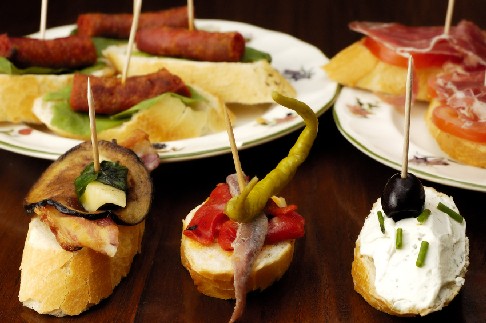
Tapas are small snacks given when ordering a drink in a bar, in our case it was given with wine Sangria (as opposed to champagne Sangria). As you can see in the photo, any kind of food -seriously- can be served on a delicious baguette as a form of a snack or appetizer served either with or before your meal/drink! In some restaurants, they are offered for free (so we've heard) but in the resto we visited, we ordered them - you just can't visit Spain without having yourself some good Tapas! With any round of drinks, tapas are usually presented, even if it's just a small tapa. They can be served both hot or cold, depending on the type of food served on your tapa.
My 2 favorites were Tortilla de patatas (potato omellete) made from potatoes and eggs served on a white baguette with onions, spinach and cheese as well as the Gambas al ajillo (shrimps) served cold with some creamy garlic bed, yum!

Seafood paella, all the seafood you can have
Paella is another seriously good meal you have to taste when in Spain, after all it's the Spanish daily dish! There are three widely known types of paella: Valencian paella (paella Valenciana), seafood paella (paella de marisco) and mixed paella (paella mixta), along with other types of course.
Valencian paella consists of white rice, green veggies, meat (could be chicken, duck or rabbit) with snails and beans, while seafood paella has no veggies, beans, meats, snails, but instead some an exquisite bouquet of seafood! As for the paella mixta,it's actually free styler with a combination of meats, veggies, seafood and beans! 
What makes the rice yellowish is the addition of saffron to the dish.Some olive oil could go into this dish as well so yes, peeps, it is super delicious!

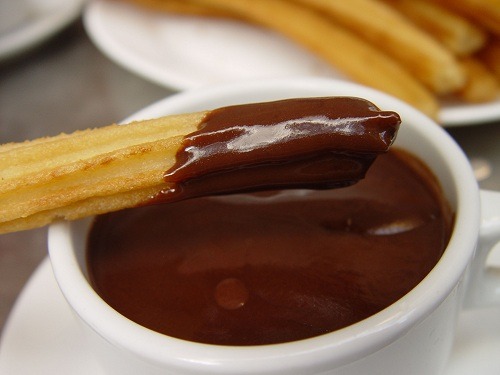
Churros with molten chocolate
Churros are the Spanish desserts, their version of doughnuts! These are delicious, although I would have to say: the fact that they are deep fried pastries = unhealthy refined sugars! You can even dip them in hot molten chocolate, like how I tasted mine! We bought ours while walking back from the annual Fiesta de Gracia, but they can also be dipped/eaten on the side with cafe latte! So when in Spain, have a taste of their famous Churros, but in moderation, of course!

Zesty Sangria with freshly cut fruit
Last but least, we had some Sangria!
Sangria is a wine punch served everywhere you go in Spain! There are many types of Sangria and lots of ingredients can go in this famous drink: white wine, ginger ale, 7 up, amaretto, etc. But it is usually made of:
  • Red wine, although there are some Sangria's made from champagne - the wine version tastes much better!
  • A small amount of brandy
  • Chopped fruit, like oranges, lemons, apples, cherries, strawberries, grapes, pineapple or - the best part - whatever fresh fruit you feel like!
  • With some orange juice or honey, sugar or syrup as a sweetener
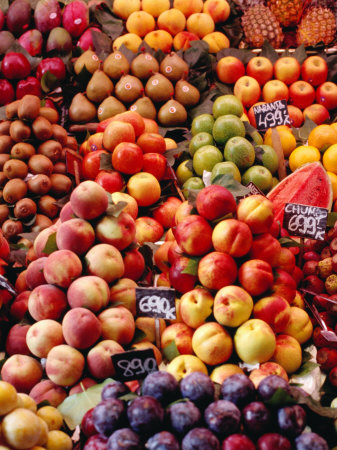
Fruitful, colorful Mercat
Either way, when in Spain, have yourself some good time, the beach is amazing, the churches are majestic, the monuments are historical and Gaudi's work is not-to-be missed! Bicycle around the city, enjoy some seriously Del-iii-cious food and make sure to pass by the colorful public market in Barcelona: La Boqueria Mercat!

Saturday, September 17, 2011

Harvard's Healthy Eating Plate!

After introducing the USDA's MyPlate back in June, Harvard is now releasing its own modified version of the plate: the "Healthy Eating Plate" to which some - healthy & useful - changes have been made!


Here is what the Healthy Eating Plate recommends:

  • Make half your meal vegetables and fruits. I always love emphasizing on the importance of veggies in one's diet and this plate serves us right! If you notice, they mentioned that potatoes and french fries don’t count as vegetables, a point most people mention when you tell them fries are not veggies! So there you go, plain and simple.
  • Choose whole grains whenever you can and limit refined grains such as white rice and white bread because they are broken quickly by the body, leading to a less sensation of satiety and quicker feeling of hunger.
    Now what I loved about this is that when you say the word "refined carbs", many may think of pastries alone but few may relate the word "refined" to white bread and white rice, so now you know!
  • As for your protein intake, it's time to let go any red meat, bacon, cold cuts and processed meats! Go with healthier sources of protein, such as fish, beans, nuts and poultry!
  • Healthy oils (like olive oil and canola oil) are recommended here! For many years, fats have been demonized to "cause" an increase in obesity prevalence world-wide! Now I am not saying they are not, but nowadays, studies have showed that different types of fats (Mono/polyunsaturated VS saturated/trans/hydrogenated) have, in fact, different effects on one's health! In addition, recent studies are drawn to "blame" refined carbs as much as unhealthy fats, so quality and quantity of all carbs, fats and proteins are crucial for a balanced diet.
  • As for your beverage choice, drink water, tea, or coffee (how many cups??) with little or no sugar: a very important point to emphasize - avoid added sugars, go easy on juices and sugary & fizzy drinks! Moreover, what I loved the most is limiting milk and dairy to no more than 1-2 servings per day! They are not must-have foods so when you have your labne/yogurt/milk/cheese in the morning, don't have another for lunch! Recent studies have been pointing out to the "not so wonderful" effects of dairy products! More research is definitely needed; however, dietary guidelines are being influenced by food politics (meat and dairy industries) so let's wait and see!
  • Last but not least is to stay active - a very important aspect, so forgotten in the USDA's Myplate! Exercise is the most essential habit you can adopt along with a healthy dietary habits!
The USDA is being influenced by food politics - but to what extent exactly? Food industries and agriculture interests are affecting MyPlate more than science. Now of course MyPlate was based on scientific research but one can't deny the fact that meat and milk industries are exerting their own influence. So let's hope the Healthy Eating Plate is based on nutritional science more than external non-scientific influences!
Better yet, my question is: To what extent does this improved plate really reflect what the Lebanese community is ought to eat?

We're being featured!

My beloved blog is being featured in RagMag magazine this month in their Ohm issue, among 2 other amazing and informative health blogs: Strawberry Blu and Point a la Ligne!
My blog seemed to be in the issue that I mostly loved, Ohm-ing your way to awaken your chakras and connect with the universe! So learn more about mantras, chakras and yoga and adopt yourself a better & healthier lifestyle while you're at it!

Thanks to Lebanon Aggregator!
PS: This post is for archiving purposes only, I mean I have to remember my first feature!
Way to go my nutrition world!
Photo source: Lebanon Aggregator

Friday, September 16, 2011

Delicious Lebanese Apples Event: Tefeh el Tayeb!


I just love Tawlet Souk El Tayeb events!
After their famous and successful National Tabboule Day, Souk et Tayeb is bringing us the delicious Tefeh El Tayeb 2011!

So meet Souk el Tayeb on Saturday the 24th of September, from 9 am till 2 pm in BIEL and learn everything about apples in Lebanon, taste different apple types, help local producers make Apple Jam, Compote and Debes El Tefeh and vote for the best apple dessert!

Tuesday, August 30, 2011

Sugar, Not So Sweet Afterall!

Sugar is everywhere we look! We, by nature, like comfort foods, sweets and sugar! In fact, sweet is the first taste humans prefer from birth, so it's no surprise that we tend to gulp sweetened foods and beverages! 
But why!
Humans have this preference for sugar largely because carbohydrates stimulate the release of the feel-good brain chemical serotonin which affects brain cells related to mood, sexual function, sleep, memory and learning, temperature regulation, and appetite. Thus carbs and sweets affect us more than we know it! 

Some examples of when sugar can lurk around in foods and drinks are coffee, cocktails, milkshakes, regular soft drinks, iced tea, fruit juices, sports drinks, energy drinks, salad dressings, cake mixes, ice cream, chocolate bars, jelly, cookie, pastries, sweets, knefe, croissants, cornflakes, chocolate spreads! And even though sweetened beverages are just liquids, these drinks provide you with empty calories more than beneficial nutrients and can pass by unnoticed especially in hot, humid weather, gulping one drink after another!

But sugar can be tricky, so how to detect it?
Spotting added sugar on the food label requires a bit of detective work. Food and beverage manufacturers must list the product's total amount of sugar per serving on the nutrition facts label. This is why you will need to scan the ingredients list of a food or beverage to find that added sugar! Note that all ingredients are listed in descending order by weight, yup! Therefore the relative position of sugar in the ingredient list is crucial and can give you an idea of whether the food contains a lot of sugar or just a little as compared to the other ingredients.
Added sugars go by many different names, yet they are all a source of extra calories! So here's a small list of what sugar can go by:


Moreover, if the label says "no added sugars", it should not contain any of the above mentioned sugars, although the food could contain naturally occurring sugars (such as lactose in milk for example). However, note that although these foods don't contain high sugar ingredients and no sugar was added during processing/packaging, foods without added sugar may still be high in carbs!
So in order to know how much exactly is a gram of sugar: One teaspoon of granulated sugar equals 4 grams of sugar. To put it another way, 16 grams of sugar in a product is equal to about 4 teaspoons of granulated sugar, so do the math!
Remember, your body doesn't care what the label says, it's all just "sugar"! Read the ingredients and watch out for drinks and foods that are high in sugar. Having a lot of sugar whether from food or sweetened beverages can lead to gaining extra weight, even in active people!

References:

Monday, August 29, 2011

Zuwwedet Aline - A Healthy Vegetarian Night in Lebanon


Aline is making us some healthy vegetarian food on the 5th of September from 8.00 pm till 11.00 pm at Tarek Booze in Gemmayze! So give yourself a break from all those trans and saturated fats, refined carbs and unhealthy meals and enjoy some delicious vegetarian food under the theme of green beans and corn!

Vegetarian diets are known to be low in saturated fats & high in fibers! The consumption of a generous supply of whole grains, legumes, nuts, fruits and vegetables provides protection against chronic diseases such as cancer, cardiovascular disease and diabetes. A plant based diet is rich in its content of health promoting factors such as the many phyto-chemicals and antioxidants. Keep in mind that, when planned well, a vegetarian diet can provide you with all the nutrients, vitamins and minerals your body needs.

So fit such nights into your schedule, you'll be doing your health a favor!
For more info, you can call Tarek Booze at 03.148890

Zuwwedet Aline poster

Sunday, August 28, 2011

"Breastfeeding Basics" Seminar

Even though breastfeeding is nature's way of providing nutritional needs for infants, the "art" of breastfeeding and the techniques may not come as naturally!
Therefore, Moms and to Be is organizing a public seminar targeting working mothers, mothers with newborns and moms to be planning to breastfeeding to provide them with credible, trust worthy information about breastfeeding basics, essentials and practical tips from a certified breastfeeding specialist!

So when and where is it?
It will be held in Sin El Fil cultural center, Lebanon on the 6th of October from 4.30 pm till 7.30 pm.

What's cooking in this seminar? 
  • Basic principles of breastfeeding
  • How to increase milk flow
  • Breastfeeding positions that are helpful for comfortable and successful lactation
  • Early hunger cues of babies
  • Babies needs of water and vitamins
  • Dad's role in the breastfeeding process
  • Feeding babies at night time
  • When to introduce bottle feeding
  • What to do if moms are sick
  • How to know if babies are getting enough milk for proper growth and development
  • The process of pumping and storing milk
  • The recommended duration for breastfeeding

The session will be fun and educational! Starting 4.00 pm, there will be a welcome coffee break and snacks will be ready for early arrivals and better yet, a special animation is foreseen for your kids all through the session! Free parking is also available at the center so for more information, contact 01.566 999!