Showing posts with label Blood lipids and Heart Diseases. Show all posts

Friday, February 25, 2011

One Quick Reminder during the "Heart Month"

One last reminder during the "Heart Month":
  • Have an active lifestyle and exercise 30-60 minutes every day
  • Lose extra weight by balancing calorie intake and physical activity
  • Sleep at least 8 hours per day
  • If you smoke, quit. If you don't, avoid passive smoking
  • Try to decrease stress as much as you can - learn stress management, breathing and relaxation techniques
  • Aim for normal glucose level, normal blood pressure, low LDL cholesterol, high HDL cholesterol and low triglycerides
  • Decrease your sodium intake (table salt, canned foods, fermented foods, fast food) and increase your potassium through fruit and vegetables
  • Limit fat intake to 25-30% of your diet with less than 10% from saturated fats, less than 1 % from trans fat and less than 300 mg of cholesterol
  • Consume baked fish at least twice per week
  • Choose lean meats
  • Roast, bake, steam, grill, broil, boil instead of frying, deep frying, sauteing, glazing
  • Use  mono and poly-unsaturated fats such as vegetable oils, nuts, fish, olives, avocado
  • Select fat free (skim) and 1 % fat milk, yogurt, cheeses, labne, chanklish and dairy products
  • Increase your fiber intake and have whole wheat non-refined carbohydrates
  • Have plenty of vegetables on every meal and 2-3 servings of fruits per day
  • Increase your intake of legumes and beans
  • Limit your intake of sweetened beverages and increase your intake of water
  • Limit your intake of carbonated and caffeinated beverages
  • Limit your intake of fatty/sugar sweets and desserts
  • Limit your intake of junk and fast food
  • If you consume alcohol, do so in moderation: max 2 drinks for men & 1 drink for women
  • Watch out for how food is prepared when you eat outside
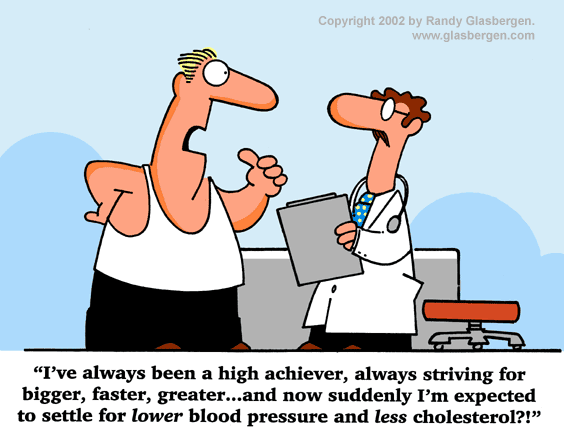
For many more cartoons, please visit Randy's site @ www.glasbergen.com.

    Wednesday, February 23, 2011

    Improve your Heart's Health

    According to the Center for Disease Control and Prevention, American life expectancy is increasing, yet we are living longer with more diseases. Heart disease and cancer are still the number 1 cause of death in the United States. 
    Now since February is the "Heart Month", it's essential to know how you can live a heart-healthy life! Excess weight, lack of physical activity, high blood pressure, high sodium diet, high cholesterol/saturated/trans fats consumption are all major risk factors for heart disease!

    Therefore, these tips will help you keep a healthy lifestyle one step at a time!

    Increase Fiber: Foods that are a good source of fiber contain at least 3 grams of fiber per serving. Check the Nutrition Facts label on a food or beverage package to ensure that you are getting at fiber in your diet. Adult men (ages 19-50 years old) need at least 38 grams of fiber, and women of the same age should aim for at least 25 grams per day. The best sources are brown rice, brown pasta, multi-cereal breads, whole grain toast, fruits and vegetables. Legumes such as beans, chickpeas, lentils,etc. are also an excellent source of dietary fiber.

    Grains:
    The Dietary Guidelines for Americans recommends that half of your grains are whole grains. Making simple switches like choosing 100 percent whole wheat bread and pasta can help you increase your whole grain intake.

    Soy:
    According to the Food and Drug Administration 25 mg of soy protein can help reduce the risk of heart disease. Try adding a packet of soy, edamame or use soy milk in your diet, especially if you haven't given them a shot yet!

    Potassium: Many fruits and vegetables such as bananas, potatoes, beats, beans, oranges, spinach, and apricots can help blunt the effects of sodium on blood pressure. All forms of fruits and vegetables, whether fresh, canned, frozen, dried, or 100 percent juice can assist you in your effort to promote heart health. However, it's best to have whole fruits and vegetables as your first choice in order to benefit from their fibers as well.

    Dark Chocolate:
    Certain phytonutrients in cocoa, known as flavanols, can help promote healthy circulation. When enjoyed in moderation, dark chocolate can be part of healthy diet that promotes heart health.

    Spread Some Heart Love:
    Plant sterols are cholesterol-reducing food ingredients that come from plant-based foods such as vegetables, nuts and seeds. Plant sterols lower your body’s cholesterol levels by competing with dietary cholesterol for absorption. You can add plant sterols to your eating plan by looking for food products that contain added plant sterols, such as granola bars, orange juice or vegetable oil spreads. Just get to know your food labels more!

    Go Nuts:
    A handful of nuts (about 1½ ounces) such as almonds, hazelnuts, peanuts, pecans, pistachios & walnuts every day may also help reduce the risk of heart disease. Portion out servings at the beginning of the week and keep them in your desk draw for a heart-healthy snack at work.

    Take 30 for heart health: Have and active lifestyle overall and find the time to fit at least 30 minutes of exercise into your daily routine. This can be done in 10 minute increments three times a day. Try finding ten minutes in the morning before work for a quick walk around the neighborhood and follow this up with a ten minute walk during lunch and another one after dinner. It's actually pretty easy to integrate separate-several 10 minutes of exercise in your day. 

    This lovely article has been brought with slight amendment from Food Insight.

    Saturday, January 8, 2011

    ALL you need to know about HIGH Cholesterol!


    Cholesterol, HDL, LDL…we often hear about them but what are they really?? It may seem confusing at first but challenge yourself and learn more about them because they come in hand to protect yourself and lower your risk of heart attacks and strokes!


    What is cholesterol?
    Cholesterol is not something to fear. It is found in every cell of the body and is actually essential for many processes like digesting fat and producing many hormones. But when it becomes high, either from overproduction by the liver or from too much dietary cholesterol, well, I can’t but say that it’s serious.
    There are two types of cholesterol:

    • HDL: This is considered to be the “good” cholesterol and it stands for high density lipoproteins. They help carry cholesterol through the body so it can be broken down. A higher number is better.
    • LDL: This “bad” cholesterol is short for low density lipoproteins. They are part of the plaque that forms and block your arteries. The lower number in the range, the better.


    Now what are we comparing against? These are numbers, I know, but they are numbers you should be aware of just to know where you stand.


    Status
    Total Cholesterol
    LDL cholesterol
    HDL cholesterol
    Normal
    Below 200 mg/dL
    40-100 mg/dL
    50 mg/dL and higher
    Borderline
    200-239 mg/dL
    100-129 mg/dL
    40-50 mg/dL
    Unhealthy
    240 mg/dL and above
    130 mg/dL and above
    40 mg/dL and below


    Now what causes high cholesterol? Every person in nature inherits genes that influence his or her cholesterol level, now we can’t actually control that. However we should know that a diet high in saturated fat and trans fat can also increase blood cholesterol as can obesity and a sedentary lifestyle. We will talk about the risk factors shortly, but the big question here is: Why this huge fuss about high cholesterol?


    The problem with high cholesterol! The problem lies in the deposits of cholesterol called plaque that sticks on the inside of you arteries and block the blood flow. This buildup is called atherosclerosis, it sure is a big word, but in fact it’s a state that increases the risk of blocking your coronary arteries that increases the risk of heart attack and/or that blocks the blood flow to the brain and would lead to a stroke.


     As we said, there are risk factors to high cholesterol. In fact, these are divided into 2 categories, those you can control and those you can’t.
    Those you really can do nothing about:
    • Age: Cholesterol levels rise with age. After age 20, you should get a cholesterol test at least once every five years and your doctor may recommend more frequent testing is he finds that you have other risk factors.
    • Gender: After menopause, women’s LDL levels tend to rise.
    • Heredity: If high cholesterol runs in the family, well these are your genes talking and it is best if you get frequent testing.


    But what about what you CAN control?!
    • Excess weight: Being overweight can increase your cholesterol.
    • Sedentary lifestyle: “Couch potatoing”, if I may say, is not OK whereas regular physical activity helps lower LDL and raise HDL.
    • Diabetes: High blood sugar increases cholesterol levels and damages the lining of your arteries.
    • Smoking: Cigarette smoking lowers HDL and increases the likelihood of blood clots.
    • Medications: Certain medications can cause high cholesterol. Talk to your doctor about any medications you are taking just in case!


    So…What can we do??


    • Start by 150 minutes a week of exercise and distribute them however you like as long as you increase your heart rate. Quick pace walking, swimming laps, riding bikes, all are considered to be aerobic and helpful.
    • Go for weight loss. For each 2 ½ kg you lose, you increase your HDL by 1 mg/dL and trimming 500 calories a day if you are overweight you help decrease your LDL by 5 to 20 percent. Just know that losing weight and maintaining it would help you no matter how modest it is, keep it up!
    • Food, food, food!
      -To increase your HDL: Avoid tans fats and hydrogenated fats that are found in commercially baked goods, eat monounsaturated oils like olive oil and eat 2 to 4 servings of baked fish!
      -To decrease your LDL: Eat foods rich in sterols like bran, oats, whole wheat, brown rice, peas, beans, walnuts, peanuts, almonds, broccoli and apples. Moreover, limit your cholesterol and saturated fat in your diet found in fried foods, whole dairy products and non lean meats. Another nutritional tip would be to increase your intake of fibers! 25-30 grams of fiber found in vegetables, whole grains, legumes and fruits are always a plus!
    • Lifestyle changes like quitting smoking and limiting alcohol drinks to no more than 2 per day would help as well.
    • And finally, medications prescribed by your doctor and your doctor only would help as well.

    Tuesday, December 7, 2010

    Heart-Healthy Diet

    To protect yourself from strokes and heart attacks, GO for a "hearty-diet"

    Women Health offers these simple yet effective guidelines:
    • Eating plenty of vegetables and fruits.
    • Making at least half of your daily grain consumption whole grains. These may include whole-grain barley, brown rice, whole-grain corn and oatmeal.
    • Eating low-fat dairy foods, such as yogurt, cheese and milk.
    • Getting lots of nuts and dry beans, lean meat, fish and poultry without the skin.
    • Favoring polyunsaturated and monounsaturated fats via vegetable oils, fish and nuts.
    • Avoiding: saturated and trans fats, sodium (salt), cholesterol and added sugars.

    Wednesday, November 17, 2010

    Cholesterol on Eyelids Might Point to Heart Risk

    Could cholesterol deposits on or around people's eyelids help doctors assess cardiovascular risk?

    A preliminary Danish study suggests that the deposits could point to an increased risk for heart attack, arterial disease and early death.
    Half of patients with such deposits, a condition called xanthelasmata, actually have normal cholesterol levels!!

    The research team therefore believes that buildup of cholesterol on the eyelid is perhaps a marker for cardiac risk, regardless of a patient's cholesterol profile.
    "In societies where other cardiovascular disease risk factors can't be readily measured, presence of xanthelasmata may be a useful predictor of underlying atherosclerotic disease [hardening of the arteries]

    In their study, the team tracked the health of nearly 13,000 patients who were examined for the presence of such eyelid deposits.

    The researchers found that those with the condition had a higher rate of heart disease and heart attack as they got older, and a poorer survival rate as compared with those who did not have the condition.
    Specifically, xanthelasmata was linked to a 51 % bump in the risk for a heart attack and a 40 % rise in the risk for ischemic heart disease. The risk for death rose by 17 % among such patients.


    Reference: The American Heart Association annual meeting, Nov. 14, 2010, news release