Friday, April 29, 2011

Dieting in Lebanon - Cartoon of the Century!

Dieting in Lebanon - a love/hate relationship especially with les croissants, macarons, knefe and committed healthy-diet adherence we can have! Sadly, it's pretty much what Zina smartly illustrated in her lovely Zina Comics Blog!
And don't forget your Canderel (an artificial sweetener made mainly from aspartame). You know, you don't want to gain extra pounds just because you love adding sugar to your coffee, seems unfair!!

You can check more witty comics chez Zina's blog!

Saturday, April 23, 2011

10 Interesting Junk Food Facts!

EGGS this Easter!


Easter is a time of family gathering, celebration, and like all lovely occasions: Good Food! So it's pretty known that no Easter weekend would be complete without an Easter egg or two. This is why the Sohi w Sarih team sent us this smart Easter newsletter to increase our awareness about EGGS!

Eggs in moderation are fine. They are a rich source of protein, B vitamins and lutein.
When it comes to hard-boiled eggs, which are eaten during Easter, the United States Department of Agriculture and the American Egg Board advice discarding them after one week! So it's smart to boil a limited amount of eggs and not keep them for weeks and weeks to come. 
  
Cooking eggs in water washes away an egg’s protective coating, and this leaves tiny pores open in the shell through which bacteria can enter and contaminate the egg. Uncooked fresh eggs last longer because they retain their protective coating—either the natural coating produced when the hen lays an egg or a mineral oil that egg producers spray on after the eggs are washed at processing plants. Keep in mind, hardboiled eggs should be refrigerated at 4°C or below within two hours of cooking.

Now that you know how to eat eggs safely, here are more tips from SWS team!

• Shell color is determined by the breed of the chicken. Brown eggs are not more nutritious than white, so don't eat more brown eggs just because they are brown!

• The color of the yolk depends on what the chicken ate:
- Wheat and barley produce a light yolk
- Corn produce a medium-yellow yolk
- Marigold petals produce a deep yellow yolk
Note that darker yellow yolks often have more carotenoids.

• A blood spot indicates that a small blood vessel on the yolk’s surface broke while the egg was forming. It does not mean the egg is fertile. It is harmless, but you can remove it with a tip of a knife.

• Cloudy albumen (egg white) indicates a very fresh egg. It is due to carbon dioxide inside the egg that has not yet escaped. Pasteurized eggs also have cloudier whites.

• Another sign of freshness is the stringy white filaments inside some eggs called chalazae. They keep the yolk centered in the albumen and lessen over time. It is okay to eat them.

• A gray-green trace around a hard-boiled egg yolk is caused by a reaction of iron and sulfur compounds. It is harmless but means the egg was cooked too long or not cooked quickly. Eggs scrambled at too high a temperature or sitting too long on a steam table may also turn a harmless green.

Now for calories! A large egg has only about 75 calories. The only concern is that egg yolks are rich in cholesterol. BUT, the new 2010 Dietary Guidelines for Americans suggest that eating one whole egg per day does not result in increased blood cholesterol levels and recommend that individuals consume, on average, less than 300 mg of cholesterol per day.
A single large egg contains 185 mg cholesterol! Therefore, enjoying an egg a day can fall within current cholesterol guidelines! 

Just keep in mind that during these holidays, we tend to consume a large variety of foods that are also rich in cholesterol, saturated fats and refined sugars. So watching your whole day diet is crucial, including your egg intake, chocolate eggs, yes, the unforgettable maamoul intake! And believe it or not, it is healthier to have one hard-boiled egg compared with 1, even healthy maamoul (Easter cookies)!

Working Out? Hydration is a Must!

As you exercise, whether to lose weight, to be fit, to have fun or as an athlete, be alert for conditions that increase fluid loss through sweating. With more perspiration, your body dehydrates faster.

Temperature: The higher the temperature around you and the more humid it is, the greater you sweat
Intensity: As you increase intensity of your workout, this increases fluid losses
Body size: The larger your size, the more you sweat. In addition, males by nature sweat more than females
Duration: As you increase the time of your workout, this increases perspiration
Fitness: Well-fit people sweat more because they sweat at lower body temperatures. This occurs because sweating cools off your body and thus well trained athletes cool their body more efficiently than untrained individuals
Now it’s important to know that if you are a swimmer, you are just like any athlete that perspires to keep your body from overheating. However, you probably don’t notice that you are sweating because you are all surrounded by water!
Moreover, even if you are exercising in a cold environment, you sweat. It could be ice skating, skiing or even ice hokey, you need to stay hydrated especially that winter sports clothes may not allow your body to breathe efficiently.
Now, we have been talking about how important it is to stay hydrated!
But what are we going to drink to ensure proper hydration?


Water is simply a good choice to replenish the fluids that are lost. It helps you lower and normalizes your body’s elevated temperature due to exercise and moves water quickly into your tissues. Now we have heard that cold water causes stomach cramps. Well, luckily that’s just a myth. Stomach cramps may be just caused by dehydration and this is good news because statistics actually shows that athletes prefer cold water, refreshes them and enhances their performance. However, if you are performing some “cold sports” make sure to rink luke warm water to avoid hypothermia (low body temperature)

Sports Drinks can benefit athletes especially in hot and humid conditions. If you are exercising for more than one hour and your workout’s intensity in high, sports drinks are usually helpful to increase endurance.

What is important is that you make sure that your sports drink’s content of carbohydrates ranges from 6-8%; that is, 14-19 g in 240 mL). This is better than diluted juice drinks because they contain around 8 % of carbohydrates which might lead to a decrease in stomach emptying, decrease the rate of fluid absorption into your tissues, diarrhea, and cramps. Now glucose in these drinks (which is the carbohydrate), fuels you in energy and for muscle glycogen that is how glucose is stored inside your muscles. This will help prevent any depletion of this glycogen, increase your endurance capacity and aid fluid restoration.
Well, that’s not all. Sports drinks contain electrolytes as well. Usually a normal balanced diet could replenish the electrolytes you lose in your sweat and by perspiration, so if you are exercising for fun, for weight loss and just for around and hour/day, drinking water + a good diet would be great. However, if you are an athlete working out intensely, sports drinks are what you need. And don’t go for vitamin enriched drinks, that’s nothing. You don’t lose vitamins while you exercise. One more thing to pay attention to are sports drinks with caffeine. Don’t go there either. One, yes, caffeine is a stimulant but you don’t really know how it affects you during exercising and two, caffeine is considered a diuretic which means it flushes water away from your body, and I am pretty sure you don’t want that.

As for alcohol, get out of here!
- Calories from alcoholic drink do not fuel your muscles
- Alcohol is a diuretic as well
- Alcohol does not have much carbs to fuel you
- It highly impairs your coordination
- And last but not least, your liver would start working on detoxifying what you had just drunk and will not be able to provide extra glucose to help you endure your workout, leading to unpreventable fatigue!
So as you see it’s easy to know what to choose to stay hydrated while you work out, just replenish and revitalize yourself!

Friday, April 1, 2011

How to Choose Smart and Healthy Breakfasts in Lebanon!

After 8 to 12 hours overnight without food, your body needs to “break the fast” and refuel its glucose for a new day. Without breakfast, your brain and muscles will not have the energy they need to sustain alert and energetic activity throughout the day. 

Now research has showed that people who skip breakfast often feel more tired, irritable and restless in the morning. On the other hand, those who do eat breakfast have better attitude towards work, better concentration, high alertness to detail, more energy, higher productivity and better ability to handle tasks that require memory, focus and problem solving. Moreover, people who skip breakfast end up getting overly hungry and making poor choices later in their day. Unconsciously, they either overcompensate by eating too much, too quick or by grabbing whatever is around especially high fat, high sugar meals in order to get “energy” the quickest way possible instead of more nutritious meals.

Most importantly is that you can make a healthy breakfast in 1 to 5 minutes tops! So giving excuses like you don’t have time or you’re in a rush to get to work/school/uni don't really work anymore. Either prepare your breakfast ahead of time (I usually prepare mine a night before, just before going to bed) or wake up 5, only five, minutes earlier!

Now that we have established that breakfast is an important part of your daily regimen and how easy it is to make one, what do you need to make yourself a health-hearty breakfast? I looked around and decided to include most of what people in Lebanon eat as a breakfast, not just typical Lebanese ideas. So after reading this list, which I divided by type of protein, carbs, fat, vegetables, fruits, sweets and beverages you decided to include in your meal, I’m sure you will never run out of healthy ideas on what to have for BF!

Protein sources to choose from!
Fresh mozzarella sandwich with fresh basil
and tomatoes
·         Cheese:
- The yellow ones like kashkawan (even in its lighter form), cheddar, mozzarella, gruyere, Fondel, chevre, Gouda, babybel and spread creamy cheeses increase your caloric intake as well as saturated fats. Note that some white cheeses are also considered high in fat like boursin, halloum and Roquefort
- The white cheeses are your smarter and healthier choice. While providing you with calcium, phosphorus and proteins, these types of cheeses provide you with less calories and fat per gram! Go for double crème, baladi, ricotta, feta, fresh or light  mozzarella, akkawi, majdoule and low fat versions of spread cheeses
- Tofu cheese, rice labne, tofu labne with thyme are also new options trending in Lebanon. My favorite was rice labne mixed with wild thyme into balls and dipped in extra virgin olive oil!
* Always make sure to read fact labels on processed cheeses (if you really must have processed ones) to make sure they contain 7 % (or less) of fat and when you buy white cheeses. You can also soak them in water and change it often to decrease any excess of sodium in the cheese. I personally would recommend not having cheese or any dairy product more than twice a week + the less its processing the better.

·         Deli whether Italian mortadelle, meat cuts, pork (jambon/ham, bacon), with olives, plain, with pistachios, salami, corn beef to prepacked meats, I mean the list goes on! Well Deli is the number one source of saturated fats, sodium and nitrites! The smarter way to go around this is to go with leaner cuts of turkey or jambon light. I would prefer to skip these, you don't need extra meat in your diet, we are consuming enough animal proteins already. Don't rely on these as a quick source, especially for kids (adults aren't off the hook either)! They'll take ages to be digested, disrupt your digestive tract and putrefy it.

·         Meats: In Lebanon, some enjoy a breakfast of raw meat, like organ meats and their fat, along with kes Arak. Well I hate to burst anyone’s bubble but organ meats, besides the chunks of white fat and the fattening Arak glass, are themselves extremely high fat even if you trim the visible chunks of fat. Another type of meats that is as well very fatty and often added to eggs is awarma. Moreover, if you are having "Lahem b ajin" or kafta in public places, just know that these are extremely high fat meats as well. Usually, meat leftovers are blended with a mix of spices/herbs, you'll never know what you're eating. I suggest you skip the meat. So if you are a fan of Lahem b ajin, you can visit your nearest furn and provide him yourself with lean (habra) meat. On another hand, in Lebanon, Lahem b ajin is often accompanied with yogurt, so make sure to have it a low fat version!

Baked omelet with veggies
·         Eggs: Egg whites are lower in fat/cholesterol content, so when you decide to have yourself eggs for breakfast, choose to eat 1 boiled egg yolk with 2 egg whites. Yes, boiled and not fried with extra cheese or bacon. This will only increase your intake of sodium, cholesterol and saturated fats and bulk you up throughout the day, making you feel heavy and bloated. What I usually do is either poach the eggs in boiling water and add a teaspoon of olive oil afterwards, boil the egg, or scramble it with diced tomatoes and scallion. In addition, if you have time, you can also bake an omelet with veggies, herbs or spices! I would suggest to have eggs just once per week max. Always have veggies (tomatoes, mint, cucumbers, basil, rocka, onions, whatever, on the side), easy on the salt and the bread! Keep in mind that if you are having those in a bistro, cafe or restaurant, I am more than sure than milk, butter, and creme fraiche are added to those babies. I mean just so that you know! Try to take it easy on such breakfasts, ask for lighter version of these meals and substitute few eggs yolks with egg whites.

·         Milk/ Labne/ Yogurt: Many dietitians advocate that you go with non-fat versions (0% fat). To be honest, I'm no dairy fan but if you must and you're not a high meat eater, go with the 1% to regular (3%) milk version [of course, take into consideration how much animal proteins, saturated fats and cholesterol you have overall during you day] because 1) the less the fat %, the more processed the product is and 2) fat-soluble vitamins (ADEK) need fat to be absorbed in the body >> If you are having a 0% fat labne, milk or yogurt, know that you are not getting any of those vitamins. However, if you are a meat and heavy dairy eater or if you have high LDL or total cholesterol, I would suggest the 1% dairy products, not because it is awesome itself, but because you gotta lay off those animal fats! It's still processed though yea? Your [conscious] call! Moreover, if you are not a dairy fan but need the milk to have your coffee for instance, you can try nut milk (hazelnut/almond) or rice milk (me choice!)

·         Keshek is made from labne (greek yogurt) and bulgur, sun dried and then made into powder. Now to start with, the labne used is always high in fat. Kechek is usually eaten as a part of man2ouche (baked dough) or it’s eaten in its soup form - cooked with minced meat, oil, pine nuts garlic and/or potatoes (depending how it’s prepared) & is eaten with bread. It’s actually considered a pretty heavy breakfast, high in fat, high in carbs and low in fibers (knowing that few people have any vegetables on the side with it). Therefore, having it occasionally is a smarter choice, as a brunch even better.

·         Arishe is a product made totally from milk proteins, when bought directly from the farm or when you know/trust someone who sells it. However, sadly, in Lebanon, fat is often added to it during processing because it's cheaper to actually prepare it. So it’s not my first choice for a healthy breakfast especially that honey and sugar are often added to sweeten it. 

Carbohydrate source
Make sure to have a whole source of carbohydrates. Go for 'whole grain', low sugar, low salt ones instead of 'multi-cereal' because this one could only mean 'different grains'. This way you will increase your intake of fibers!

·         Baguette/bread/toast are best eaten in their high fiber, no milk, no sugar versions. Try to avoid pain au lait and pain de mire, because one small portion is considered as 1/2 baguette and is not as satiating  so you’ll end up eating 2 to 4, equivalent to one whole loaf of big Arabic bread! Pain au lait and pain de mie (fluffy toasts) are made with sugar and whole fat milk as well. Moreover, some pain au laits are already filled with chocolate, high fat cheese, thyme or olives and thus adding extra calories to an, already, unhealthy refined carb. ALWAYS read the label, you don't want milk, sugar, additives and emulsifiers in your bread. The less, the better. Whole grain Arabic bread, oat bread or saj bread are ok - just don't have the whole pack please.

·         Kaak is pretty famous here as well. When you decide to have yourself kaak with tea or dipping it with labne, cheese, zaatar, it's best to choose finger sized whole fiber kaaks with no ghee, butter and sugar. Please read the label (takes few seconds and you'll look smart too) given that most kaak in Lebanon are made with lots of fats! 3 kaaks = 1/2 french bread/baguette. Portion control is crucial when eating kaak especially that most have them like biscuits, unconsciously nibbling them all day because someone said they're ok. Put 4-5 finger-sized kaaks and close the container away.

·         Cracottes and rice cakes are usually labeled as the "diet" foods. Well, they are healthy but if you are watching what you wat, you can go for the usual toast and breads if you're not into cracottes and rice cakes! Now most rice cakes are made from white rice, high glycemic load causing peaks in your blood sugar. I would suggest that you choose whole oats cakes or whole rice, made from whole grains obviously, to increase your fiber intake and avoid blood sugar peaks. Calorie wise, one toast = 1/2 ab3a of the big Arabic bread = 1 pain au lait = 3 cracottes = 3 rice cakes, 3 small finger like kaak = 1/2 baguette = 1/2 burger bun! Just to keep things into perspective. Of course, portion control, rice/oats cakes are not biscuits to munch on in the office!

All famous man'ouche!
·         Man'ouche is a tricky breakfast because it is practically found everywhere you go and is considered an "on the go" breakfast. To start with, know that a man'ouche's dough might be mixed with lots of oil before any baking is done. So one man2ouche's dough is at least 1 loaf of large Arabic bread (rghif), so as a start, it's lots for a breakfast. Second, it's usually made with either oily thyme in it or high fat cheese (most often mixed with oil itself). So check the cheese section to choose the healthiest version. As for thyme, it is considered healthy but watch out not to have lots of oil in your sandwich or man'ouche. And always accompany your man'ouche with veggies! One good tip to know in the man'ouche/saj industry: Not because the saj is thinner, it's considered as lower in calories, nopes! The same dough is either made into a thin saj dough or a thick furn dough, same calories! Sharing a man2ouche, asking for whole-wheat dough, having it '3al bered' = adding oil after it's baked, having veggies on the side and having it once a week is advisable.

·         Pancakes, crepes and waffles are usually made with sugar, eggs, butter, milk, flour and oil. So having them occasionally is ok (occasionally = once a month tops + I prefer they are home made and never from quick pancake/crepe fixes, those are pure crap, hydrogenated fats, preservatives, emulsifiers, genetically modified corn syrup, additives to name a few) as long as you stick to one. Try to prepare them with whole flour and skimmed milk/ nut milk/ rirce milk and have them with low fat cheese and turkey/ zaatar as a salty breakfast or home made jam/honey/fruits as a sweet one. No Nutella please!


Cornflakes with milk
& strawberries
·         Cornflakes,in my opinion are crap, are considered as meal replacements and not actual meals. It's sad that mothers believe they're doing their kids some good when they feed them these flakes. Just check the 'plainest', highest in fiber cornflakes in town, it has at least 2 sources of sugar. Other than the fact that more than 75% of corn is genetically modified, unless otherwise specified.Try to avoid these in general but if you must (I don't know why you might have to, but if you did) avoid those high in sugar, chocolate and carcinogenic colorants (please, I beg, read the label, take few seconds really). They’ll only add up the total amounts of calories and unwanted sugars and toxins to your diet. A smart way to go around this is by having plain sugarless whole fiber any grain flakes with nut/rice milk and fruit cuts. The fruit cuts will be great replacements for sugar, giving your meal a sweet, fresh and delicious taste. Experiment with fruits, add berries, dried raisins, cherries, peach or even bananas. An even smarter and healthier way around this processed food is having your own oats! 

·         Oats are kinda the new trend in town, they can be eaten like cornflakes  (I'm sorry I compared, they are better) or cooked to which you can add milk, fruits and nuts and have as a meal. So if you haven’t tried them yet, give them a shot! They're my favorite! What I do = I get organic rolled oats, boil them for 1 minute (just 1 cz I like them fluffed up) with rice milk and then add my fruits, chopped almonds and walnuts. Some love cinnamon, but it's not my favorite taste. Easy quick and can be prepared ahead of a day, it's called an overnight oatmeal!

·         Knefe is not considered a healthy breakfast, sorry. It consists of the kaak covered with sesame accompanied with either high fat cheese or achta smothered in ghee (samne)/butter and sugar syrup (ater). It's therefore high in fat and sugar, a breakfast you wouldn't want to have as a part of a healthy breakfast. And last but not least, it provides you with at least 550 calories, too much, no? Try to share it if you really feel like it and have it once every couple of month, or like I do, once every year on New Year's eve, hey it's a Lebanese tradition!

Fat
·         Olives and olive oil are good sources of monounsaturated fats, the types of fats you want to include in your diet instead of saturated and trans ones. If you decided to add olives, go for 8-10 ones or 1-2 tsp of olives, but make sure your breakfast does not contain another source of hidden fats incorporated in carbs (like in the dough of mne2ish or croissants), in proteins (like deli cuts, high fat meats and cheeses/labne/yogurt), with thyme or mixed with cheeses or mixed with vegetables. Olive oil can also be a good vehicle for ADEK, fat soluble vitamins, if you are having 1% dairy products.

·         Butter and ghee are both saturated in fats and high in cholesterol, so try to avoid adding them in food like with jam & butter or having them hidden like ghee in pastry puffs (croissants and donuts). I can't say much about those, they're a no for me.

·         Nuts and seeds are sources of good fats, lots of minerals as well as fibers. Have a handful with your breakfast, but again, watching the total intake of fat is important. They can be found in Lahem be ajin’s pine nuts, hazelnuts on pancakes, peanuts in peanut butters, mized with oatmeals, almonds in cocktails, walnuts in muffins, sesame seeds on breads and kaak, etc.

Veggies
Vegetables are and important part of your breakfast. They provide you with fibers, wide range of vitamin and minerals as well as water. Try to blend them in anything you have, not only in the morning but throughout the day as well. From lettuce, tomatoes, mint, cucumbers, carrots, rockets, radish, parsley to purslane...
·         In your labne/cheese/turkey sandwich
·         In your thyme/cheese man2ouche
·         In spinach or swiss chard (selek) pies (fatayer)
·         As a part of your baked omellete; add mushrooms, tomatoes, bell peppers, green onions and your favorite blend of herbs and spices

Fruits
Fresh fruit smoothie:
Fresh, delicious and nutritious
Fruits also add to your intake of vitamins, minerals and water! They can be taken as fresh juice, whole or dried/chunks in your cereal!
·         One thing you have to keep in mind is that one cup of a fruit juice equals 2 whole fruits and is not as satiating. Try to avoid pre-packed juices that are only made from lots of sugar!
·         Fruit cocktails (those served in large glass jars) are not a good choice for a breakfast. Not only does the smallest cup provide you with 3 servings of fruit, but it’s also smothered with avocado, “achta”, honey and nuts, not health hearty and light for a breakfast. Either way, you can check the fresh fruit smoothies in the beverages section, those are yum!

Sweets
·         You can have jam as a part of a balanced breakfast, just keep in mind that it is half sugar/half fruit. Have 1.5 tsp instead of a fruits occasionally.

This sure ain't healthy!
·         Croissant, doughnuts, éclair, puffed pastries and desserts that are eaten at breakfast are full of ghee/butter and therefore saturated fats, filled with chocolate/jam/cream and thus lots of sugar and are considered as refined carbs! So they are actually meals low in fibers, vitamins and minerals and actually of empty calories, those that add no benefit to your diet and keep you sluggish all day long. These sure aren't considered breakfasts!

·         Muffins. Everyone says they're healthy but I don't think so. Muffins have this healthy halo around them. Ok they could be made with whole grains, but those babies have high fat milk, sugar and butter most of the times. And they add up to 500 calories if you're aiming to have one from Starbucks! If you're baking your own healthy mini muffin, then fine. Once in a month. As a treat. No, not breakfast.


·         Sugar and honey provide you with empty calories. Now many believe that honey provides you with a healthier version of sugar but unfortunately with processing nowadays, they're considered the same. Honey does in fact have antimicrobial and antifungal properties and may have antioxidants, but this is the authentic honey version we are talking about. So yea it may me better than refine sugar, anything is better than refined sugar. So when you want to add them in your breakfast, keep in mind that they both provide you with extra calories that you don't actually need. So if you are hooked on adding lots of sugar to your coffee for example, try to decrease it gradually, 1/4 teaspoon at a time. Note that brown sugar is not a smarter choice, it's just a decoy. It's in fact white sugar covered with molasses, so yea same thing!

Beverages
·         Water is the best beverage you can have at breakfast. It is cleansing and hydrating, just what you need every morning to wash out your digestive system.

·         If you decide to make your own coffee, which I akid recommend over on the go coffees, it’s best made with rice/nut milk or 1-2% fat milk with no creamer because they are high in fat and low in calcium + decaf-coffee + 1-2 tsp sugar, if you must. Please skip those instant coffee creamers or mixes (like 2 in 1 or 3 in 1), these are loaded with hydrogenated trans fats, genetically modified sugars, generated during high processing and leading to high cholesterol and heart diseases.

·         Tea is a calorie free warm drink to have in the morning; however, it’s important to keep in mind that it also contains caffeine so it’s best to limit your caffeine intake to a maximum of 2-3 cups of coffee/tea/hot chocolate (and coke) per day. Moreover, green tea has less caffeine than regular versions.

Hot chocolate made with unsweetened
cocoa powder and skimmed milk!
·         Hot chocolate is best made from unsweetened cocoa and low fat milk/better yet, nut milk. And don't go adding marshmallows to your hot chocolate, extra pointless sugar for a breakfast! You can also go for a cold iced crushed chocolate milk shake by adding unsweetened cocoa powder to skimmed milk. Please don't dip biscuits in those too. The lightest commercial biscuit is not light at all.

·         Smoothies when made with low fat milk and fresh/dried fruits are best. However, note that when you buy smoothies and shakes on the go, they are often full of fat, cream and sugar! Even the lighter versions at shops are still saturated with creams! Blend your own, it seriously takes 5 minutes > Milk of choice, fruit of choice, crushed ice if it's summery, nuts, chia seeds, spinach, kale, anything can go in there! Blend for 5 minutes and nom-nom. It can be considered as a meal replacement though, not my best option but still it's a break from everyday's routine breakfast so it can be good, once every month or so.

So now, you have all the ingredients broken down! Here are few examples:
·         A whole wheat akkawi sandwich with olives and vegetables followed by a diced fresh orange fruit
·         One cup of almond milk + a cup of rolled oats + diced strawberries/banana/dried raisins + 5 soaked almonds
·         2 eggs omelet baked with diced mushrooms, spinach and tomatoes with 2 whole wheat toasts
·         Half thyme man2ouche with fresh vegetables and a cup of tea
·         A toast of 1 tbsp low fat labne with cucumber/tomatoes/mint and another toast with 1.5 tsp jam with coffee made from skimmed milk and decaf instant coffee
·         Multigrain crepe with light mozzarella cheese, basil and tomatoes
·         One cup of smoothie made with your choice of milk blended with fresh strawberries and bananas or 1 tbsp of unsweetened cocoa with crushed ice.

Sahtein!! Now go have yourself a good productive day!

Monday, March 21, 2011

McDonald's Horrifying Nutrition Facts


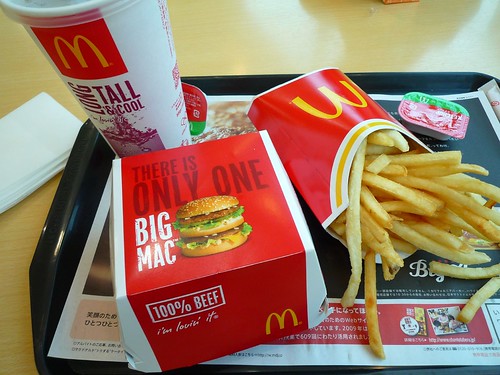
So let's say you decided to hit McDonald's for a Big Mac, some fries, a coke and one small Oreo Mcflurry! And the nice lady on the cashier asks if you would like to super-size it Sir, and you go "What the hell!" Pretty common conversation, no?
Well, truth be told, we are talking about:
  • Big Mac >> 540 calories with 29 grams of fat, 10 of which are saturated, 70 mg cholesterol and 1020 mg sodium
  • One large fries >> 560 calories with 27 g fat, 4 g saturated 430 mg sodium
  • A large coke >> 320 cals with and 82 g sugar!
  • One Oreo Mcflurry >> 500 calories, yes, with 17 grams fat, 10 g saturated, 60 grams sugar and 330 mg sodium
Lots of fat, sodium, cholesterol, saturated fats and sugar no? And a total of 1920 calories is more than I can have in a whole day! So say hello to heart diseases, stroke, hypertension, metabolic syndrome, hypertension and obesity!
So before you decide to go for McDonald's and other fast food restaurants, check McDonald's Nutrition Facts for the unbelievably huge unwanted amounts of extra fat, saturated fat, trans fat, cholesterol, sugar and sodium you are adding to your diet!

Friday, March 18, 2011

Fruits and Veggies - Blended Creatively in your Diet


Modifying recipes without compromising taste does not actually require extra time or effort, you just need few ideas to spark your creativity especially when it comes to fruits and vegetables and incorporating them in your family’s dietary habits. Focus has been put more on the importance of including fruits and veggies as a part of everyone’s personal eating habits with variety, moderation and balance built in.

Now even though fruits and vegetables’ content varies enormously, in general, they are low in fat, low in sodium, they are high in fiber and water, they supply many vitamins such as vitamin A, vitamin C, folate, B 6, potassium, calcium, magnesium, selenium and they provide lots of phytochemicals and antioxidants .

So here are few ideas that might help you fit a rainbow in your and your children’s diets:

Kalyn's Kitchen
Grate your way – Add grated shredded or chopped vegetables such as zucchini, spinach, carrots and cabbage to mashed potatoes, meat dishes, rice, bulgur, wheat or lasagna.
Be fruit saucy – It’s time to experiment with fruits: make strawberry puree, banana, apples, peaches or pears and try them on grilled seafood or poultry, pancakes, toasts or even mix them with skimmed milk and crushed ice!
Toss in dried fruits – Try adding dried mangoes, papaya, raisins, prunes or apricots in whatever meal you are having whether you are baking homemade breads or cakes or in salads, sandwiches, rice, pasta, milk or pancakes.
Creative pizza – You’ll probably think I’ll suggest adding zucchini, broccoli, asparagus, carrots, bell pepper strips and tomatoes to your pizza, and yes, it’s true. But I also suggest you trying to experiment with fruits as well! Try adding pineapple slices, raisins, mango bits or even apple wedges. They will sure taste different – good different.
Mix fruits and veggies – Make a quick stir fry or boiled rice or pasta and add both fruits and vegetables to them! Start with small bits of raisins and experiment with one meal as a start.
Expand – Try new vegetables that you haven’t tried in your life. These could be local or not; either way give them a shot in a stew, salad, with rice or rice!
Lunch then fruit – Make a habit of packing one fruit for every member of the family to have after lunch.
Toss up a vegetable, fruits and legumes – Add colorful vegetables, legumes and fruits in your salad. Try adding rocket with strawberries, kiwi with romaine lettuce, beets with cabbage and chickpeas or carrots with spinach, lentils and raisins. Weird, yet creative and delicious combination!
Check this recipe from Italian food net
Make dips and spreads – spicy salsas can be made with bell peppers, tomatoes, onions, garlic and spices. For a new twist, add pineapples, peaches or mangoes! You can make baba ghanouj form eggplants with tomatoes and pomegranates seeds as a topping or chickpeas hummus with mint and strawberry bits! 
Stuff omelette time with veggies – In Lebanon, we have the habit of scrambling eggs with mint, tomatoes, cucumbers and probably onions on the side. This time try mixing your choice of onions, bell pepper, tomatoes, carrots or spinach with the eggs and baking them altogether.

Through these “out of the box” creative and colorful recipes, you, as a family, will probably learn how to enjoy fruits and vegetables for their vibrant colors, crunch and wonderful different flavors and in the same have enough fruits and vegetables fit in your diet. This way, you will sure increase your intake of healthful foods and stick to a hearty diet!


Source: American Dietetic Association - Complete food and Nutrition Guide, Roberta Larson Duyff

Monday, March 14, 2011

Hummus - Just Deee-licious!

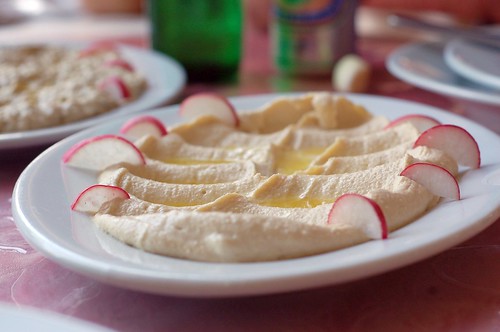
Pureed chickpeas may not sound very appetizing, but Hummus, the pretty famous Middle Eastern chickpeas spread, is just de-licious (especially my mom's)! 
Now we often take hummus for granted here in Lebanon, but it's actually a hot food trend abroad! Hummus has virtually taken over the “refrigerated flavored spreads” category, which enjoyed sales of more than $300 million in 2009, according to data from a Chicago-based market research firm.


Even though you can find pre-made hummus in supermarkets, it's just not the same. Now it's actually pretty easy to prepare so here's a the Lebanese quick version which I got verbatim from The Food Blog:
  • Soak chickpeas overnight with a spoon or two of sodium bicarbonate
  • 
    Courtesy of The "yummy" Food Blog
    
  • Boil the hell out of the chickpeas. (now this step will definitely cause your chickpeas to lose some nutrients during the boiling process, diffused in the water).You want to be able to turn it into mush by simply pressing on the grain between your index and thumb
  • Drain but keep the cooking liquid as you will need it, especially that it has some leaked chickpeas' vitamins!
  • Put in a food processor with no other liquid and blend.
  • If the food processor is not blending properly, add tiny amounts of cooking water, and I mean by the tablespoon just to get it going
  • Keep blending until very smooth. If you put too much liquid, it will not get smooth enough, and remain yucky and grainy
  • Add garlic, salt and lemon juice, blend again and adjust to taste.
  • Add tahini paste/sesame seed butter (a bit at a time), blend and taste.
  • Tahini will make the dip seize up, so add a bit of cooking liquid (or lemon juice if it needs it) to loosen it all up, but not too much. It should be be thick and creamy, not liquidy in any way. Have a look at how it holds its grooves in the picture above.
  • Adjust garlic, salt and lemon juice, plate up, make a sort of well in the middle and fill it with good olive oil! (I would say just put 2 tsps of olive oil when you put hummus in your plate because you are already taking your fat in this meal from the tahini)
Now for more chickpeas facts (which are also called garbanzo beans), they are one of the world's oldest cultivated foods, dating back to the Neolithic period in what is now Sicily, according to The Food Encyclopedia. During the Roman Empire, chickpeas were shipped in jars from Sicily to the rest of Italy. But the Middle Eastern region is thought to have created hummus hundreds of years ago by combining pureed chickpeas with lemon juice or vinegar, tahini (sesame seed butter), garlic, and olive oil. 


Most importantly, whether you're new to hummus or a longtime fan, like moi, here are the nutritional benefits which it offers you!


Chickpeas, the main ingredient in hummus, are rich in fiber and lean proteins to start with. They also offer you vitamins and mineral such as folic acid, calcium, zinc and magnesium!
Now beans in general have been linked to lower bloog cholesterol and lower risk of cancer because they are rich in enzymes and antioxidants (such as saponins, protease inhibitors and phytic acid)!
On another hand, tahini (sesame seed butter) is rich in mono-unsaturated fats (the fat that helps to increase the "good" cholesterol HDL) and has additional calcium, proteins and fiber.
And not to forget, last but not least, the vitamin C lemon juice offers you, the monounsaturated fat the olive oil contains and the rich anti-oxidant heart healthy garlic potential!

Balila, courtesy of The food Blog

So be creative and enjoy your hummus:- As a raw vegetable dip: put your hummus bowl in the center and surround it with a rich combination of stick veggies such as cucumbers, broccoli, cherry tomatoes, bell peppers, cauliflowers, etc.
- As a sandwich spread with mint, cucumbers, tomatoes, rockets and olives
- In sandwiches, instead of mayonnaise >> this way you'll cut down your fat intake

- Diluted in water, broth or even wine to make such a delicious dressing for cold pastas
- Mix in a food processor with spices or ketchup to get a different taste and red color or with mint to get green creamy texture
- You can add small bits of lean grilled meat + pine nuts on the top and have it as a main dish with
fattouch on the side (my personal favorite lunch!)
- You can even keep the chickpeas intact (no food processing) and make yourself a nice bowl of "Balila" mixed with garlic, lemon juice, oil and pine nuts!


Now food aside, I was inspired to write this "nutritional' post about hummus because of the Lebanese smart/sarcastic Hummus Nation Blog well, has nothing to do with food!


Sources: WebMD, The Food Blog and The Food Encyclopedia

Sunday, March 13, 2011

St. Patrick's Day Green Cookies!

Courtesy of Taste of Beirut

It's pretty known that on March 17th,  St. Paddy's Day, you either Go Green or Go Home!

So in order to celebrate this day in a delicious crispy way, I think it's definitely fine to have something sweet. This is why I found this chocolate-minty cookies recipe which I highly recommend to check here, especially if you love the mixture crispy-chocolate sweet-refreshing minty taste!

However, you know I can't but add: A little chocolate is good for the heart, so have these cookies in moderation and try to avoid beer binge drinking on this lovely day!

Friday, March 11, 2011

Coffee - Everyone's Morning Ritual

An innocent cup of coffee can become a morning ritual, right? Well it has probably happened to you! However, it's important to know the facts!


A cup of plain black coffee contains around 10 to 15 calories tops! And moderate intake of coffee - a cup or 2 per day - provides you with rich antioxidants and is actually linked with lower risk of diabetes type 2, heart diseases and Alzheimer's! But be warned, this is only linked to plain black coffee!


BUT - Ordering from the fancier side of the menu, say at Dunkin Donuts perhaps, you decided to go to a coffee coolatta with cream. Well, sorry to burst your bubble, but this contains 400 calories, 23 grams of fat and 43 grams of sugar! Even if you chose the skim milk version, you will end up with 210 calories and 49 grams of sugar!


So let's say you dropped by Starbucks:
If you go for its Frapuccino, we are talking about 450+ calories and even if you decide to go for "lighter" or simpler options such as the iced falvored Latte with only 2% fat milk, this is more like 250 calories with 6 grams fat and 34 grams of sugar! Cocoa whole milk (venti) is 600 calories, Mocha whole milk (venti) is 500 cals, caramel Machiato whole milk (grande) is 300 cals, mint Mocha chip frappucino (grande) is more like 500 cals and white chocolate mocha with whipped cream is 470 cals, I mean just to name a few!


So now you're probably asking "What can I order then?"
  • First of all, stick to one cup a day! Skip all the rituals of one cup in the morning, one on the break and another in the afternoon! You don't need this much caffeine in your body. Keep in mind that too much caffeine is linked to bone loss, fertility problems, headaches, irritability, little sleep, back pain, heartburn and ulcerpain! Moreover, try to avoid other caffeinated foods and beverages throughout your day such as carbonated sodas, tea and chocolate
  • Watch your order size, always go for the smallest cup
  • Ask for skim milk or 1% fat milk (low fat)
  • Avoid adding sugar
  • Avoid the whipped cream topping
  • Avoid sugary syrups like the chocolate/caramel/vanilla ones!
  • AND, lay off the extra doughnuts, croissants, muffins, brownies, cookies and cakes that may accompany it! Just think of the blueberry muffin at Starbucks: it's 360 cals, apple bran muffin 470 cals, apple fritter 490 cals, butter croissant 350 cals and vanilla cupcake 340 cals!
So enjoy a good warm cup of coffee without those fancy mixings and extra calories, fat and sugar!


Source: Everyday Health

Monday, March 7, 2011

How to Manage Your Diet This Lent

It’s the first day of Christian fasting (aka Lent) here in Lebanon, and most people are confused about how this could affect their overall health. So I got a good straight to the point newsletter from Sohi Wa Sarih Clinics and elaborated on it a bit. You can actually check their website and apply to get their healthy weekly newsletter as well.

Now there are mainly 4 types of fasting that can be applied separately or together, depending on your own preference, physical condition, age and/or religious sect:
• Fasting until 12 pm
• Deprivation of food(s) you like
• Abstinence from meat for the whole fasting season
• Deprivation of all types of animal products, including meats, dairy products and eggs

Fasting until 12 pm:
Well, it has no effect on health at all since your body will not reach its starvation mode yet. It may be harder on night workers or people who wake up really early but it’s usually not recommended to exceed a period of 14 hours without food between dinner and breakfast. So keep track of how long you are staying without providing your body with food and fix your diet accordingly!
Giving up chocolate
Deprivation of food you like (could be chocolate, potato chips, soft drinks):
These foods are not necessary, and yes guys, they can be left out of your diet. They will sure not affect your health or physical well-being, on the contraire, they will push you to focus on healthier food options such as fruits and vegetables as snacks! This way you'll cut the junk and increase your intake of vitamins, minerals, fibers and anti-oxidants!
Abstinence from meat:
Some people could also choose to cut down on their meats. Meats contain iron, a mineral essential for the body, found in legumes and vegetables too, but in a different and less effectively absorbed form. So when you give up meats, make sure to have enough legumes (7boub, such as beans, chickpeas, peas and lentils, along with dark green leafy vegetables). Throw a lemon on the side because Vitamin C enhances the absorption of iron whether it's in its meaty or vegetable form! Moreover, make sure to have at least 2 servings of grilled or canned fish (I mean if you haven’t given them up as well) to ensure appropriate amount of proteins and omega 3 in your diet.
All vegan diet
Deprivation of all types of animal products (Vegan Diet):
This type of fasting consists of abstinence from red meat, chicken, fish, eggs, milk, cheese, butter and all animal products whatsoever. This would compromise protein, calcium, zinc and vitamin B 12. Animal foods provide all 9 “essential” amino acids (protein building blocks) needed to make “complete proteins”, whereas plant foods are considered as incomplete, meaning they lack one or more essential amino acids.
 
Lentils and Rice. Don't forget
the complementary lemon-y salad
on the side!
Now to outsmart this >> Go for “complementary” protein sources, such as grains and legumes consumed together in the same meal, thus providing adequate amounts of all the essential amino acids. For example mix beans with rice (fasolia w rez) or lentils with rice (mjadara or mdardara) along with cabbage salad with lemon juice on the side (remember the Vitamin C effect on iron in legumes) 
As for milk and milk products, calcium should not be a concern if abstinence is limited to the 50 days’ fasting period. Osteoporosis takes much longer than 50 days to develop!  However, keep in mind that dark green vegetables such as broccoli and canned sardines (with bones) provide considerate amounts of calcium in your diet.

Drink at least 8 to 10 cups
of water per day
Last but not least, consume slow-digesting foods having fibers such as vegetables, legumes, whole wheat carbs and fruits more than fast-digesting food like juices, white bread, sweets and sugary drinks because the fast digesting ones make us feel hungry again (low filling effect) after 2 to 3 hours of eating and increase the risk of constipation!
And even if you are fasting till 12 noon (and maybe fasting from drinking water as well) make sure to drink enough water, 30 ml/kg X your weight in kilograms throughout your day!